Precision Surveying Instruments
High-precision optical, electronic, and satellite-based measuring instruments engineered for absolute accuracy in land mapping, topography, utility location, and construction layout.
Widely Used By
Land Surveyors Civil Engineers Topographical Mappers Mining Exploration Infrastructure Firms
Key Purposes
Coordinate Geometry Elevation & Leveling GIS Spatial Mapping Buried Utility Tracing Site Grading & Layout
Single Tap to Scroll • Double Tap to Open Catalog
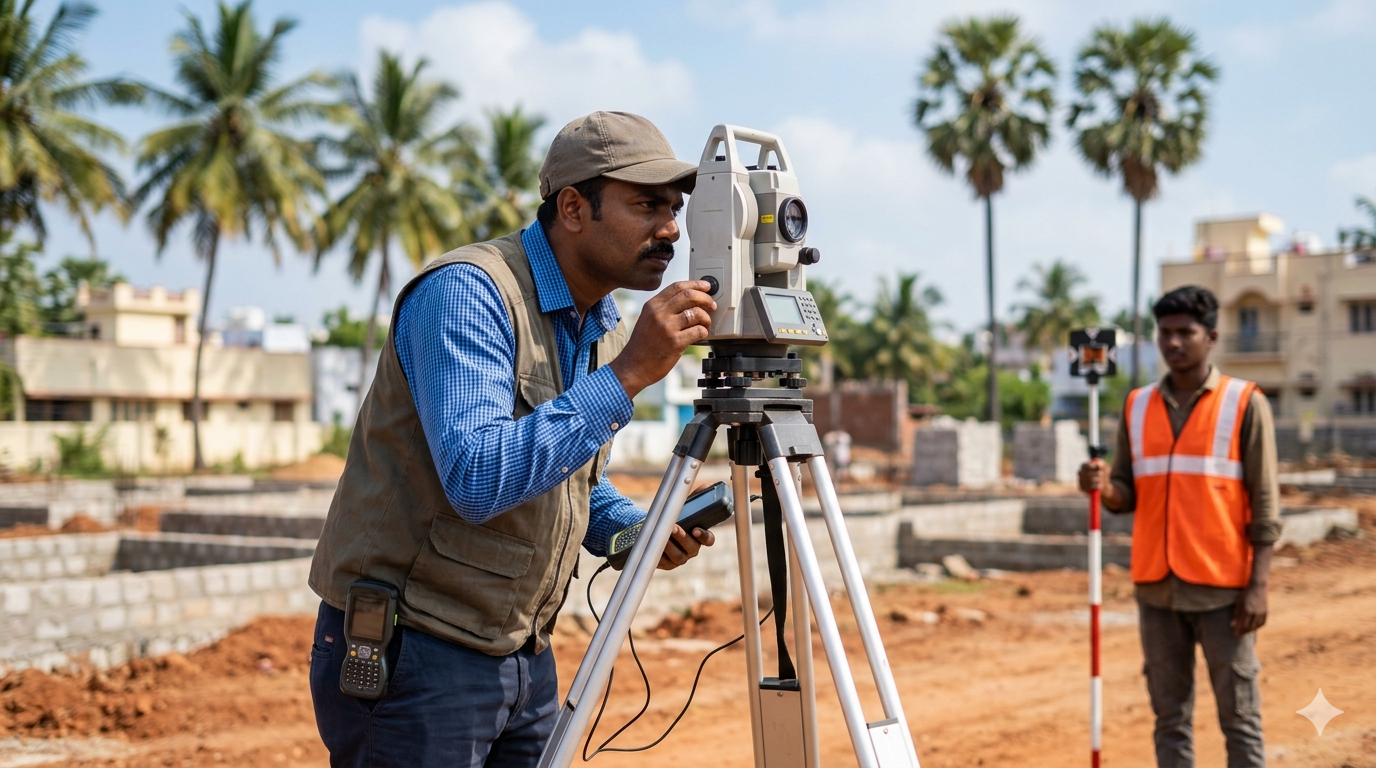
Total Stations
- Integrates an electronic theodolite with an Electronic Distance Meter (EDM).
- Delivers sub-millimeter accuracy for complex topographies.
- Features onboard data logging and coordinate geometry calculation.
Access Catalog
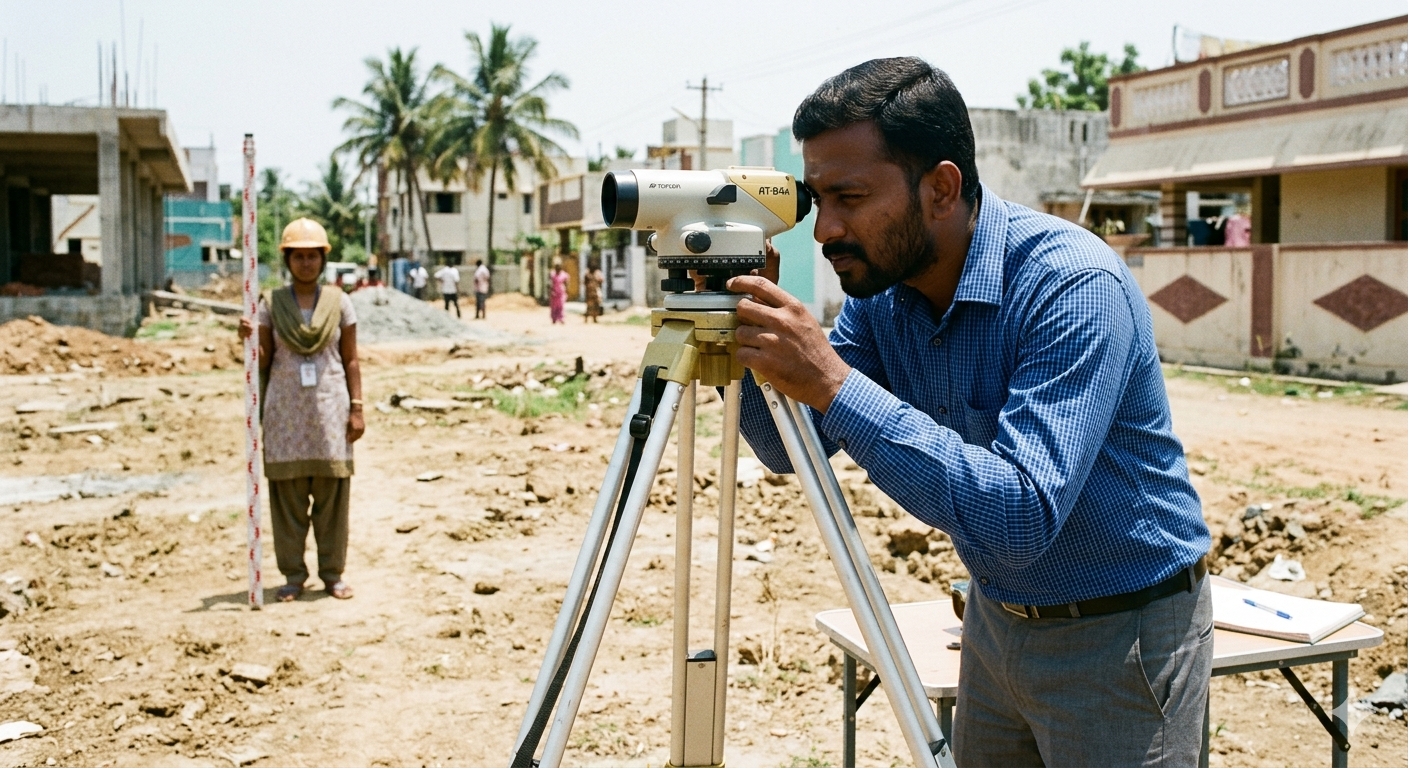
Auto Levels
- Built-in compensator automatically adjusts the line of sight horizontally.
- Ideal for rapid elevation transfers and establishing grade.
- Highly durable optical components for rugged construction sites.
Access Catalog

Dumpy Levels
- Classic, robust optical leveling instrument for fundamental surveying.
- Rigidly fixed telescope ensures absolute stability during readings.
- Requires manual leveling via precise spirit bubbles and foot screws.
Access Catalog
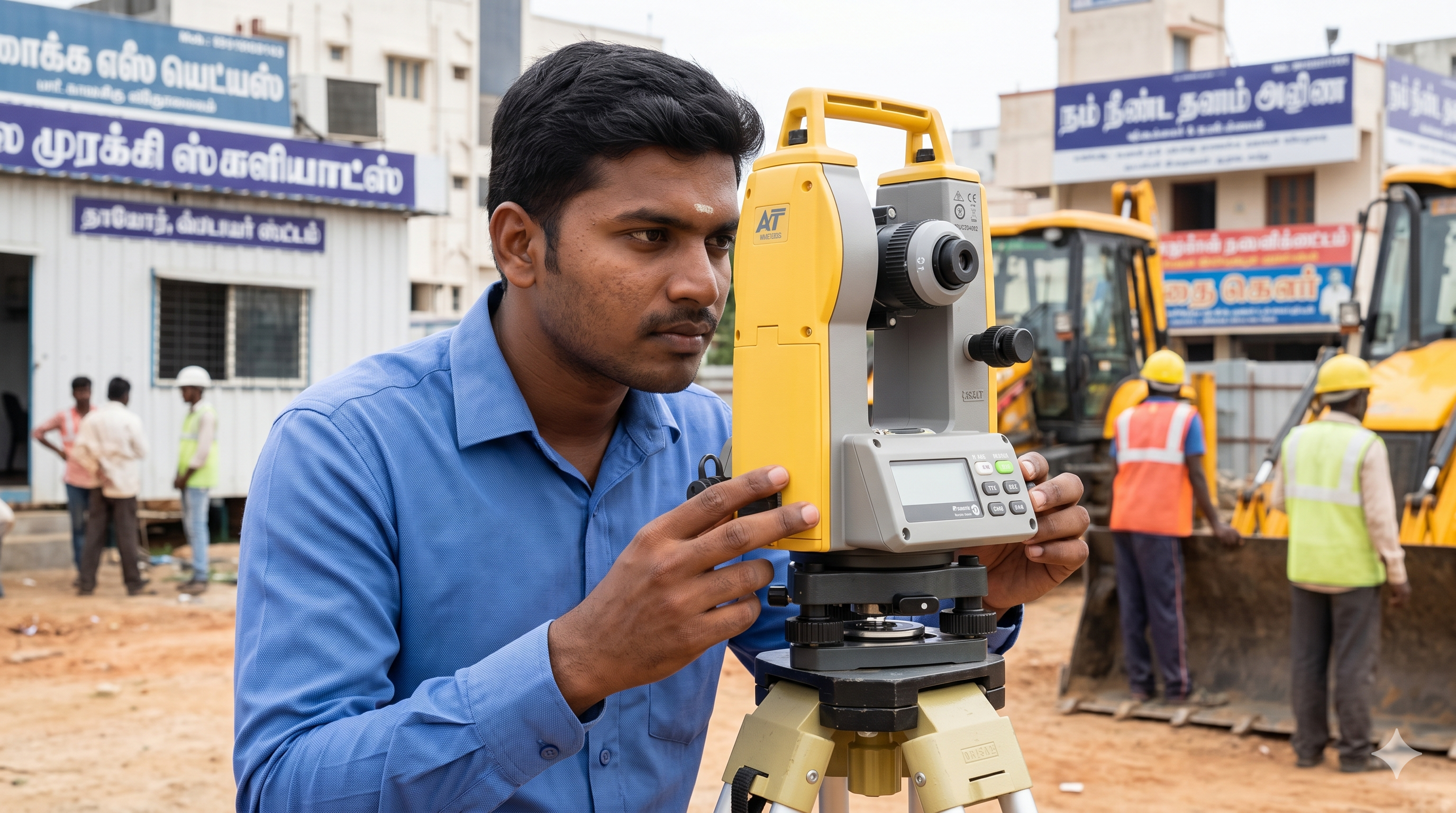
Theodolites
- Precision instrument for measuring both horizontal and vertical angles.
- Available in digital formats with highly legible LCD readouts.
- Critical for aligning building corners, plotting grids, and triangulation.
Access Catalog

GPS / GNSS Systems
- Real-Time Kinematic (RTK) rovers communicating with global satellites.
- Achieves centimeter-level geographic positioning instantly.
- Eliminates the need for line-of-sight between surveyor base stations.
Access Catalog
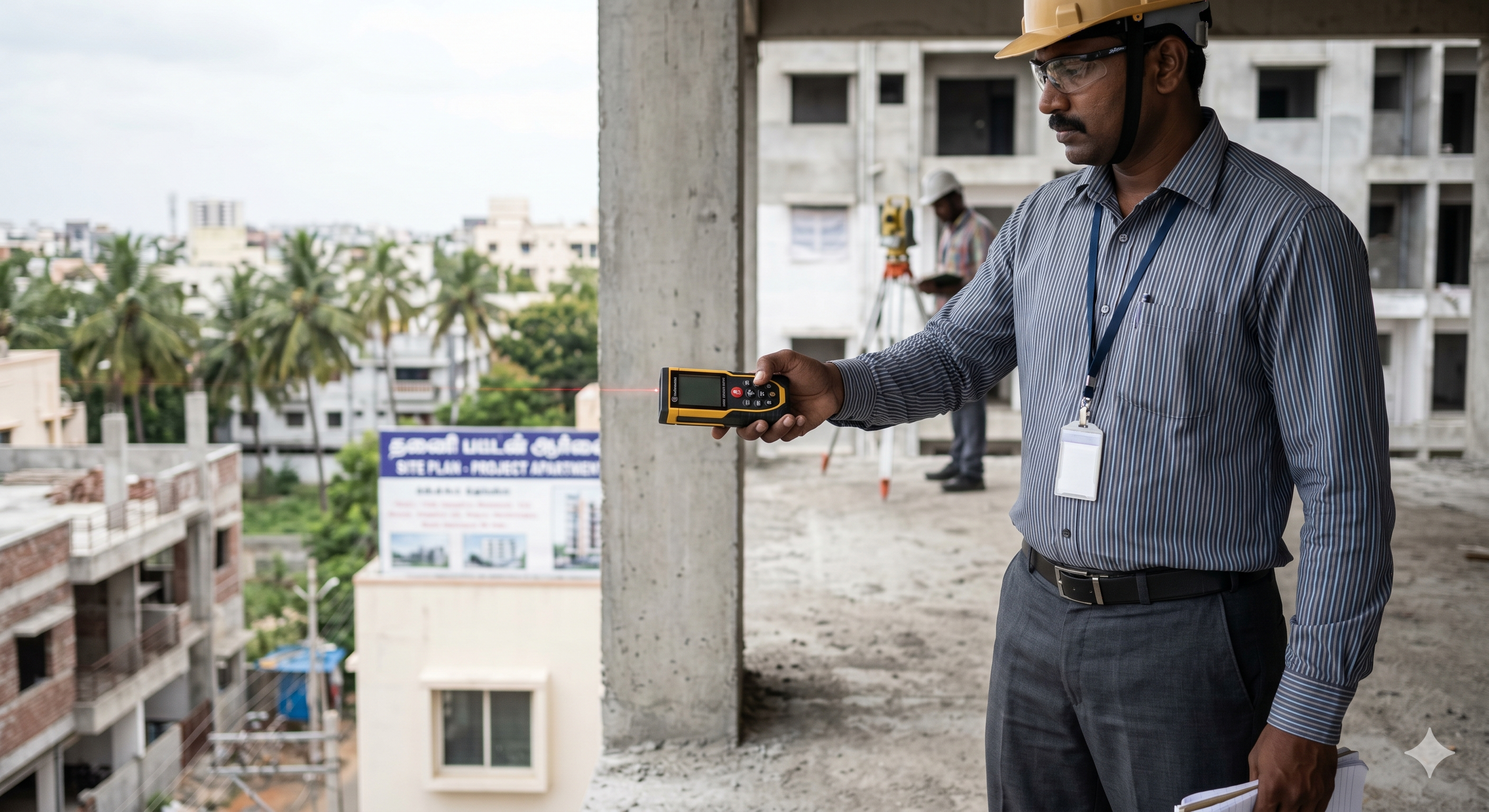
Laser Distance Meters
- Handheld units for rapid, single-operator distance measurement.
- Calculates area, volume, and complex Pythagorean triangulations instantly.
- Replaces sagging steel tape measures over long spans.
Access Catalog
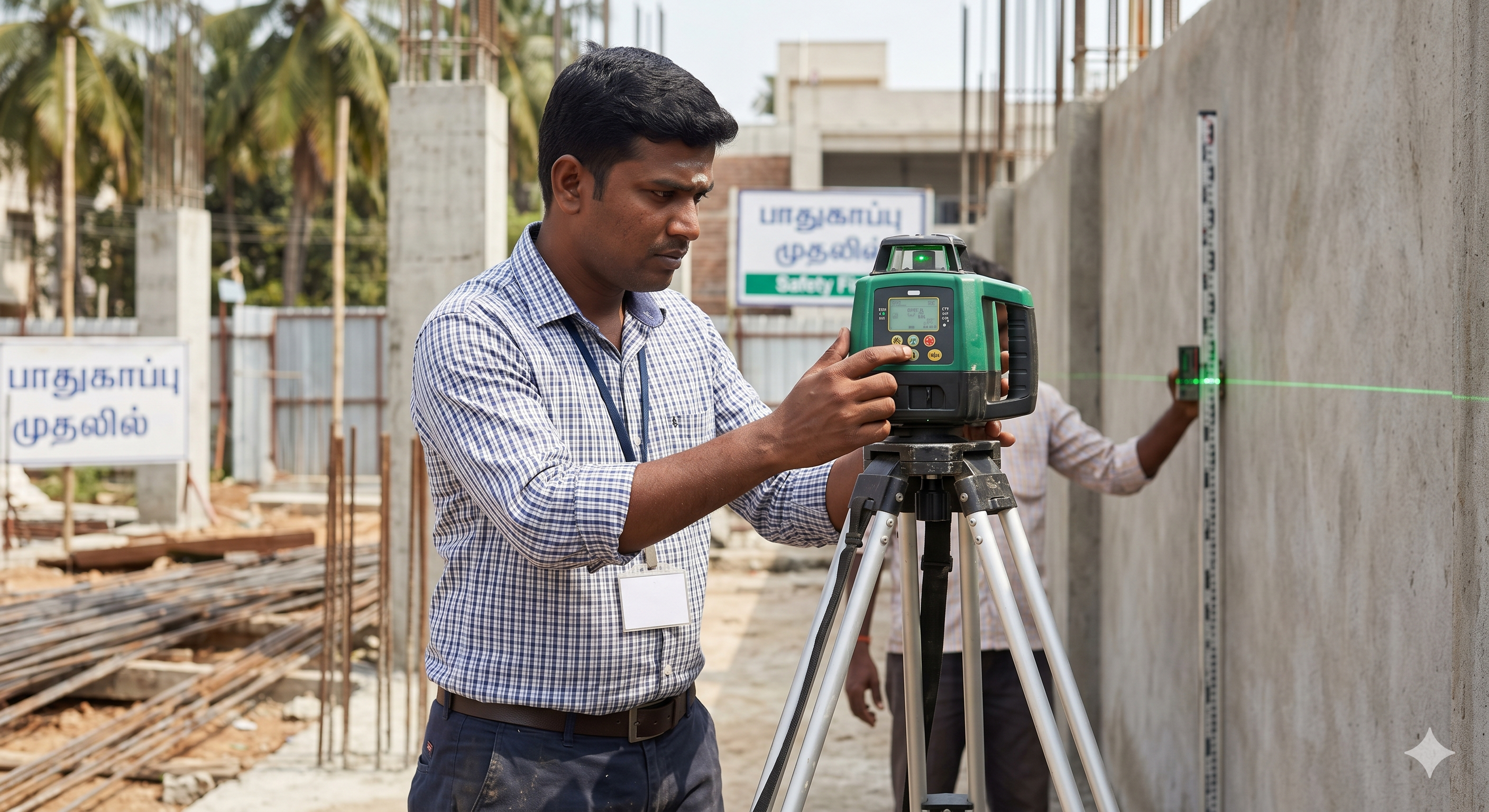
Laser Levels
- Projects high-visibility laser lines (Red/Green) across work sites.
- Includes rotary lasers for 360-degree room grading and alignment.
- Essential for dropping ceilings, laying pipe, and pouring slabs.
Access Catalog
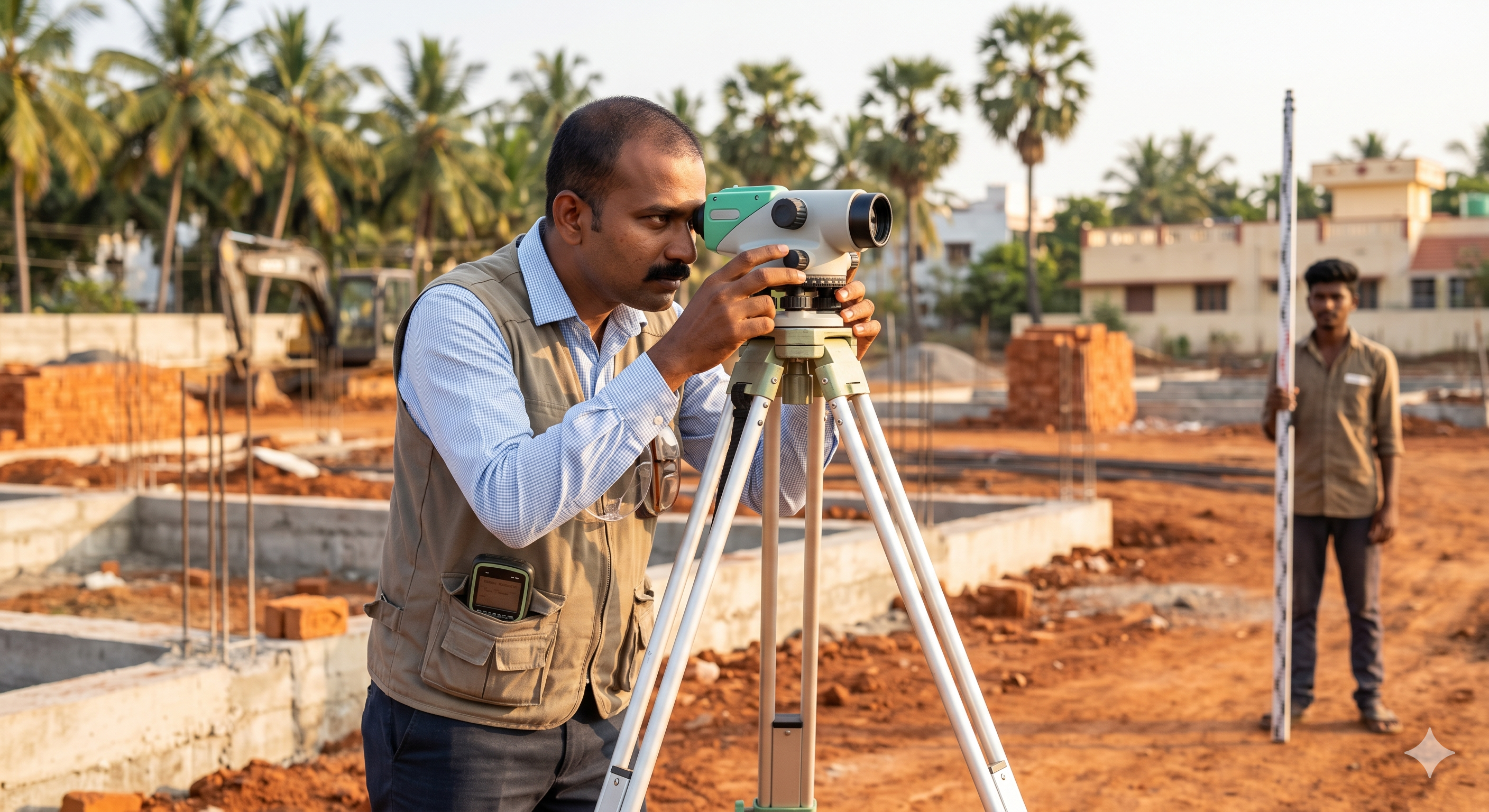
Digital Levels
- Electronically reads bar-coded leveling staffs to eliminate human error.
- Automatically calculates and logs elevation differences in memory.
- Drastically speeds up field operations in low-light conditions.
Access Catalog
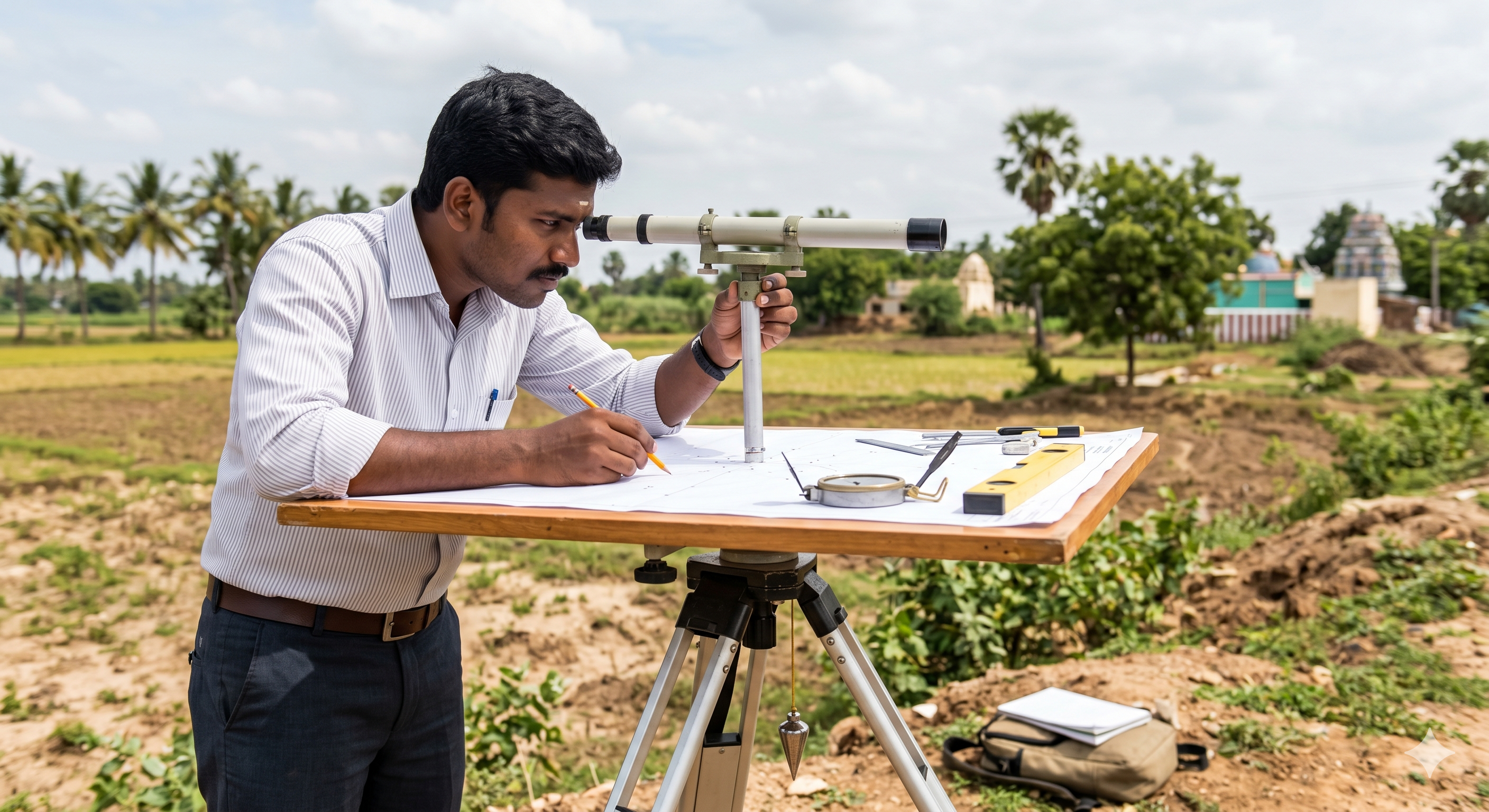
Plane Table Survey
- Traditional graphical surveying method for small-scale mapping.
- Plotting and field observation are executed simultaneously.
- Includes Alidades, plumb bobs, U-forks, and sturdy drawing boards.
Access Catalog

Measuring Wheels
- Records distance as the user walks along a continuous path.
- Ideal for estimating road lengths, fencing, and pipeline routing.
- Features large mechanical counters and kickstands for easy stopping.
Access Catalog
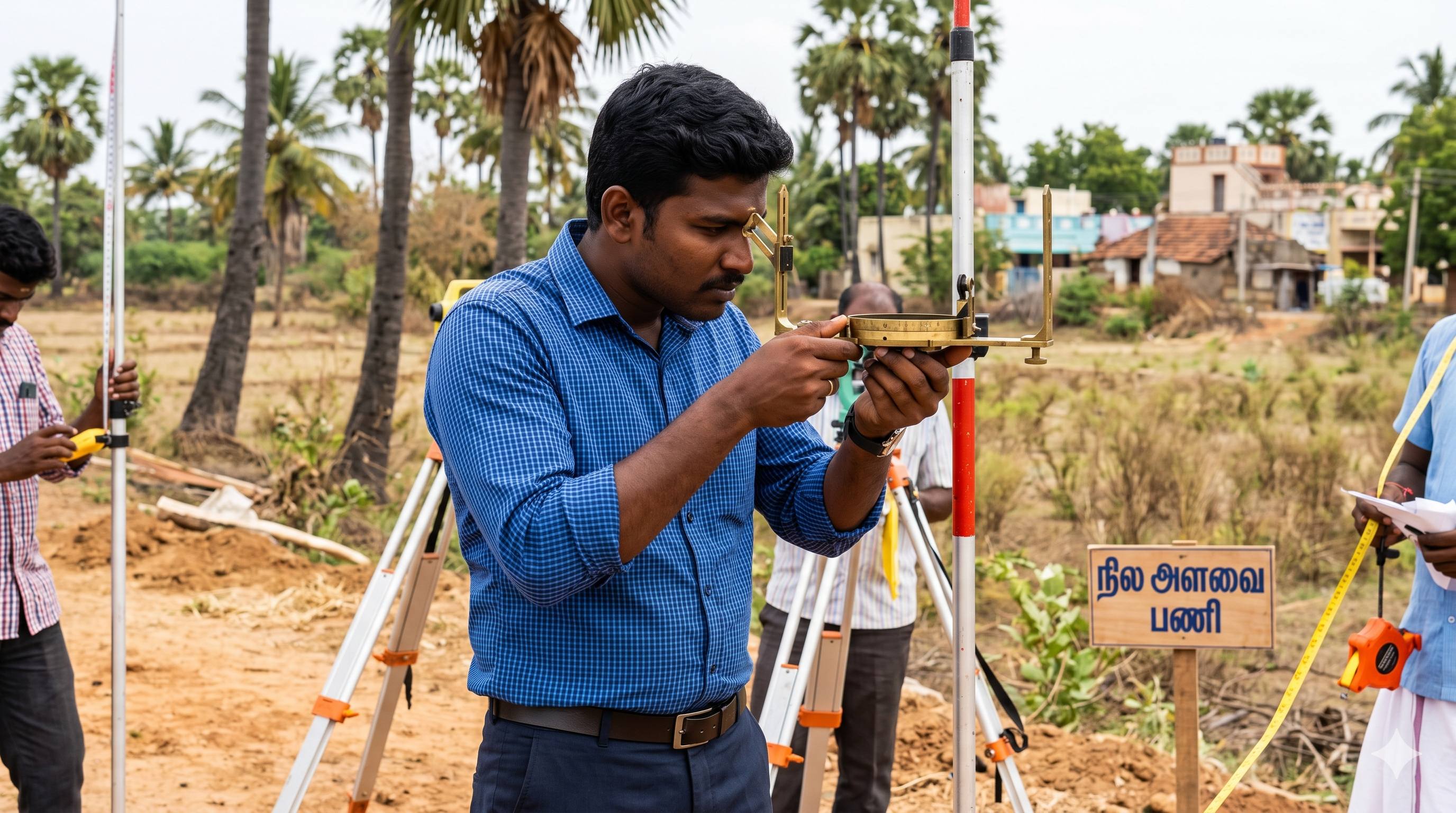
Prismatic Compasses
- Determines magnetic bearings directly through a built-in prism.
- Used for initial rough traversing and forestry orientation.
- Liquid-damped dials settle quickly for faster readings.
Access Catalog
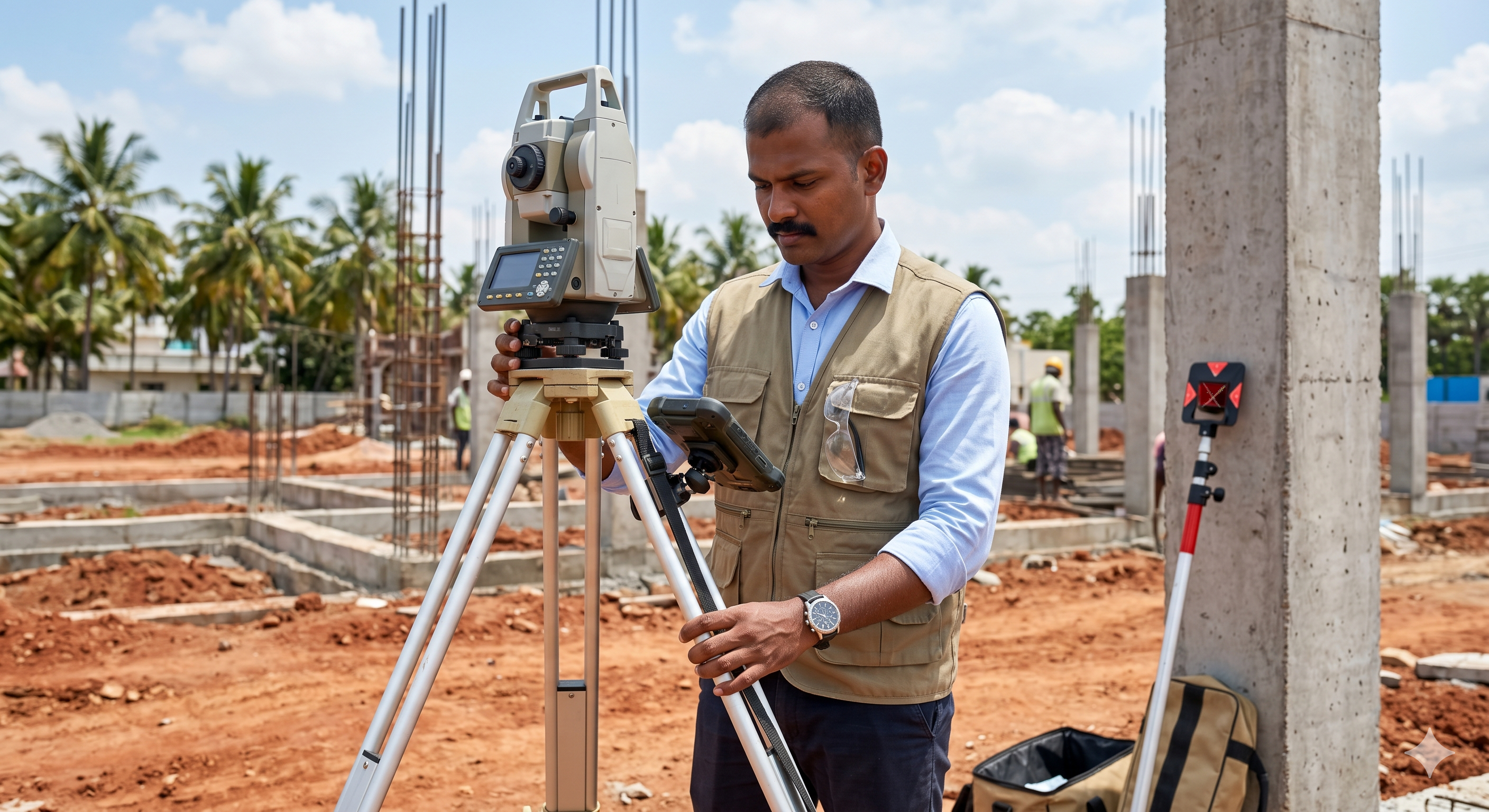
Survey Tripods & Access.
- Heavy-duty aluminum and wooden platforms for instrument mounting.
- Ensures absolute stability against wind vibration and ground shift.
- Includes tribrachs, prisms, target plates, and carrying cases.
Access Catalog
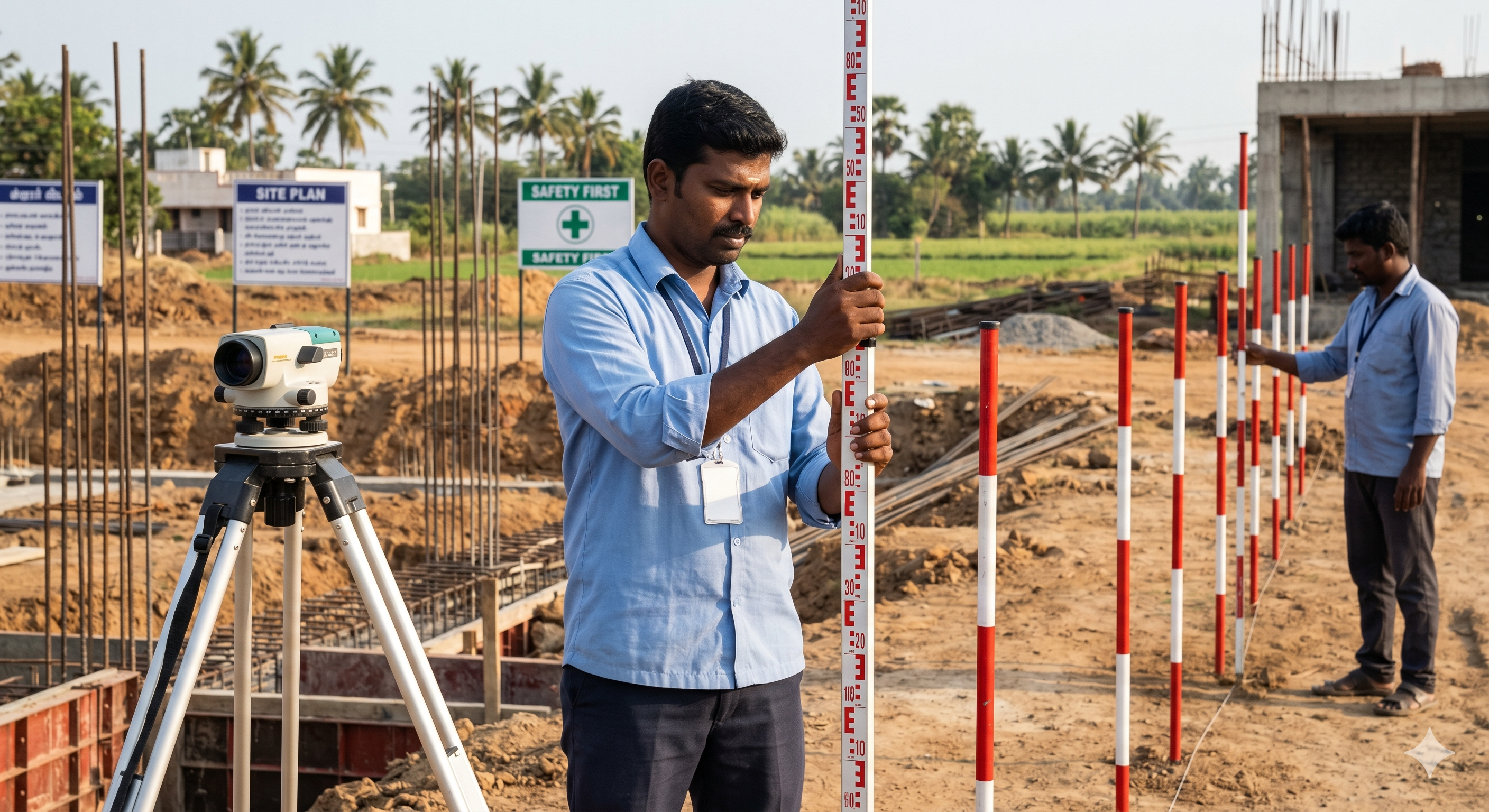
Staffs & Ranging Rods
- Telescopic aluminum rods marked with high-visibility graduations.
- Essential companion for Auto Levels and Theodolites.
- Ranging rods used for marking intermediate points on a survey line.
Access Catalog
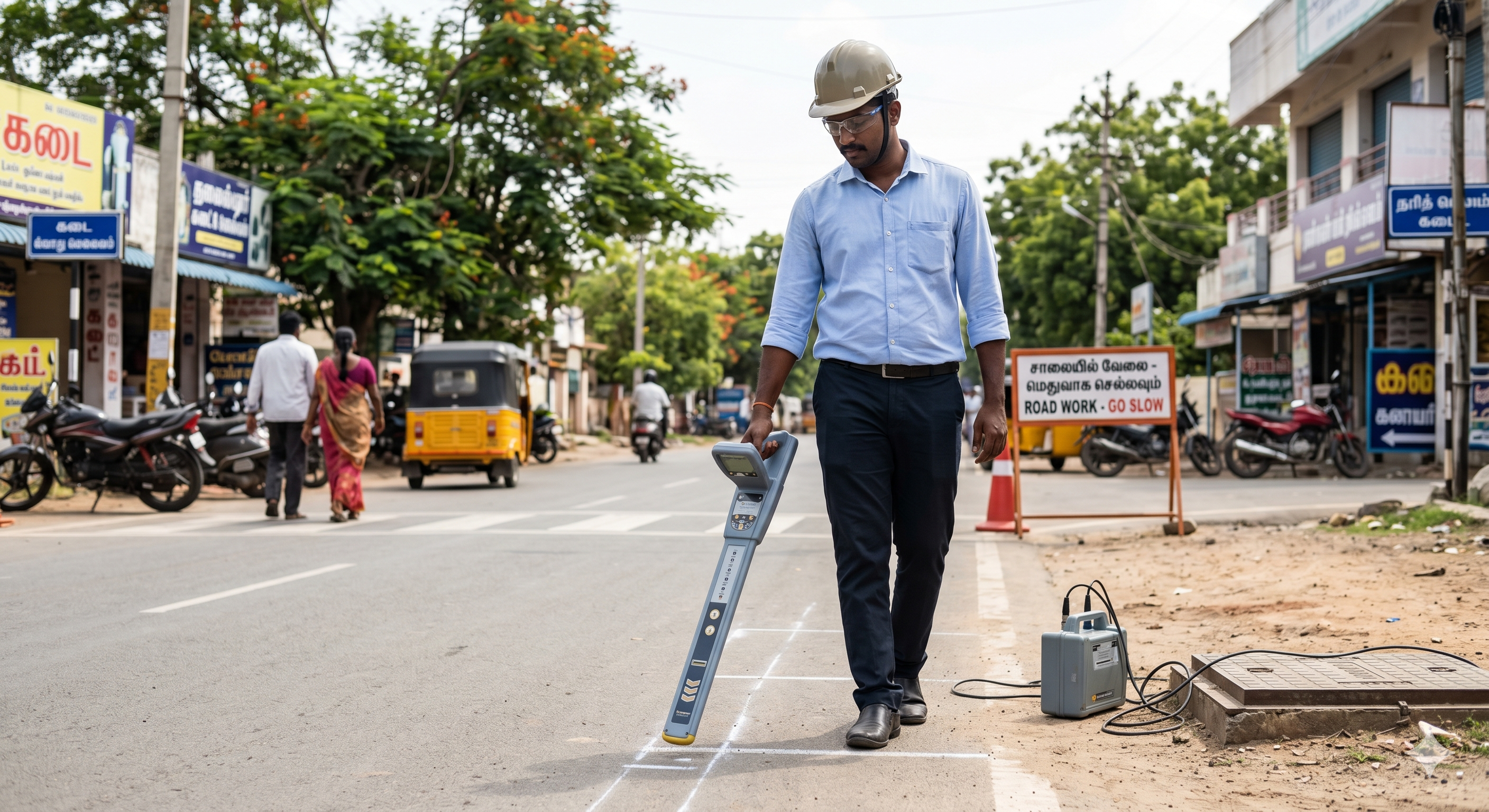
Utility Locators
- Electromagnetic scanners for tracing buried pipes and live cables.
- Crucial safety equipment to prevent utility strikes before excavation.
- Determines the exact depth and trajectory of subterranean networks.
Access Catalog
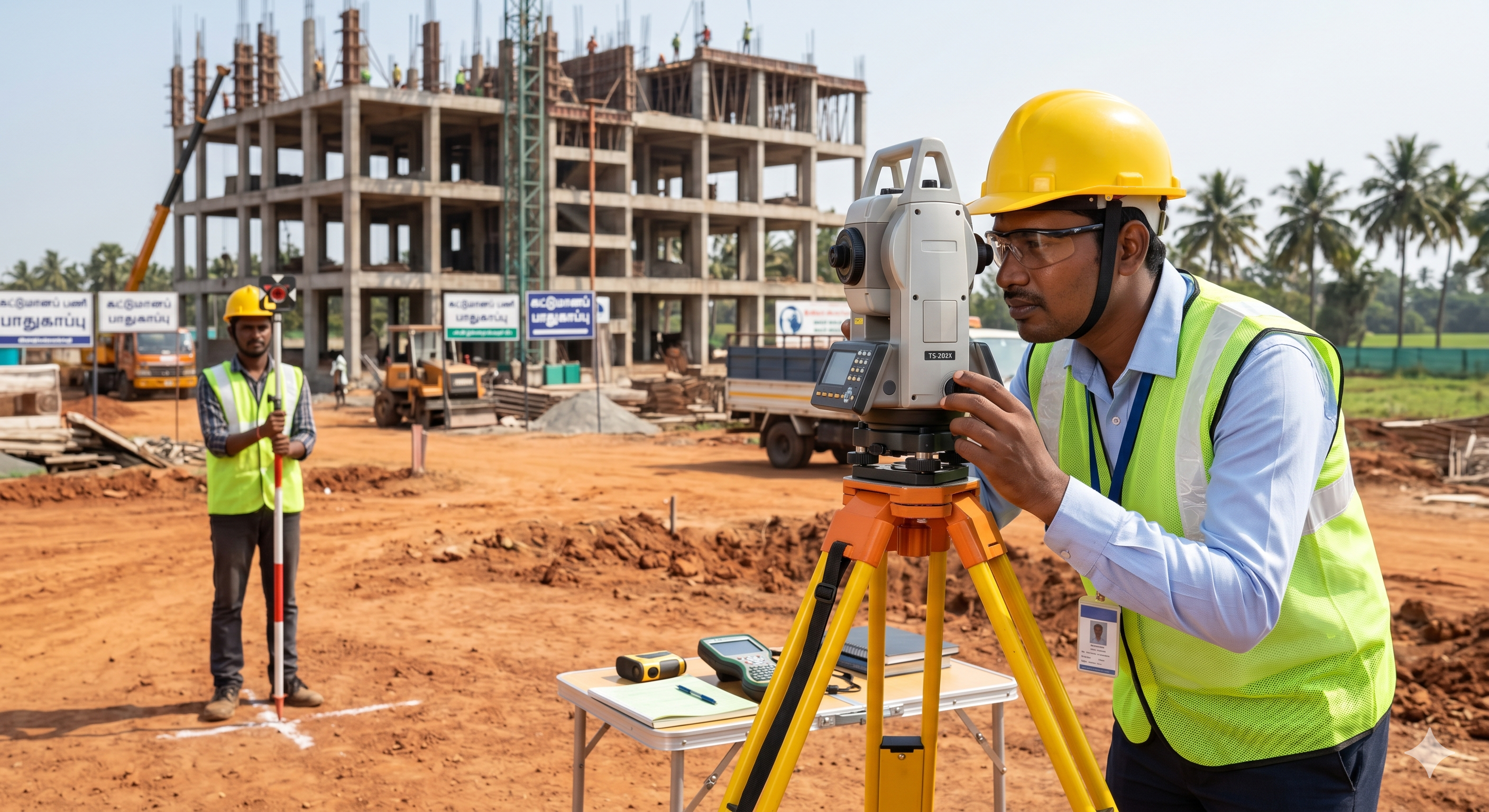
Construction Site Survey
- Comprehensive toolkits encompassing all layout and alignment basics.
- Includes plumb bobs, optical squares, spirit levels, and marking paints.
- Ensures structural foundations are perfectly squared and leveled.
Access Catalog
No Categories Found
Try adjusting your search terminology.
Surveying Metrology Protocol
Critical parameters that define the accuracy, range, and environmental resilience of topographic instrumentation.
| Instrument Type | Primary Metric | Operational Impact & Usage |
|---|---|---|
| Total Stations | Angular Accuracy (Seconds) | Defines the potential error margin over distance; 1-second or 2-second accuracy is required for massive infrastructure. |
| Auto Levels | Magnification (e.g., 32x) | Higher magnification ensures the surveyor can distinctly read staff graduations at distances exceeding 100 meters. |
| RTK GPS Rovers | Positioning Accuracy (mm) | Determines how closely the digital coordinates match true geographic positioning via satellite correction data. |
| Laser Distance Meters | Effective Range (Meters) | Specifies the maximum distance a laser pulse can reflect off a target and return readable data without a prism. |
| All Electronic Survey Gear | IP Rating (e.g., IP65) | Ensures the internal optics and electronics are sealed against monsoon rains and abrasive construction dust. |
Global Calibration Standards
Our instruments guarantee precision measurement in accordance with major international civil engineering and metrology standards.
Digital Integration & GIS
Transition from manual field books to seamless cloud-based topography.
- Direct export to AutoCAD and Civil 3D
- Real-time kinematic (RTK) corrections
- Cloud-syncing for instant office processing