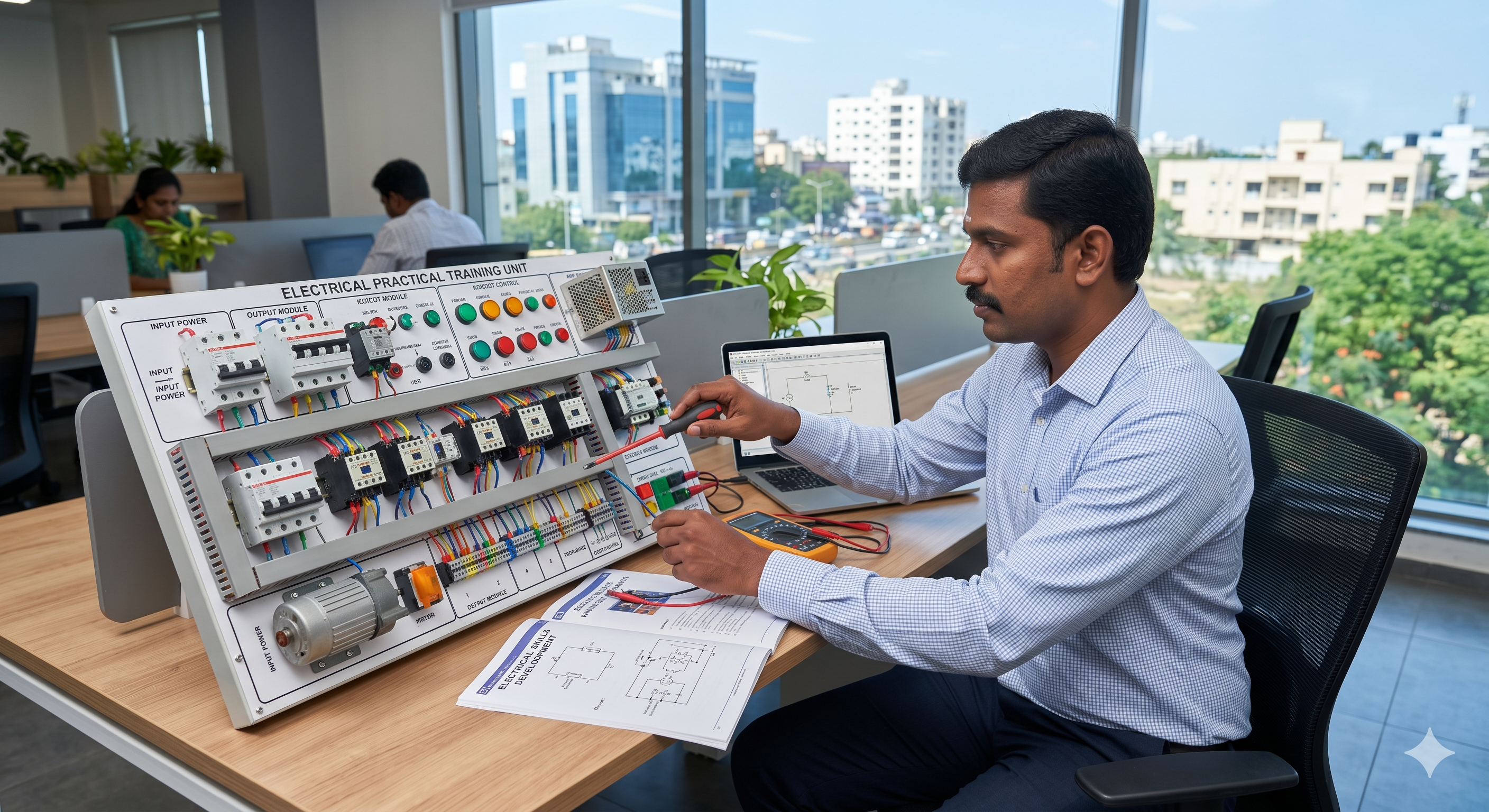
- Comprehensive panels for basic to advanced electrical wiring.
- Includes motor control, transformer studies, and power grid simulation.
- Ensures students master essential safety and grounding protocols.
- Interactive breadboard systems for analog and digital circuitry.
- Study logic gates, operational amplifiers, and power electronics.
- Designed to simplify complex PCB troubleshooting techniques.
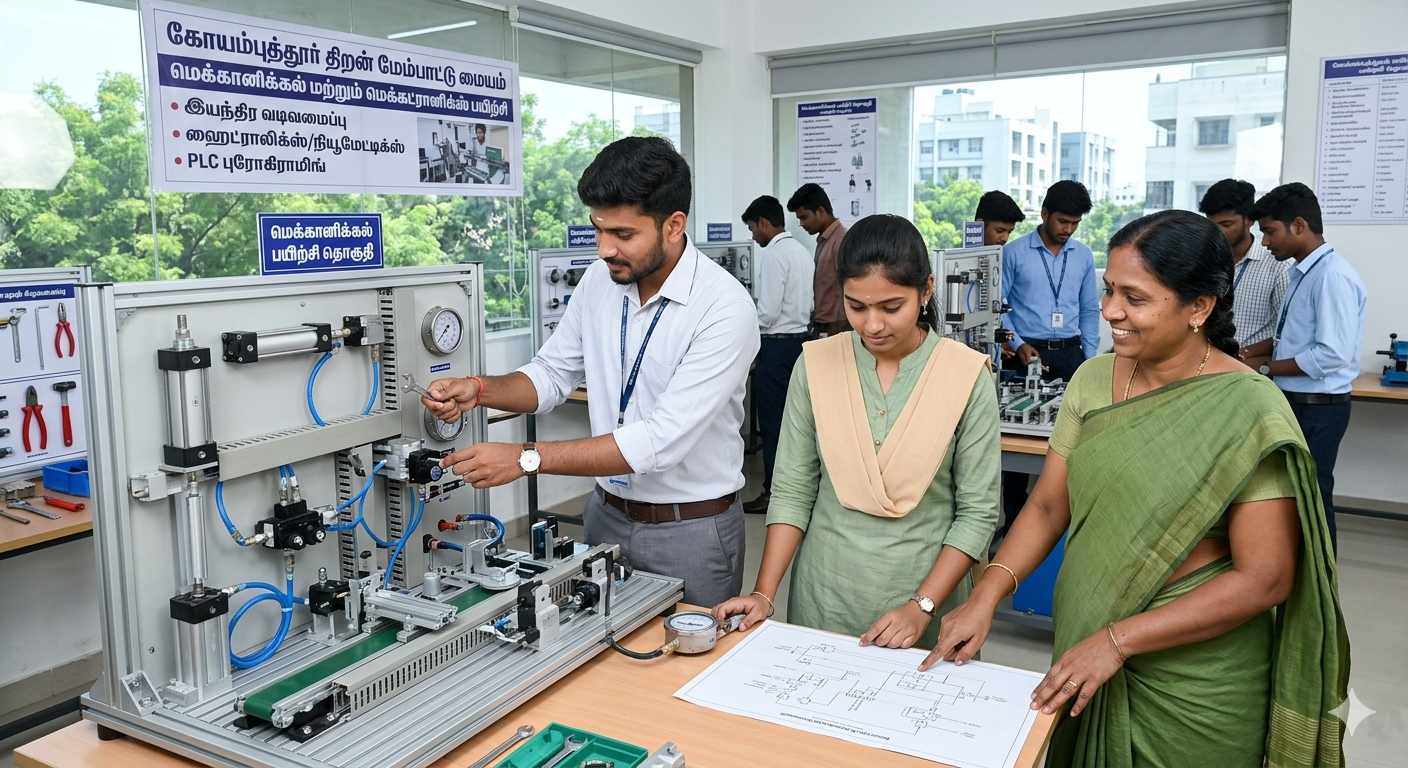
- Fundamentals of gears, linkages, and mechanical power transmission.
- Hands-on assembly modules for heavy-duty industrial components.
- Focuses on alignment, tolerancing, and preventive maintenance.
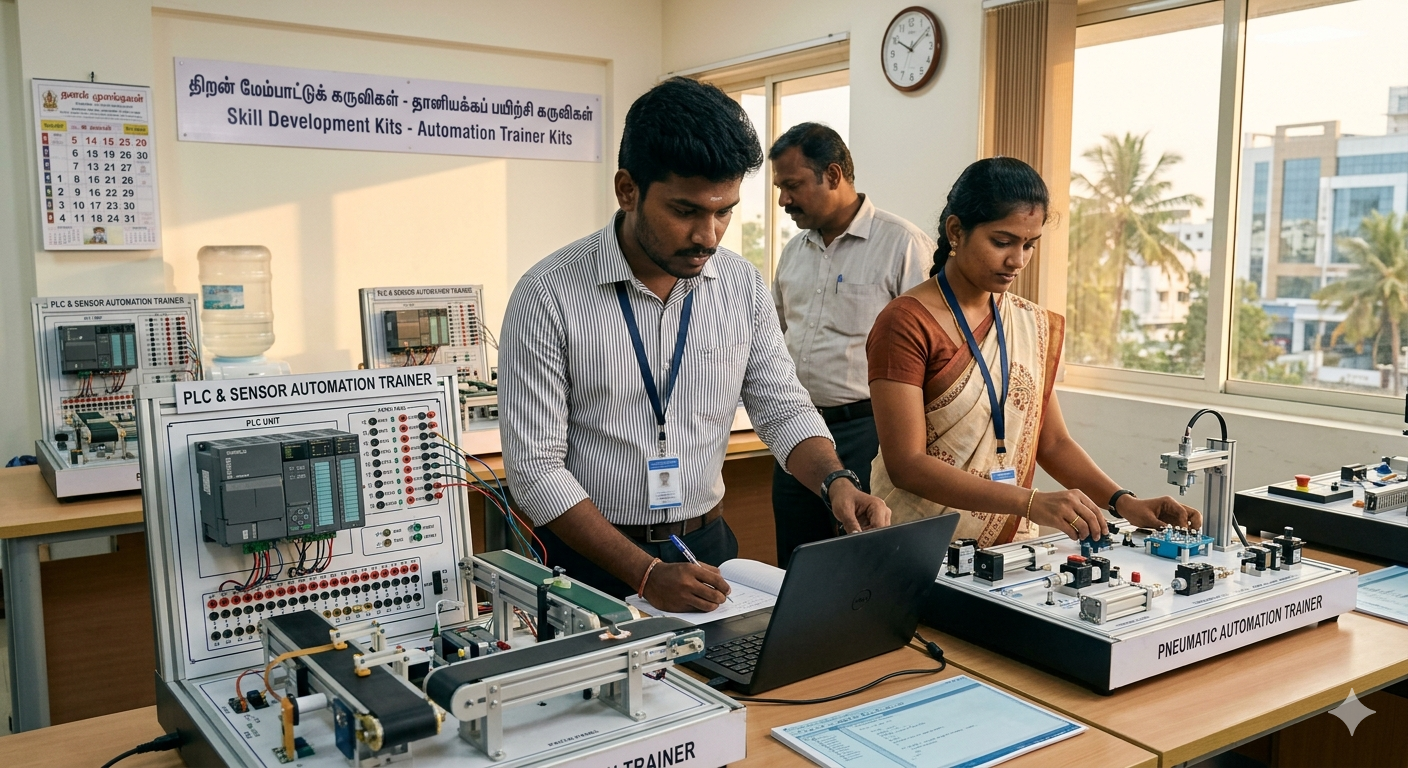
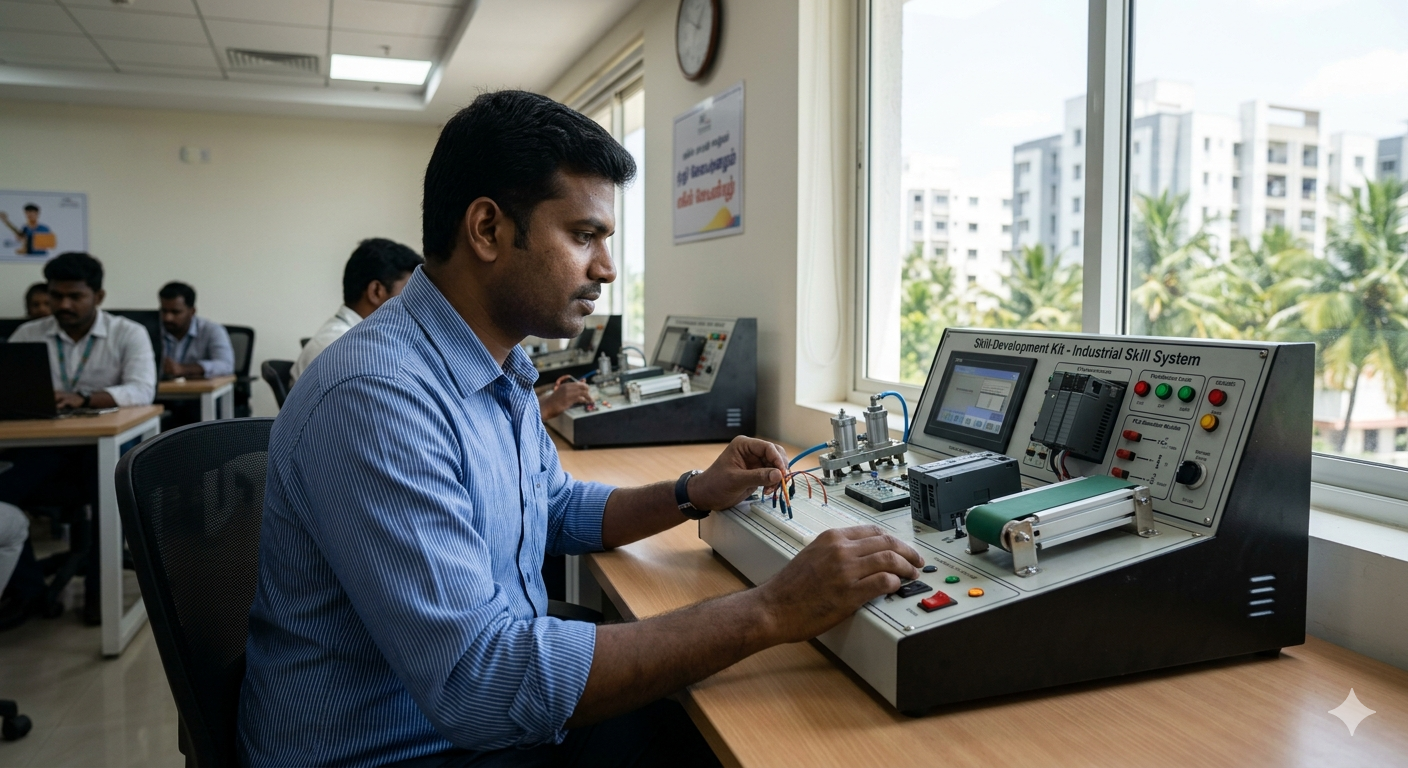
- Simulates automated assembly lines and conveying systems.
- Teaches sensor integration, actuator logic, and sorting mechanics.
- Prepares students for modern smart factory environments.
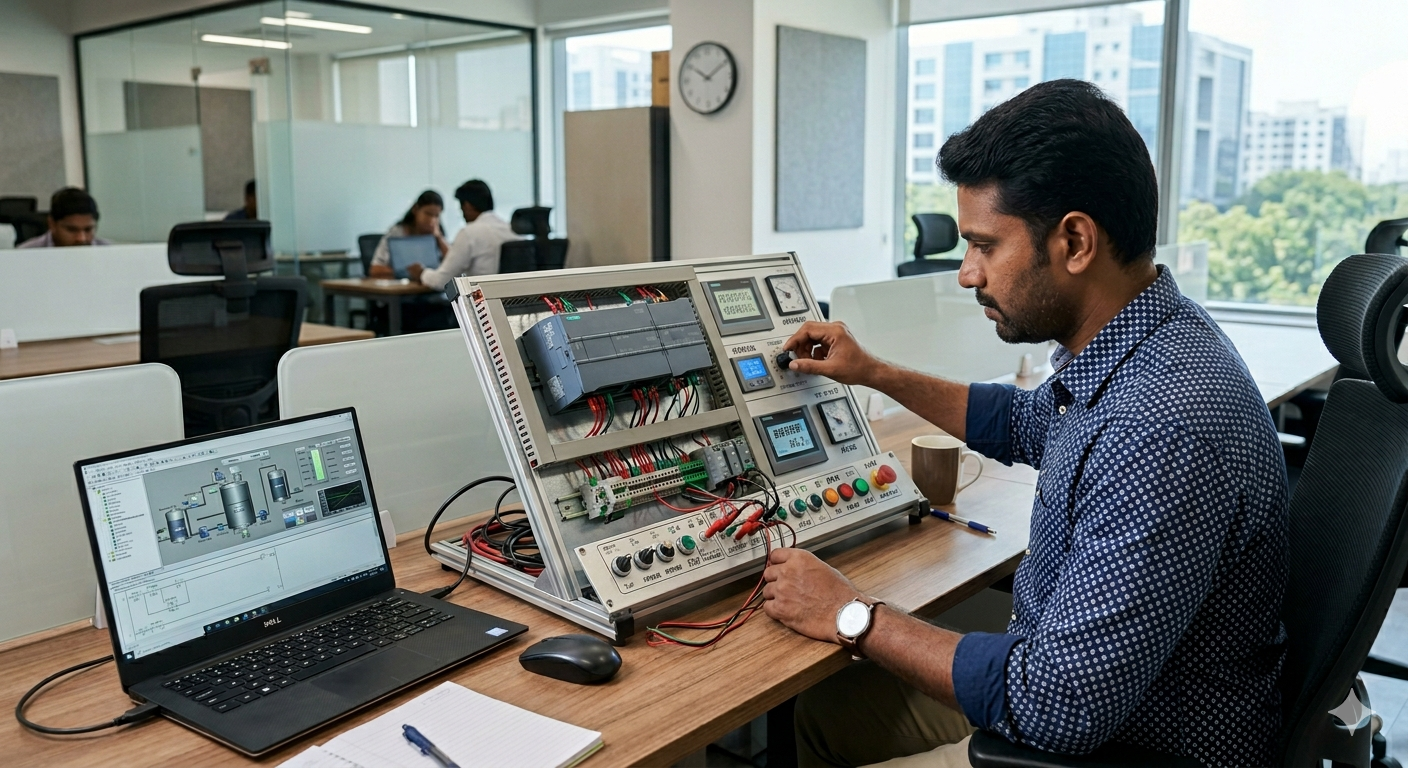
- Programmable Logic Controller setups from leading industrial brands.
- Includes HMI touch panels and SCADA software for data visualization.
- Essential for writing ladder logic and controlling complex processes.
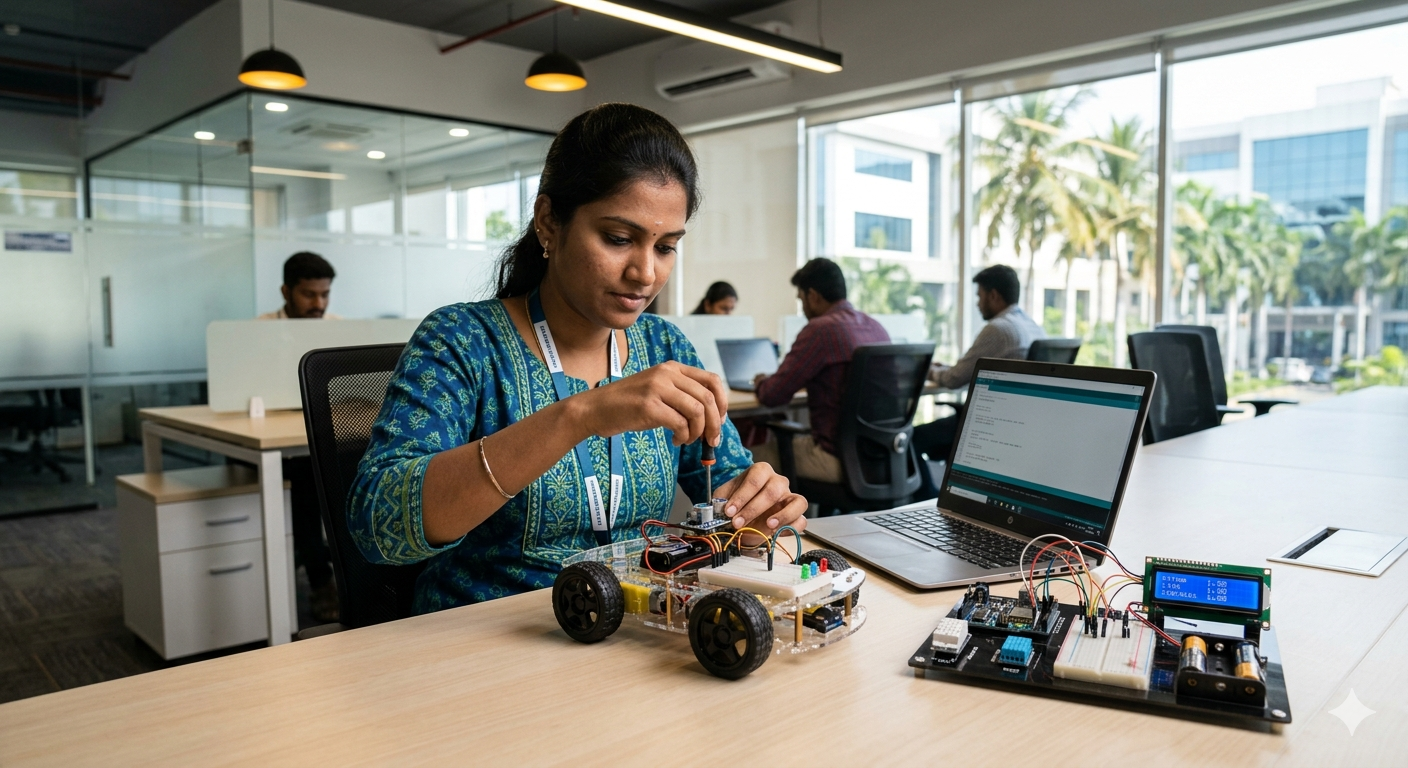
- Build and program autonomous robotic arms and mobile rovers.
- Integrates cloud connectivity for Internet of Things (IoT) data logging.
- Focuses on servo kinematics, Python programming, and smart sensors.
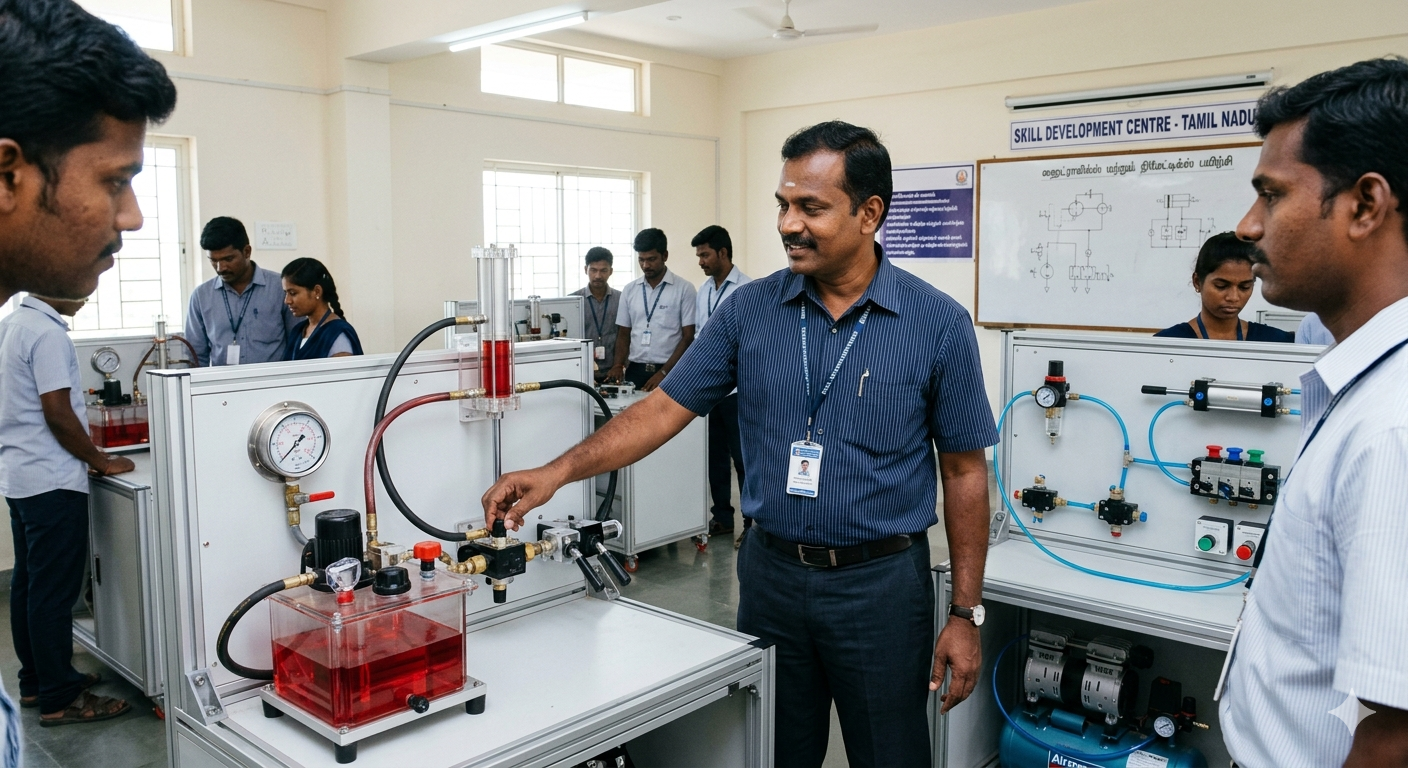
- Hands-on fluid power systems with industrial-grade compressors/pumps.
- Build logic circuits using directional control valves and actuators.
- Crucial for understanding heavy machinery operation and safety.
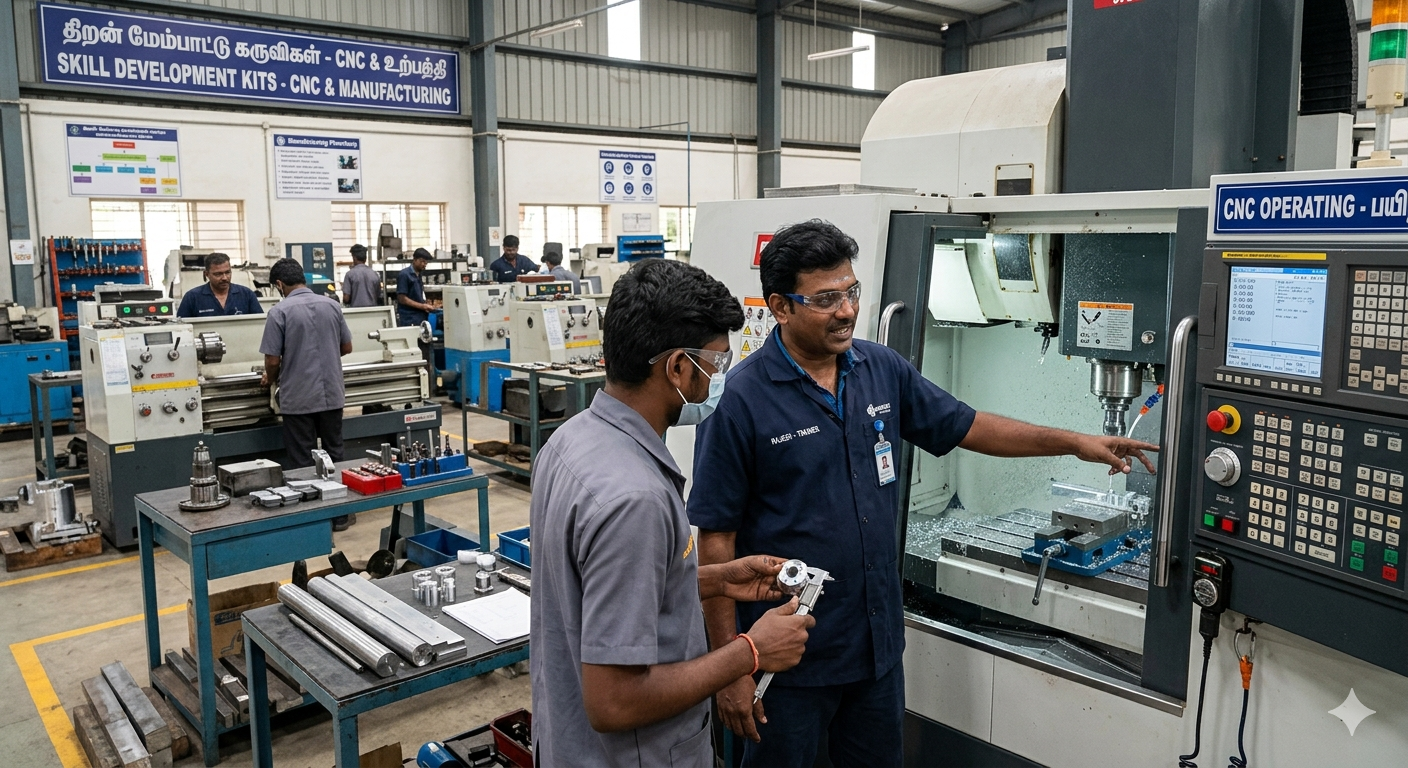
- Desktop-sized milling and lathe machines optimized for safe learning.
- G-code programming, toolpath simulation, and precise material cutting.
- Bridges CAD design software directly with physical manufacturing.
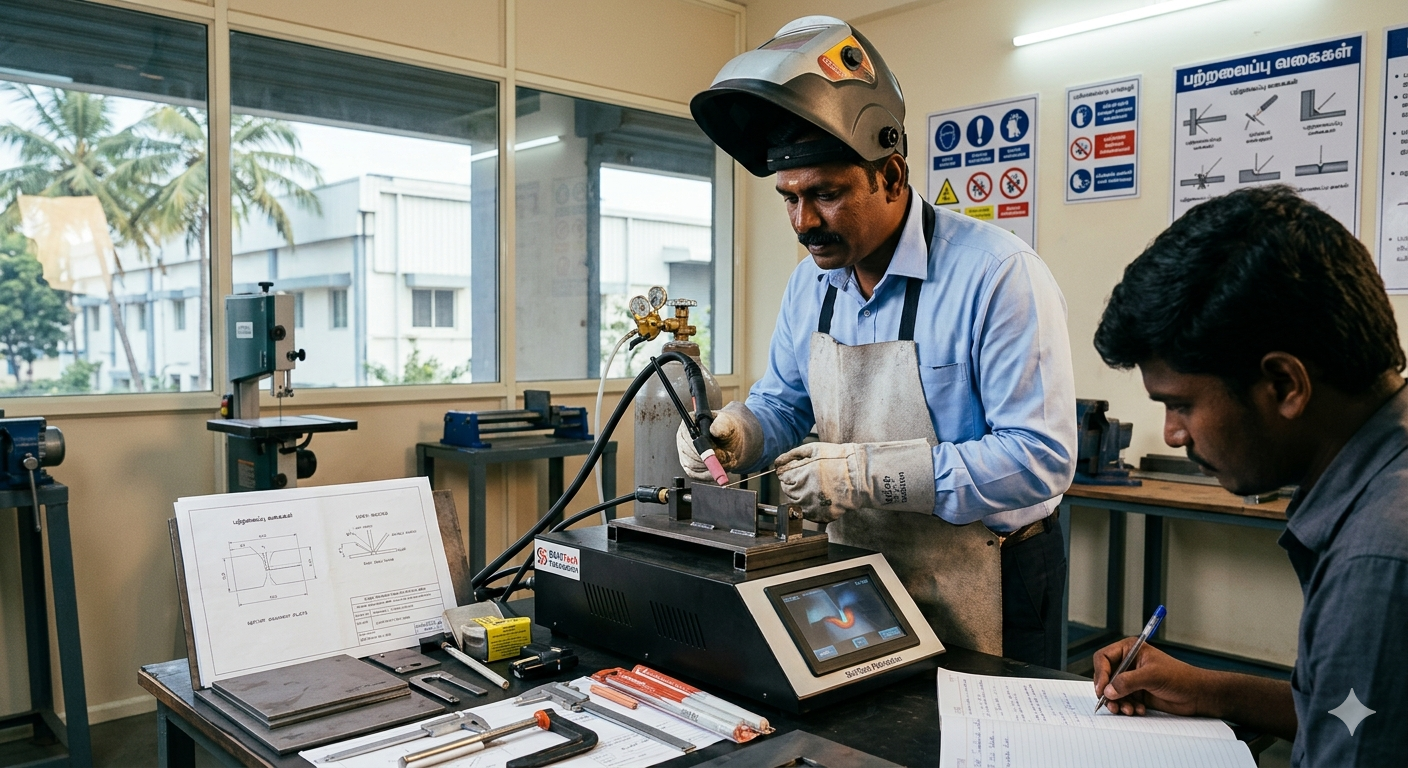
- Features Augmented Reality (AR) simulators for zero-risk weld training.
- Includes physical stations for mastering Arc, MIG, and TIG techniques.
- Provides real-time feedback on travel speed, angle, and arc length.
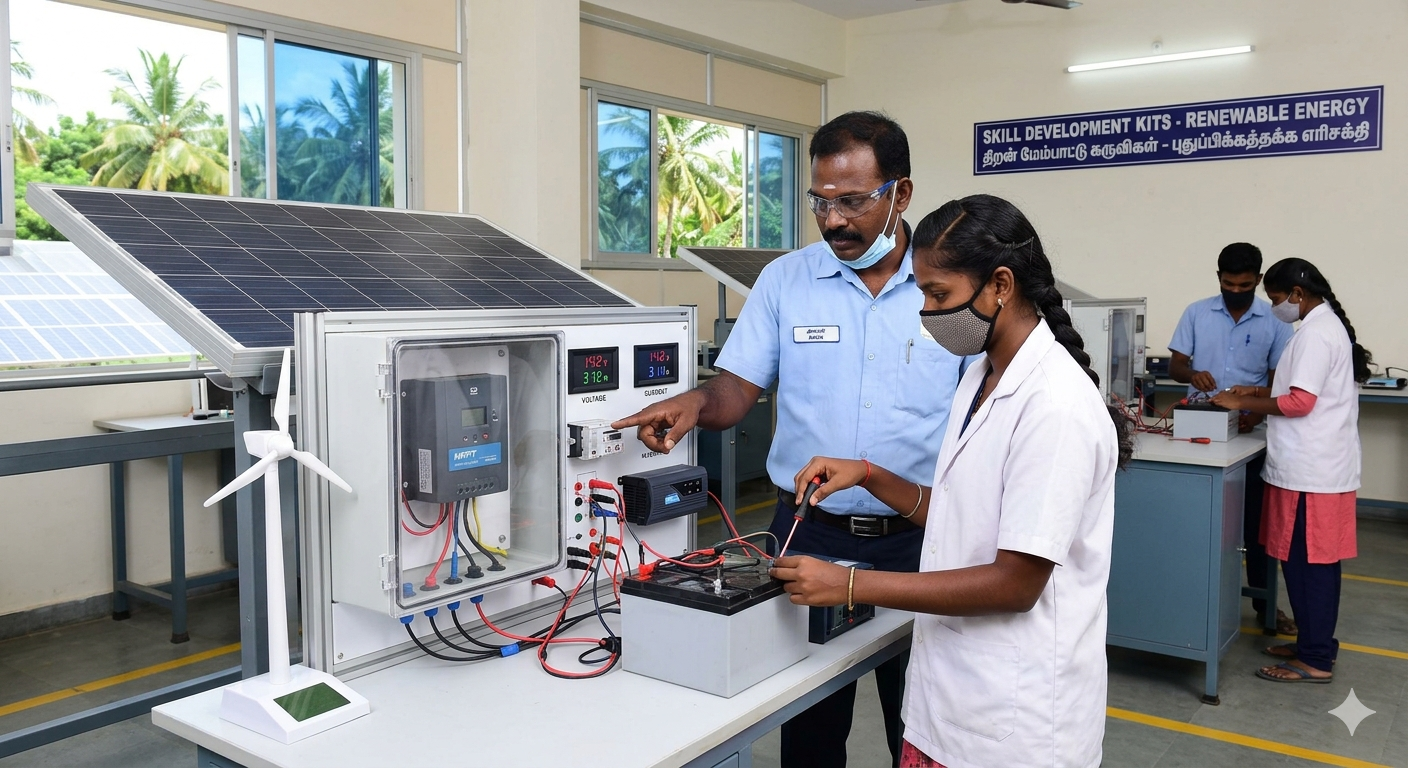
- Interactive solar PV arrays and miniature wind turbine generators.
- Study energy storage, charge controllers, and grid synchronization.
- Crucial for preparing technicians for the green energy transition.
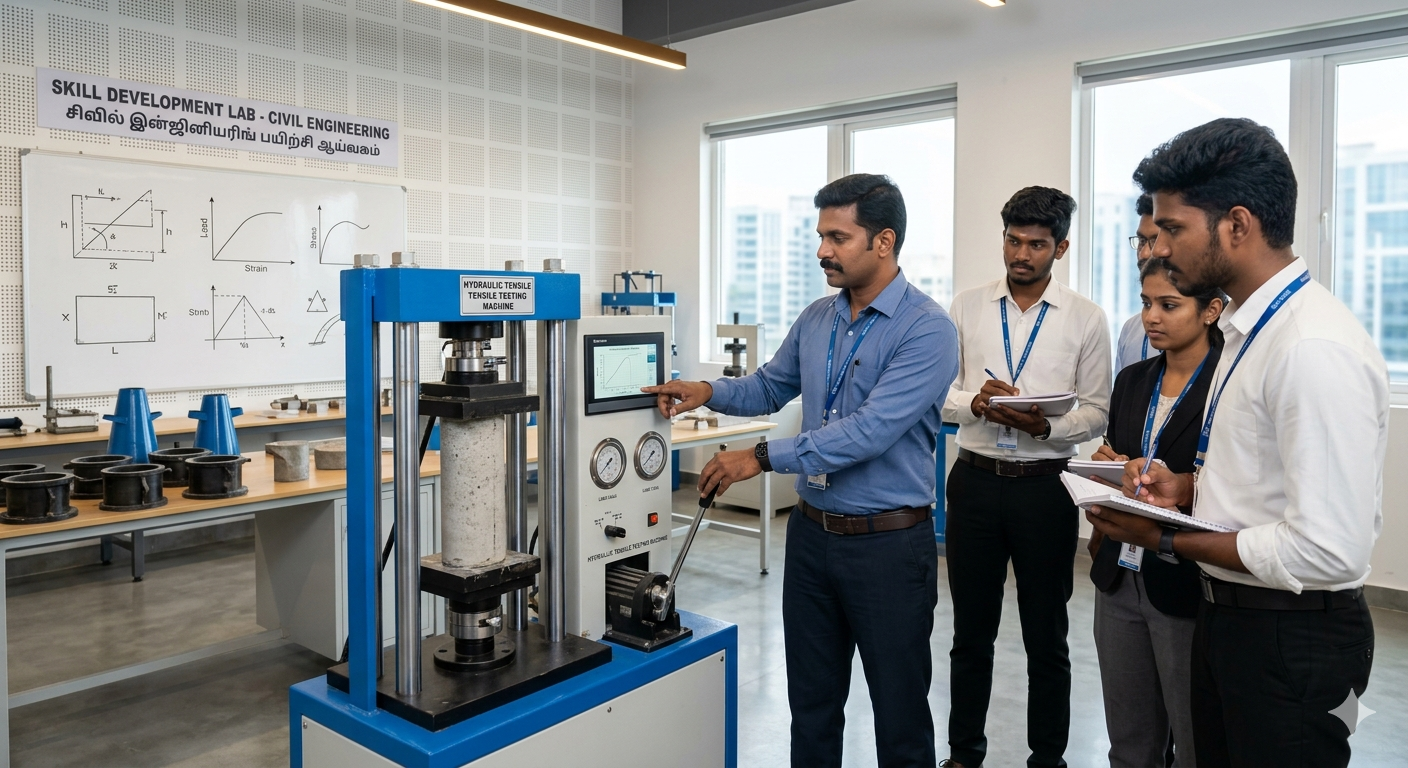
- Tools for surveying, leveling, and basic structural analysis.
- Includes scaled bridge models and material strength testing basics.
- Ideal for introducing infrastructural design and site management.
- Working cutaways of modern internal combustion engines and gearboxes.
- Fault-simulation panels for automotive electrical and HVAC systems.
- Includes dedicated modules for EV (Electric Vehicle) powertrains.
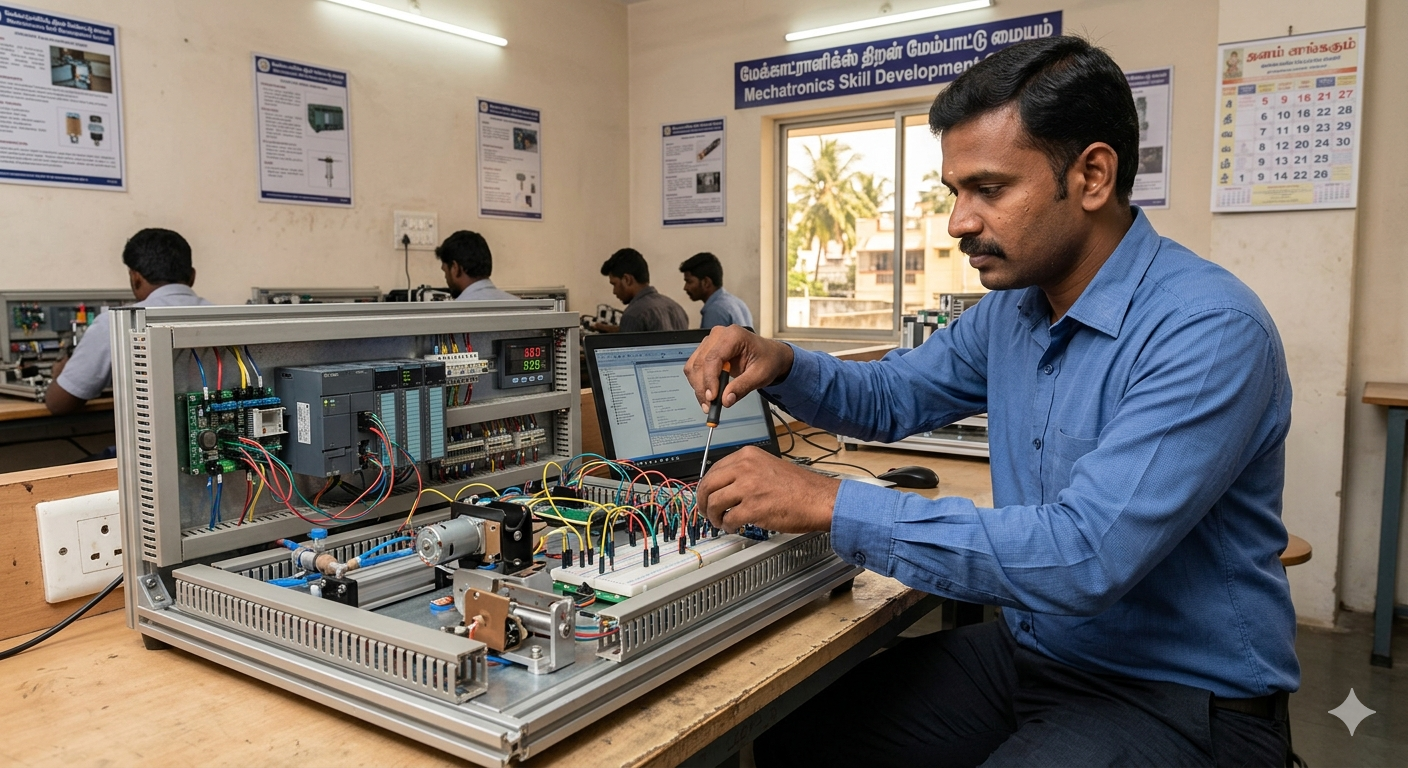
- The ultimate convergence of mechanical, electrical, and software skills.
- Multi-station modular production systems (MPS) for advanced logic.
- Develops holistic systems-thinking for complex machine design.
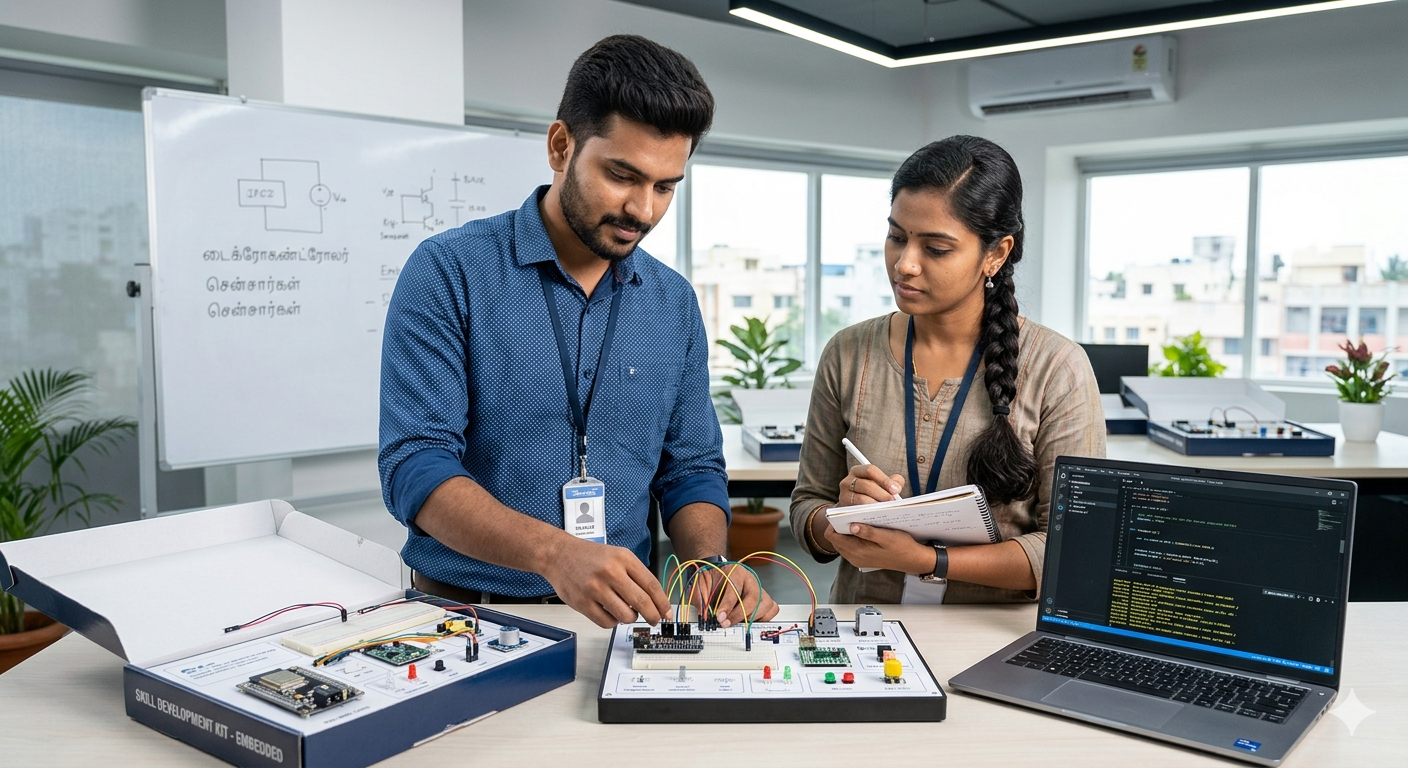
- Hardware platforms based on ARM Cortex, PIC, and AVR microcontrollers.
- Focuses on real-time operating systems (RTOS) and firmware coding.
- Interfaces with LCDs, keypads, ADCs, and communication protocols.
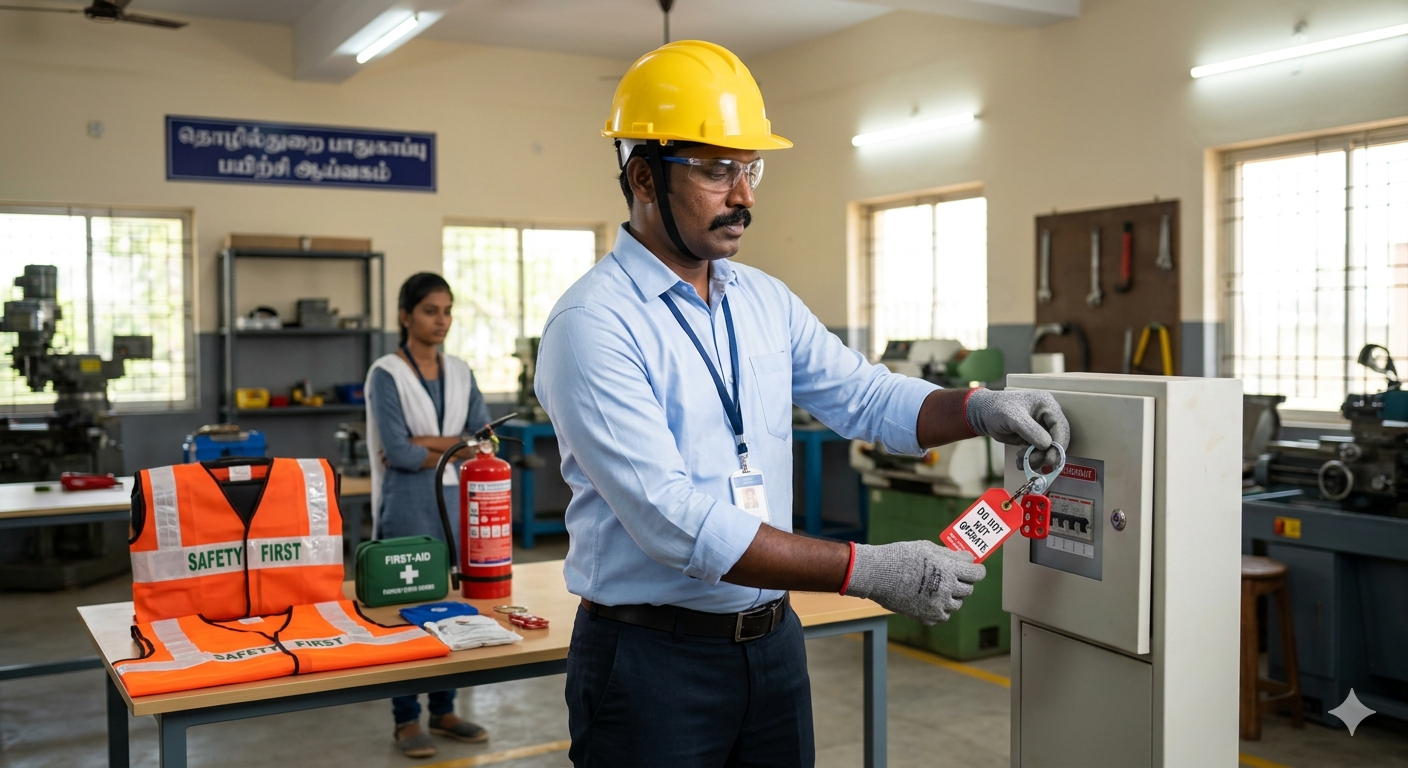
- Simulates hazardous environments and Lockout/Tagout (LOTO) procedures.
- Training on gas detection, fall protection gear, and emergency stops.
- Ensures compliance with global occupational safety standards.

- Foundational physics, chemistry, and math demonstration models.
- Engaging, safe science experiments for secondary education levels.
- Sparks early interest in Science, Technology, Engineering, and Math.
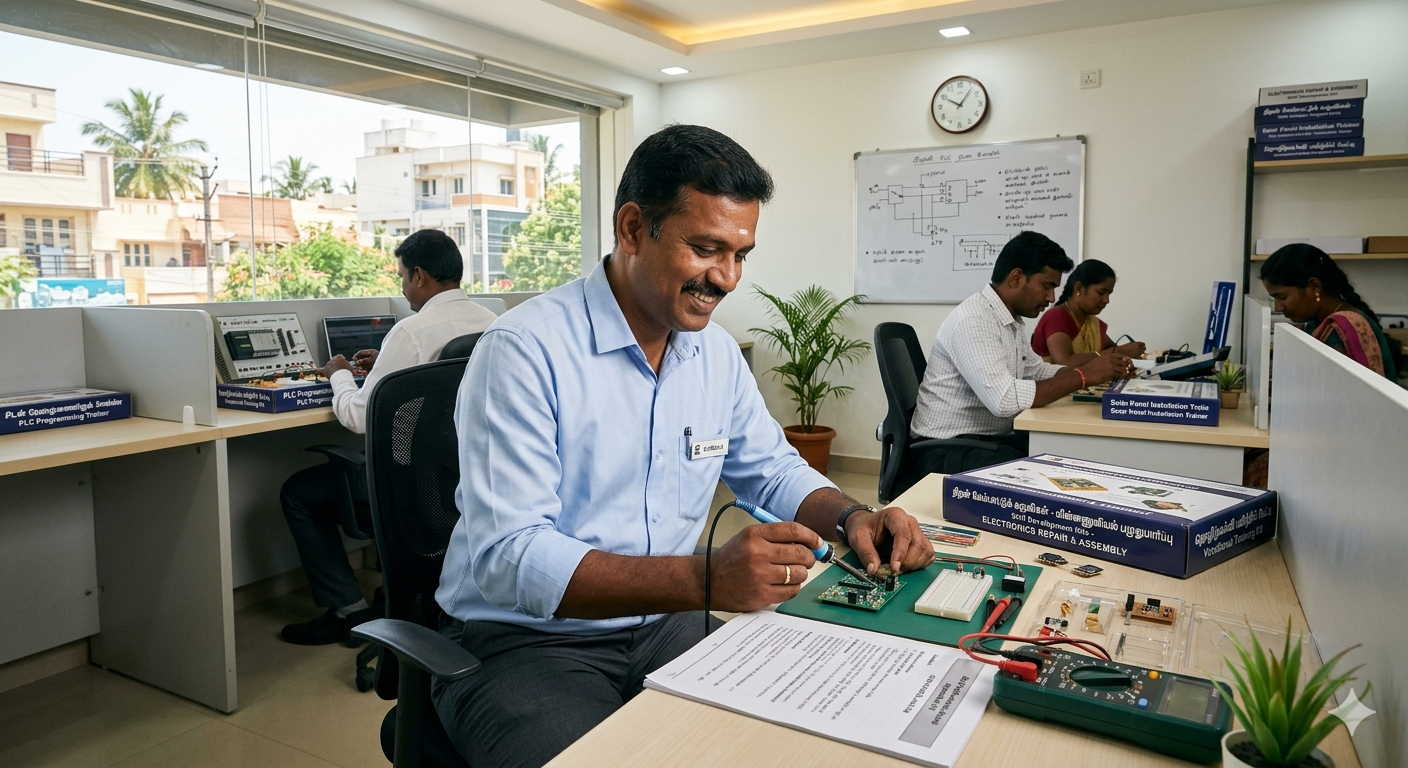
- Skill-specific kits for plumbing, carpentry, and masonry basics.
- Focuses on precision hand-tool usage, measurement, and safety.
- Directly prepares students for immediate entry into skilled trades.
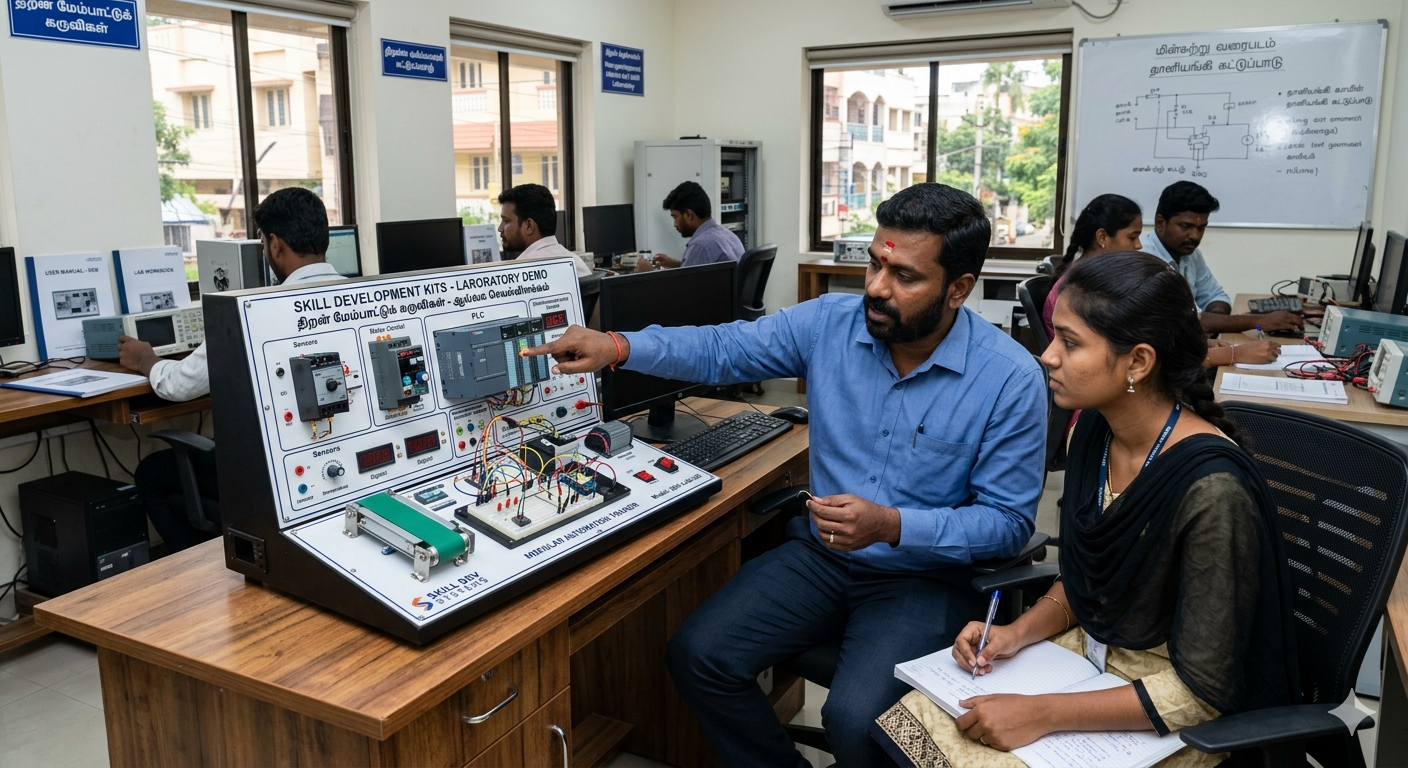
- Clear, oversized models designed for classroom visibility.
- Demonstrates complex molecular structures and physical phenomena.
- Enhances theoretical lectures with tangible, visual aids.
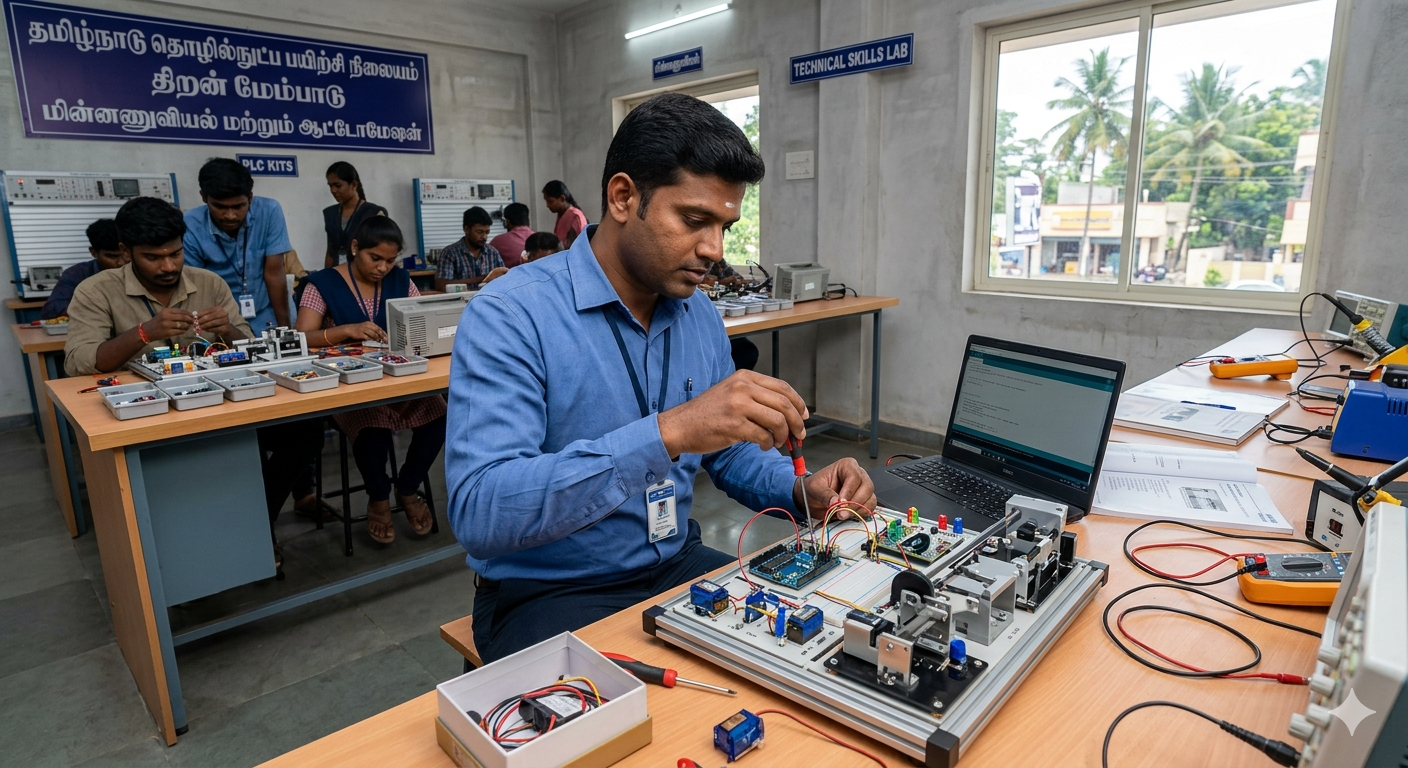
- Broad-spectrum engineering kits covering thermodynamics to materials.
- Standardized curriculum alignment for university lab requirements.
- Robust construction to withstand years of student handling.
- Full-scale, multi-technology systems mirroring actual factory floors.
- Integrates pneumatic, electrical, and PLC control into one station.
- The ultimate capstone training for industrial maintenance technicians.
Enterprise Skill Development Framework
The modern industrial landscape demands highly skilled technicians who can seamlessly integrate mechanical, electrical, and software systems. Our skill development framework accelerates the transition from classroom theory to factory floor competency.
Industry 4.0 Readiness
Usage: SCADA, IoT & AutomationWe equip students for the Fourth Industrial Revolution. Our advanced kits feature networked PLCs, cloud-based data logging, and smart sensors to teach the architecture of decentralized, automated "smart factories."
Hands-On Competency
Usage: Vocational & Core EngineeringTheoretical knowledge must be paired with muscle memory. Our training stations require students to physically wire circuits, align mechanical drives, and program logic, building the confidence needed for real-world troubleshooting.
Curriculum Alignment
Usage: Universities & ITI CentersEvery kit is designed in consultation with academic boards and industrial experts. They map directly to standard global curriculums (AICTE, ABET), ensuring educational institutions meet strict accreditation requirements for lab facilities.
Safe Learning Environments
Usage: Welding, High Voltage & CNCWe mitigate the risks of industrial training. Our systems utilize low-voltage control circuits, enclosed CNC workstations, and Augmented Reality (AR) simulators to allow students to learn complex, hazardous skills in absolute safety.
Skill Matrix & Career Pathways
| Training Discipline | Key Equipment Used | Target Industrial Career |
|---|---|---|
| Industrial Automation | PLCs, HMI Panels, SCADA Software | Automation Engineer, Control Systems Tech |
| Mechatronics & Robotics | Modular Production Systems, Robotic Arms | Mechatronics Technician, Robotics Programmer |
| Fluid Power Technology | Hydraulic Benches, Electro-Pneumatics | Heavy Machinery Technician, Maintenance Engineer |
| Automobile & EV | Engine Cutaways, EV Powertrain Simulators | Automotive Diagnostic Tech, EV Service Engineer |
| Advanced Manufacturing | Desktop CNC, AR Welding Simulators | CNC Programmer, Precision Fabricator |
Pedagogical Design Variables
Effective technical education requires more than just parts in a box. Our training systems are architected with pedagogical features designed specifically to accelerate the learning curve and improve retention.
Fault Insertion Capabilities
- Controlled Diagnostics: Instructors can activate hidden switches to inject simulated faults (e.g., broken wires, sensor failures) into the system.
- Troubleshooting Skills: Forces students to use multimeters, logic probes, and diagnostic thinking to identify and bypass the error, mirroring real maintenance scenarios.
Modular Architecture
- Plug-and-Play Panels: Components are mounted on interchangeable acrylic or aluminum panels with standardized safety jacks.
- Scalable Complexity: Students begin by building simple circuits and incrementally add modules to create complex, multi-stage systems.
Comprehensive Courseware
- Guided Experiments: Every kit includes detailed lab manuals outlining theoretical principles, step-by-step procedures, and expected outcomes.
- Instructor Resources: Includes schematic diagrams, grading rubrics, and pre-configured software templates to reduce educator prep time.