Puncture Resistance Testers
Engineered to measure the structural resilience and ultimate failure limits of materials when subjected to concentrated, localized piercing forces, ensuring safety and compliance.
Widely Used By
Packaging Manufacturers Geotextile Engineers Medical Device Labs Automotive Safety Leather & Footwear
Key Purposes
Drop Dart Impact Analysis Needle Penetration Force ASTM / ISO Compliance Burst Integrity Testing Protective Gear Validation
Single Tap to Scroll • Double Tap to Open Catalog
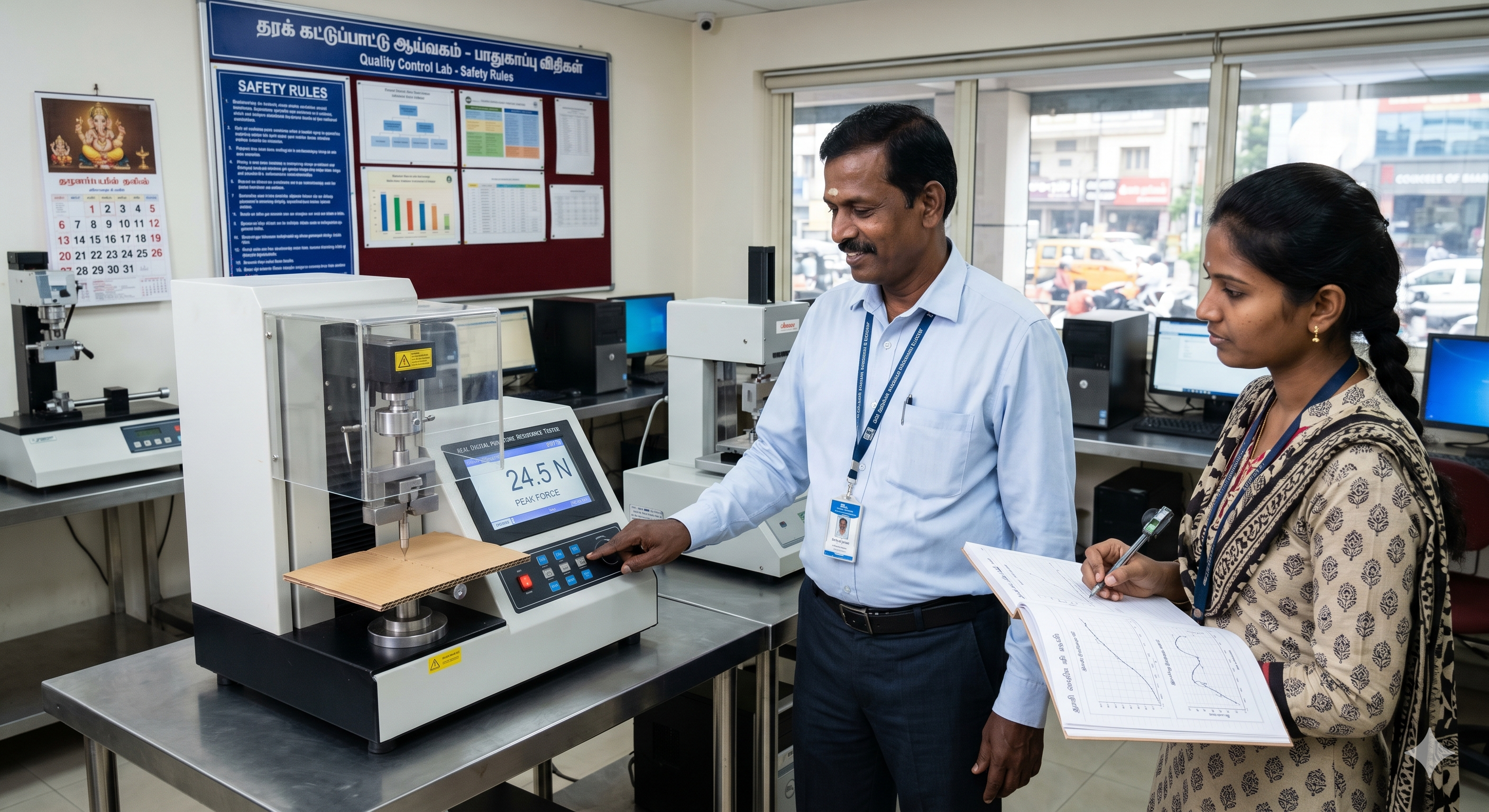
Digital Puncture Testers
- Features high-resolution digital displays for instant peak-force readouts.
- Eliminates human reading error inherent in older mechanical gauge systems.
- Automatically calculates energy absorption during the puncture event.
Access Catalog
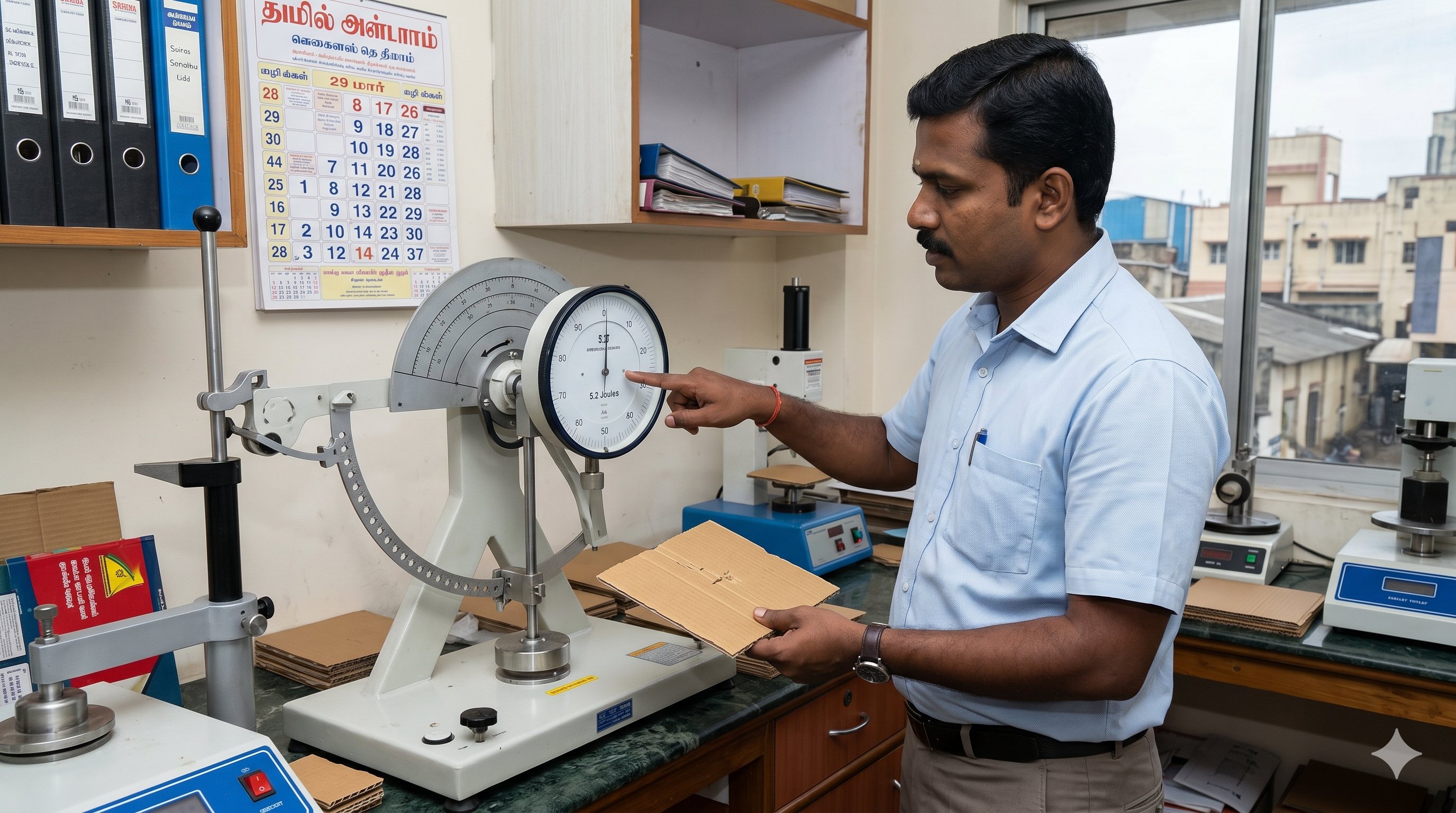
Analog Puncture Testers
- Classic pendulum-style testing utilizing a physical dial and drag pointer.
- Highly reliable, requiring zero electricity for operation in harsh environments.
- Cost-effective solution commonly used for heavy corrugated board (GE scale).
Access Catalog
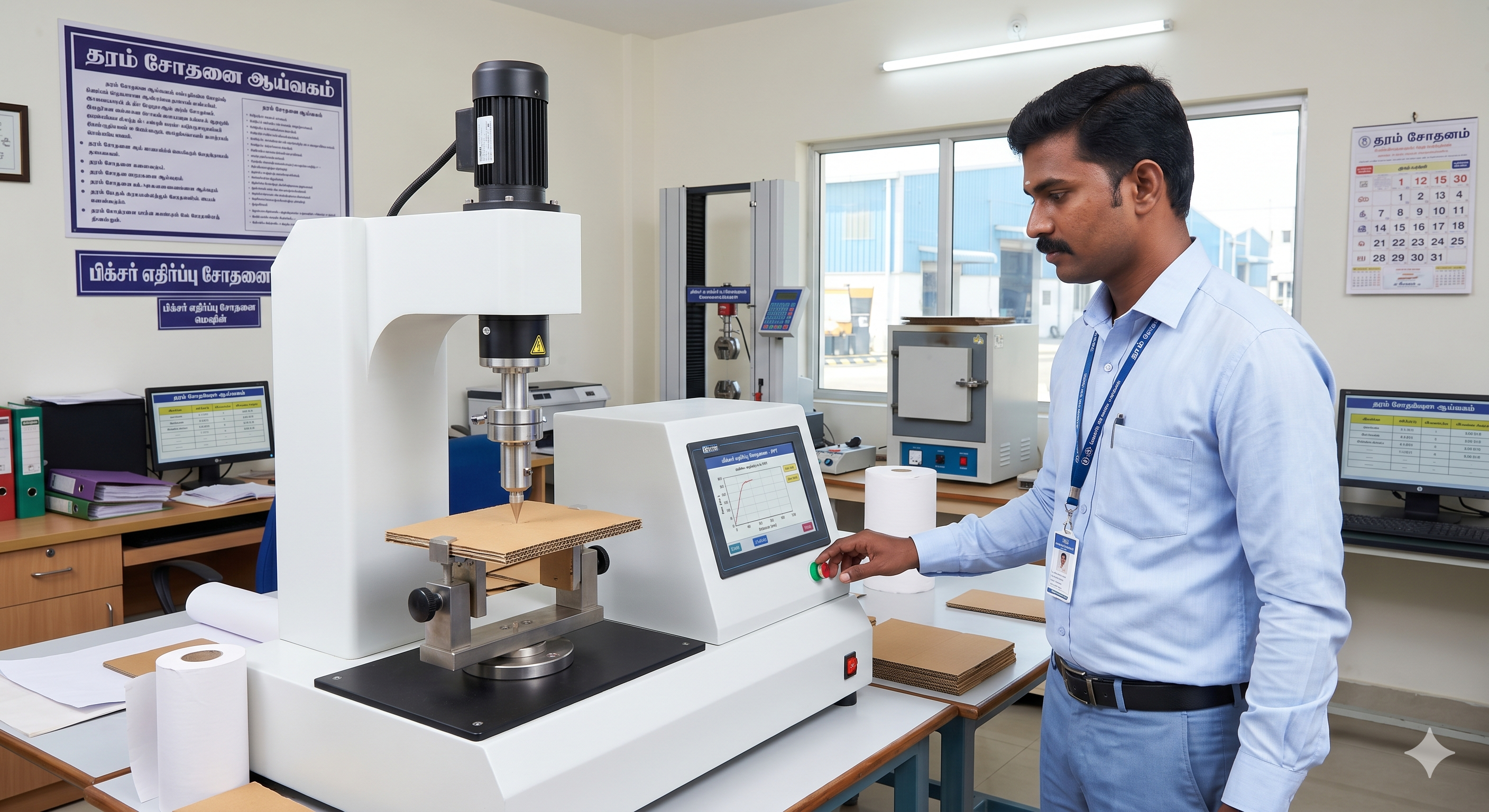
Automatic Puncture Testers
- Motorized drive systems ensure a perfectly consistent testing speed.
- Pneumatic clamping automatically secures the sample without slippage.
- Ideal for high-throughput QA labs requiring highly repeatable batch testing.
Access Catalog
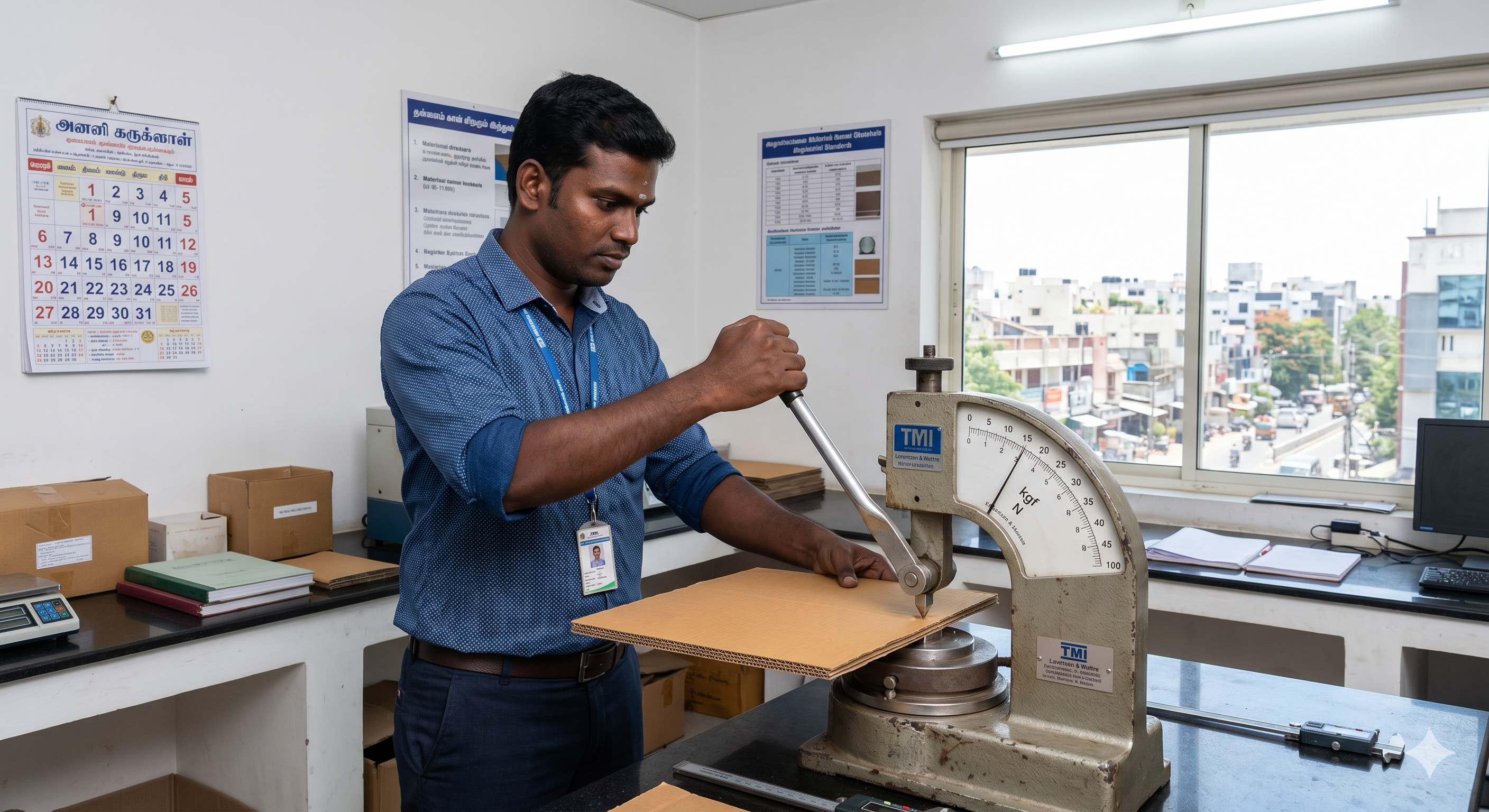
Manual Puncture Testers
- Hand-wheel driven models for basic educational and low-volume testing.
- Affordable entry point for verifying basic material compliance.
- Compact footprint suitable for small workshops and tight spaces.
Access Catalog
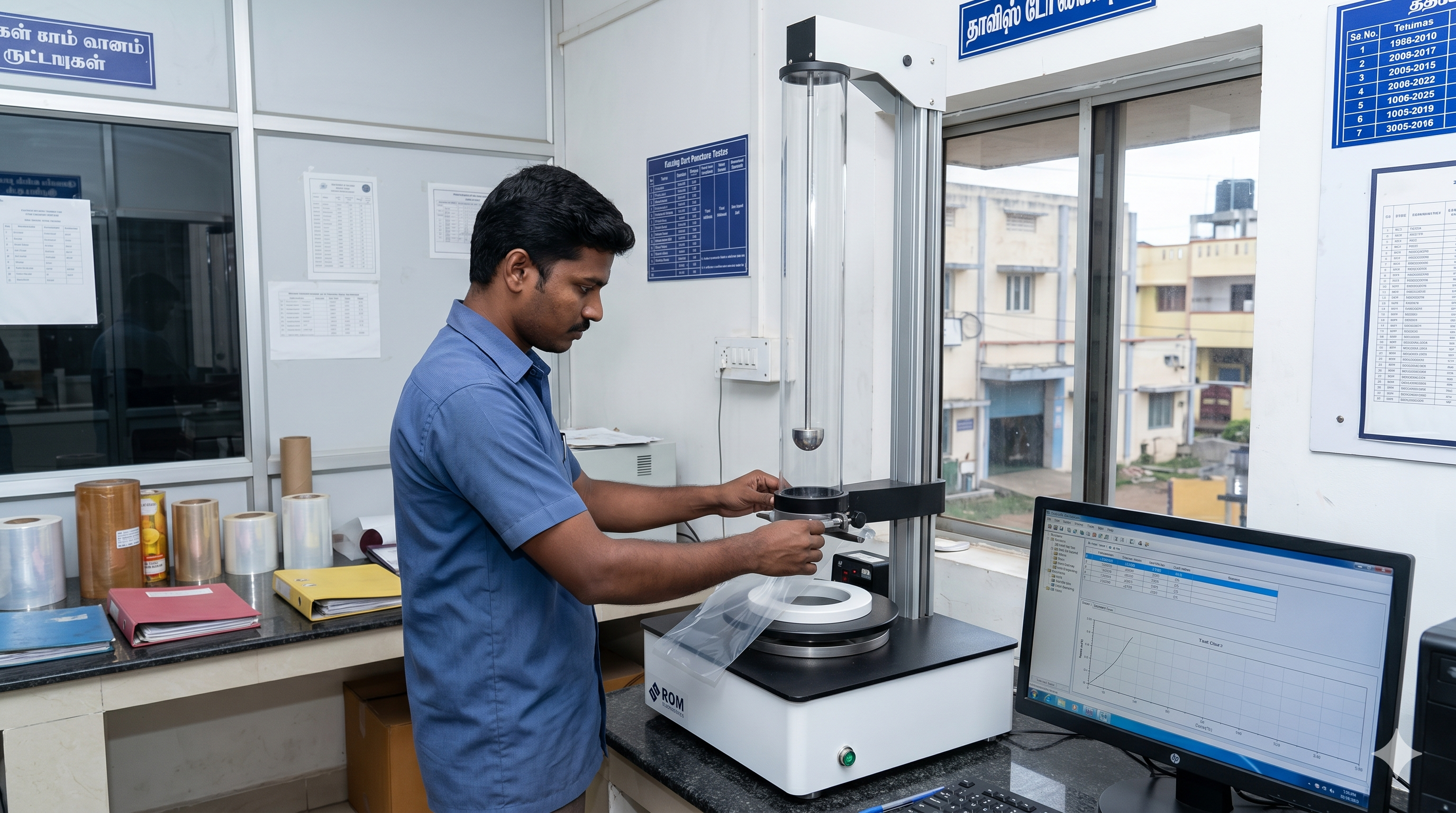
Falling Dart Puncture
- Simulates real-world drop impact using a free-falling weighted dart.
- Crucial for plastic films, agricultural sheeting, and flexible packaging.
- Determines the energy (mass x height) required to fail 50% of tested specimens.
Access Catalog
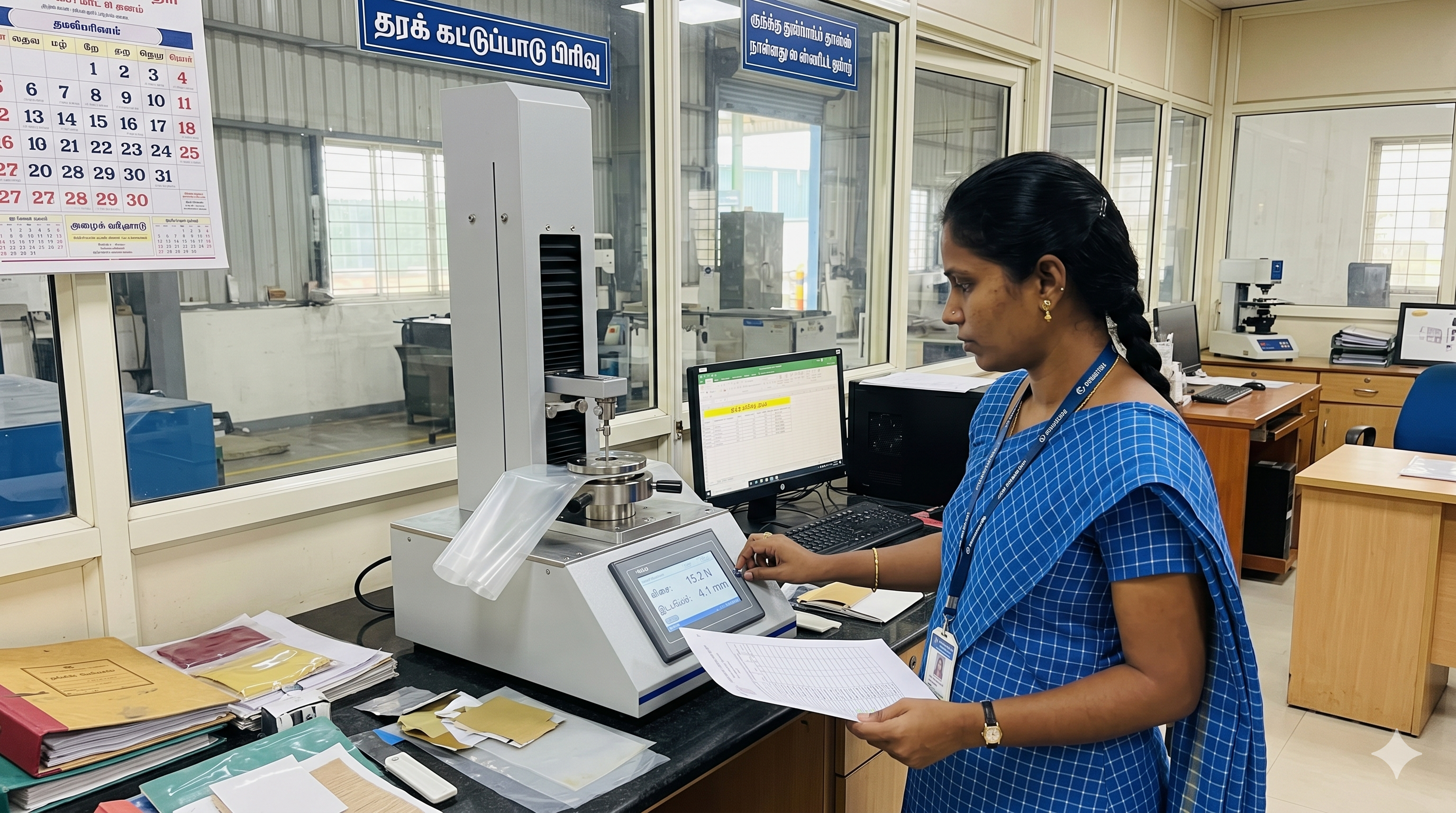
Probe / Needle Puncture
- Utilizes sharp or specifically radiused probes driven at a constant speed.
- Measures the exact peak force required to penetrate the substrate.
- Vital for testing medical gloves, protective fabrics, and synthetic leather.
Access Catalog

Film & Packaging Testers
- Optimized for testing multi-layer laminates and food barrier films.
- Simulates sharp object penetration during logistics and handling.
- Ensures vacuum-sealed products maintain integrity during transport.
Access Catalog
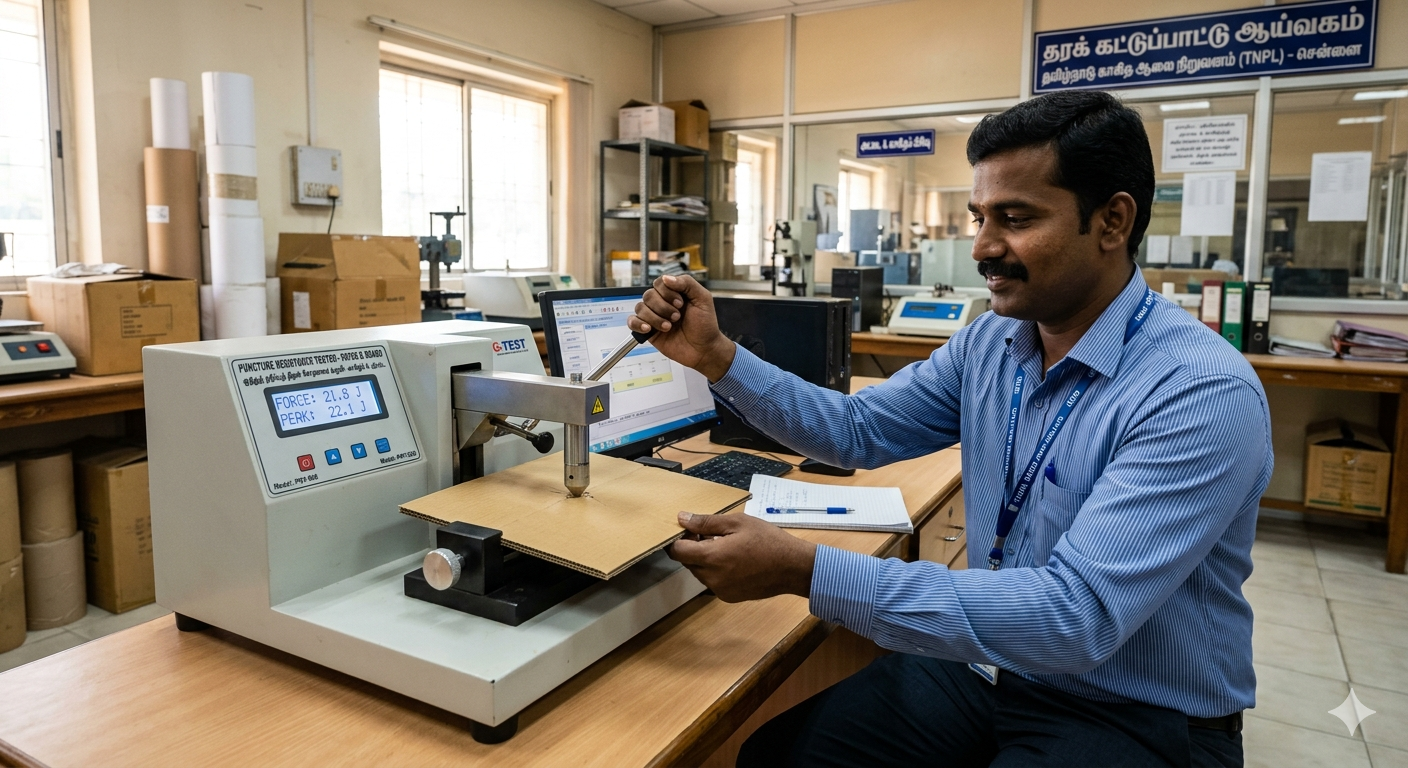
Paper & Board Testers
- Typically utilizes a heavy pendulum equipped with a triangular pyramid head.
- Measures the energy absorbed when tearing through heavy corrugated boxes.
- A mandatory test for verifying shipping container strength (TAPPI T803).
Access Catalog

Textile / Fabric Testers
- Evaluates woven and non-woven fabrics, including heavy geotextiles.
- Uses flat-ended (CBR) or pointed probes to simulate rock/root penetration.
- Critical for certifying stab-resistant vests and construction materials.
Access Catalog
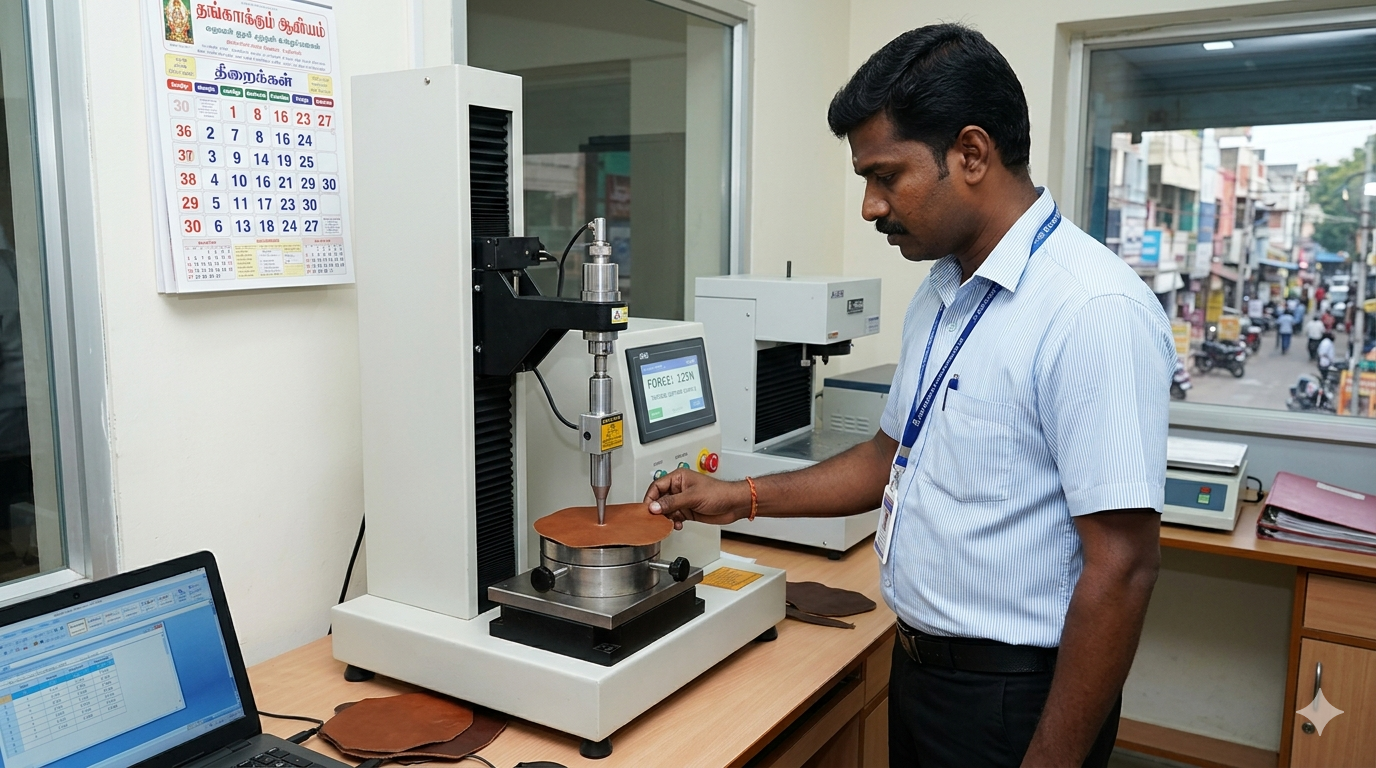
Leather Puncture Testers
- Measures the piercing resistance of natural and synthetic leathers.
- Essential for verifying safety footwear (nail penetration resistance).
- Provides high-force compression testing on thick, dense hides.
Access Catalog
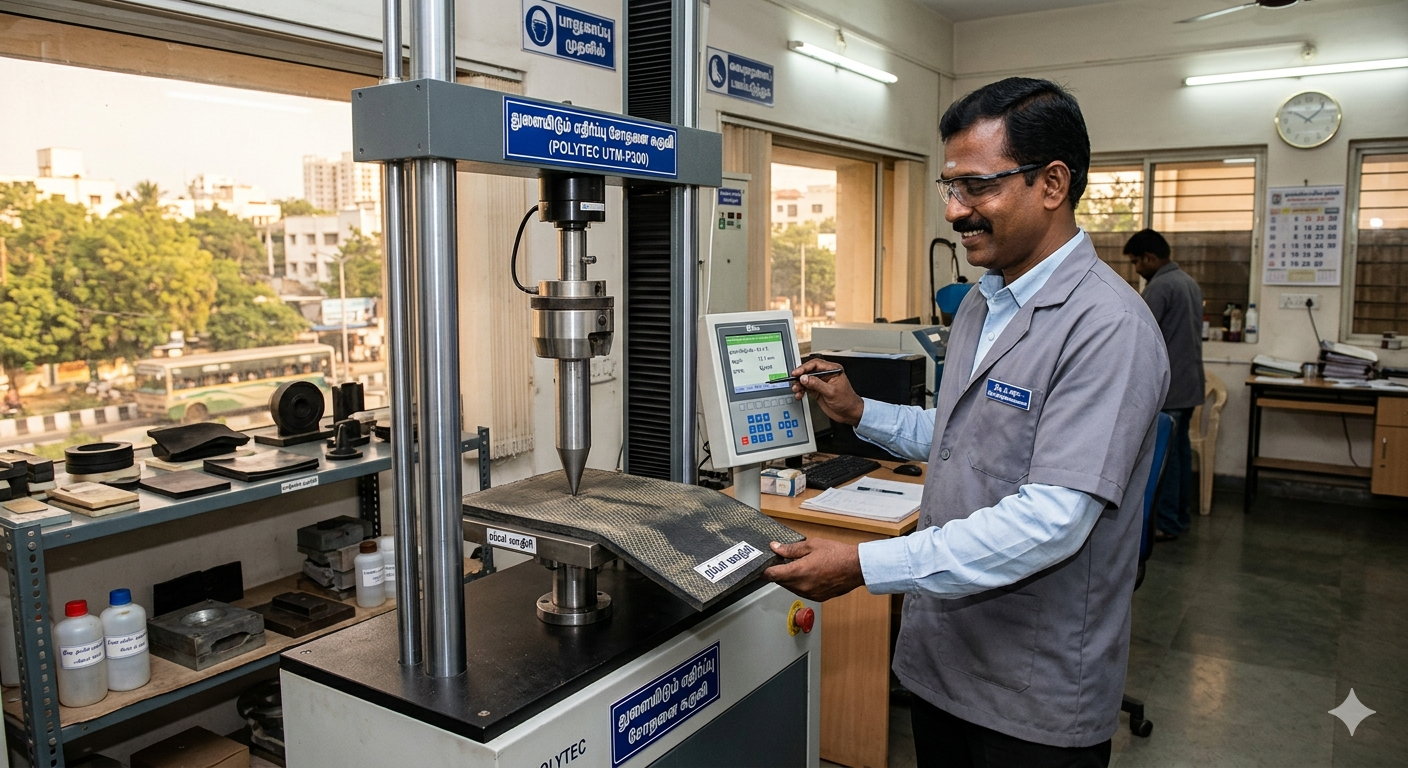
Rubber & Polymer Testers
- Designed to test highly elastomeric materials before ultimate rupture.
- Tracks both the penetration force and the severe elongation of the sample.
- Used extensively for automotive tires, O-rings, and heavy industrial belts.
Access Catalog
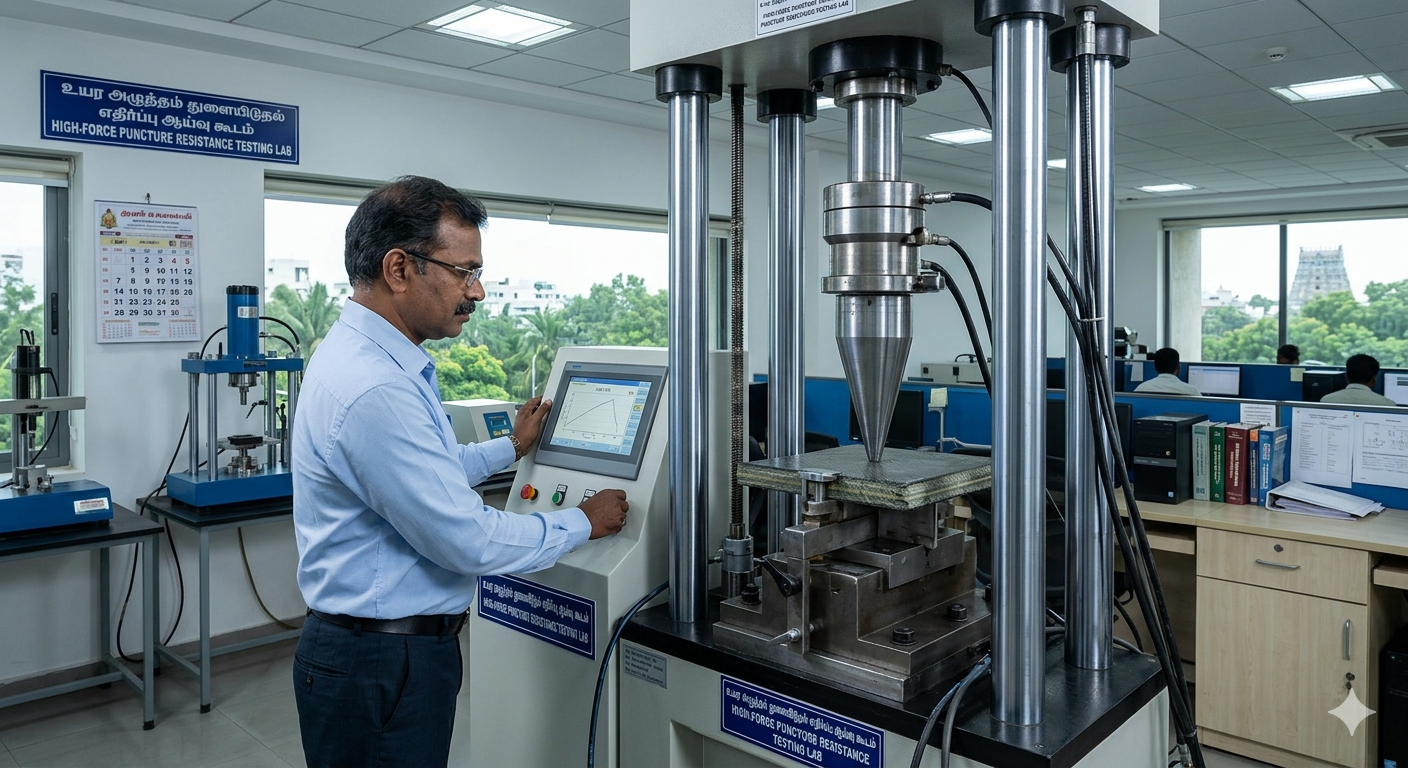
High Force Testers
- Heavy-duty load frames capable of exceeding 50kN (5000 kgf).
- Built for testing rigid composites, thick plastics, and advanced ceramics.
- Features heavily reinforced structures to prevent frame deflection during tests.
Access Catalog

Low Force / Micro Puncture
- Utilizes highly sensitive load cells (e.g., 10N to 50N) for delicate work.
- Perfect for testing medical blister packs, foils, and ultra-thin membranes.
- Provides micro-resolution data to detect the slightest material imperfections.
Access Catalog

Laboratory Puncture Testers
- Advanced R&D units supporting interchangeable probes, darts, and clamps.
- Fully integrated with PC software for graphing force vs. displacement curves.
- Essential for formulating new polymers and designing novel packaging solutions.
Access Catalog
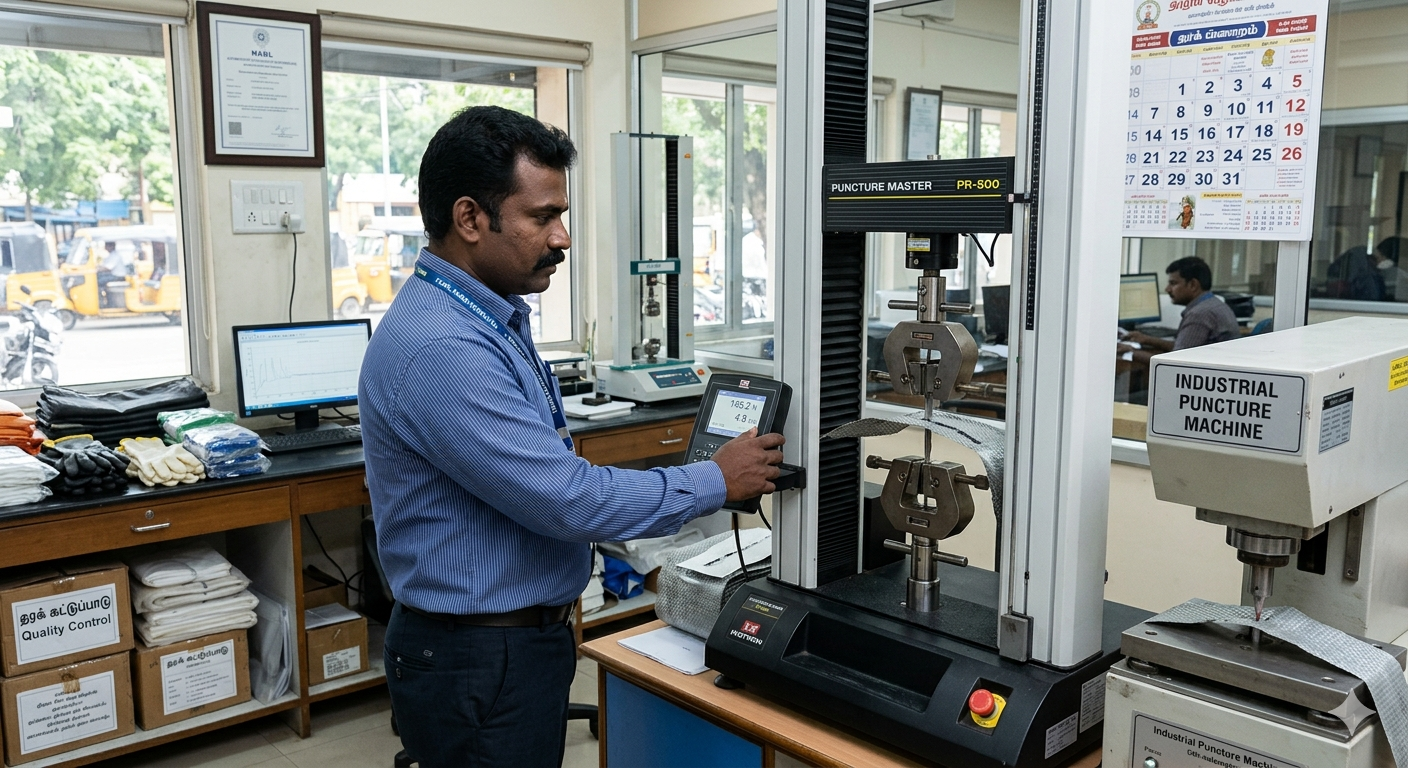
Industrial Puncture Machines
- Floor-standing behemoths built for continuous, brutal factory environments.
- Capable of accommodating very large, oversized product samples (like whole tires).
- Designed for maximum uptime, reliability, and operator safety guarding.
Access Catalog
No Categories Found
Try adjusting your search terminology.
Enterprise Materials Failure Protocol
Understanding the physics of material failure is essential for establishing robust quality control. Selecting the incorrect testing geometry—such as confusing slow-speed probe penetration with dynamic impact—will lead to inaccurate structural assessments and product failures in the field.
Dynamic Impact (Falling Dart)
Usage: Films, Foils, Flexible PackagingSimulates a sudden, high-speed impact. A weighted, hemispherical dart is dropped from a specific height. The test determines the mass required to cause failure in 50% of the tested specimens. It evaluates the material's ability to absorb shock energy instantly without tearing.
Quasi-Static (Probe Penetration)
Usage: Geotextiles, Medical, RubberA controlled, slow-speed test utilizing a universal testing machine (UTM). A specifically shaped probe (flat, radiused, or needle) is driven into the clamped sample at a constant velocity. It accurately maps the force vs. displacement curve, identifying the exact peak force before rupture.
Pendulum Tearing (Triangular)
Usage: Heavy Corrugated Board (TAPPI)A heavy pendulum swings a triangular pyramidal head into a rigid board. It measures the total energy absorbed by the board as the head punches through. This test evaluates both the initial puncture resistance and the subsequent tearing of the corrugated fluting.
Energy Absorption Metrics
Advanced Material ProfilingPuncture testing isn't just about the peak force. The area under the force-displacement curve represents the total energy absorbed. A material might require a high force to break, but if it breaks instantly (brittle), it absorbs less energy than a material that stretches significantly before failing (ductile).
Testing Geometry & Standards Matrix
| Material / Application | Recommended Testing Method | Primary Standard |
|---|---|---|
| Plastic Films & Sheeting | Free-Falling Dart Impact | ASTM D1709 / ISO 7765 |
| Heavy Corrugated Board | Pendulum (Triangular Head) | TAPPI T803 / ISO 3036 |
| Geotextiles (CBR Test) | Quasi-Static (Flat 50mm Probe) | ASTM D6241 / ISO 12236 |
| Protective Gloves & Fabrics | Quasi-Static (Pointed Needle/Probe) | EN 388 / ASTM F1342 |
| Medical Vials & Blister Packs | Low-Force Micro Probe | Custom / Application Specific |
Advanced Testing Variables
To maintain enterprise-grade accuracy, puncture testers must tightly control the physical parameters that directly influence a material's failure point.
Probe Geometry Influence
- Shape Matters: A sharp needle measures cutting/tearing, while a flat-ended probe (CBR) measures pure tensile stretching before rupture.
- Diameter Tolerances: Strict adherence to standardized probe diameters is required; even a 1mm deviation alters the stress concentration.
- Surface Finish: Probes must be highly polished. Friction between a rough probe and the sample will artificially inflate the required puncture force.
Test Speed (Strain Rate)
- Polymer Behavior: Plastics are viscoelastic. If punctured rapidly, they act brittle (high force, low stretch). If punctured slowly, they act ductile (lower force, high stretch).
- Motor Precision: Servo-driven systems ensure the crosshead speed remains absolutely constant regardless of the material's resistance.
Clamping Mechanics
- Sample Slippage: If a sample slips within the ring clamps during testing, the data is invalid as the material is stretching from outside the test area.
- Pneumatic Clamping: High-end systems utilize regulated pneumatic air pressure to ensure identical holding force across every sample, eliminating operator inconsistency.