
- Provides instantaneous, high-contrast LCD/LED percentage readouts.
- Often features built-in material libraries to auto-compensate readings.
- Eliminates human reading error associated with older analog dials.

- Classic mechanical needle sweep design.
- Highly reliable in harsh, dusty, or extreme temperature environments.
- Simple "Green/Yellow/Red" zoning for rapid visual moisture checks.

- Utilizes two sharp metal probes physically driven into the material.
- Measures electrical resistance between the pins to calculate moisture.
- Provides the most accurate reading for wood and drywall at specific depths.

- Non-destructive testing utilizing high-frequency electromagnetic sensors.
- Scans a large surface area instantly without leaving puncture holes.
- Ideal for finished flooring, expensive cabinetry, and delicate surfaces.

- Compact, battery-operated units designed for maximum field mobility.
- Ruggedized housings protect sensitive electronics during transport.
- Crucial for agricultural field assessments and remote building inspections.
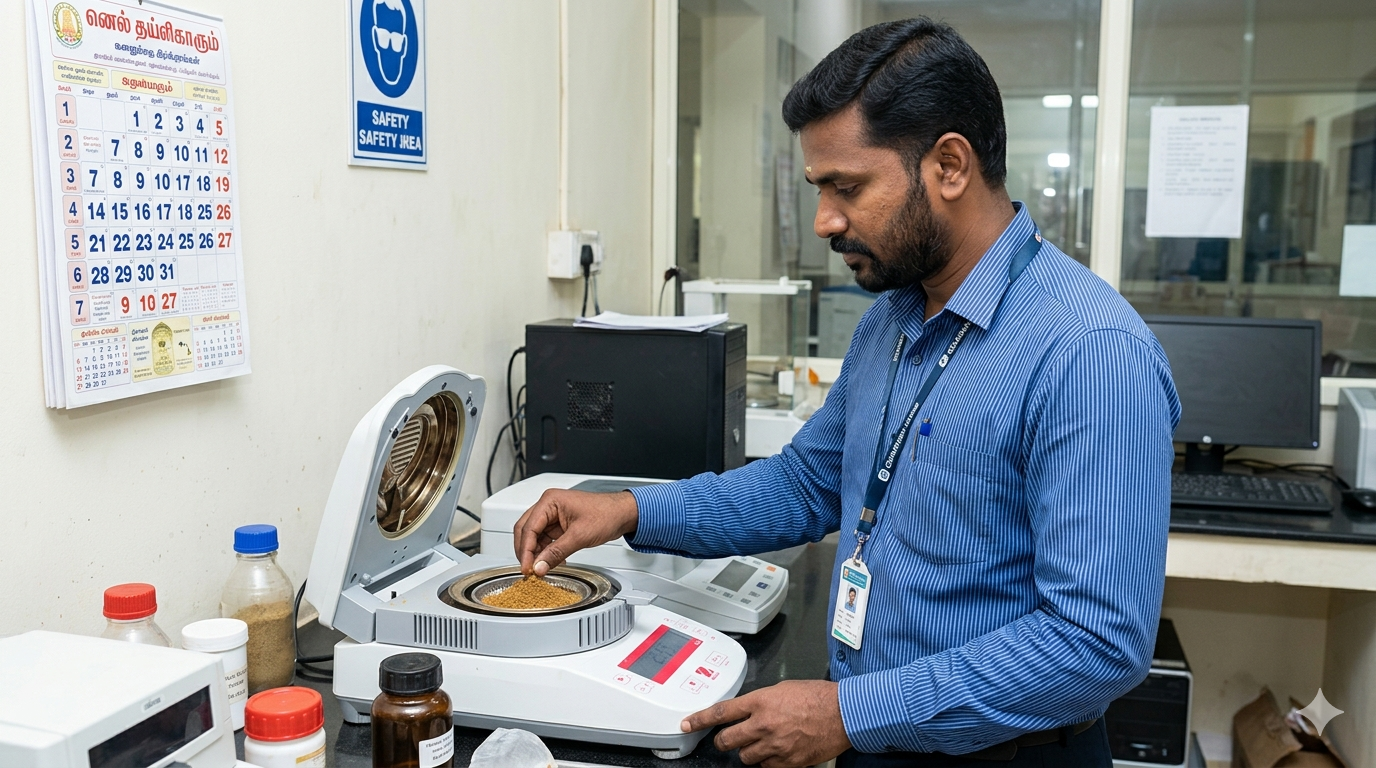
- Advanced Loss-on-Drying (LOD) systems utilizing halogen heaters.
- Provides absolute precision by physically drying and weighing the sample.
- The gold standard for pharmaceutical, food processing, and chemical labs.
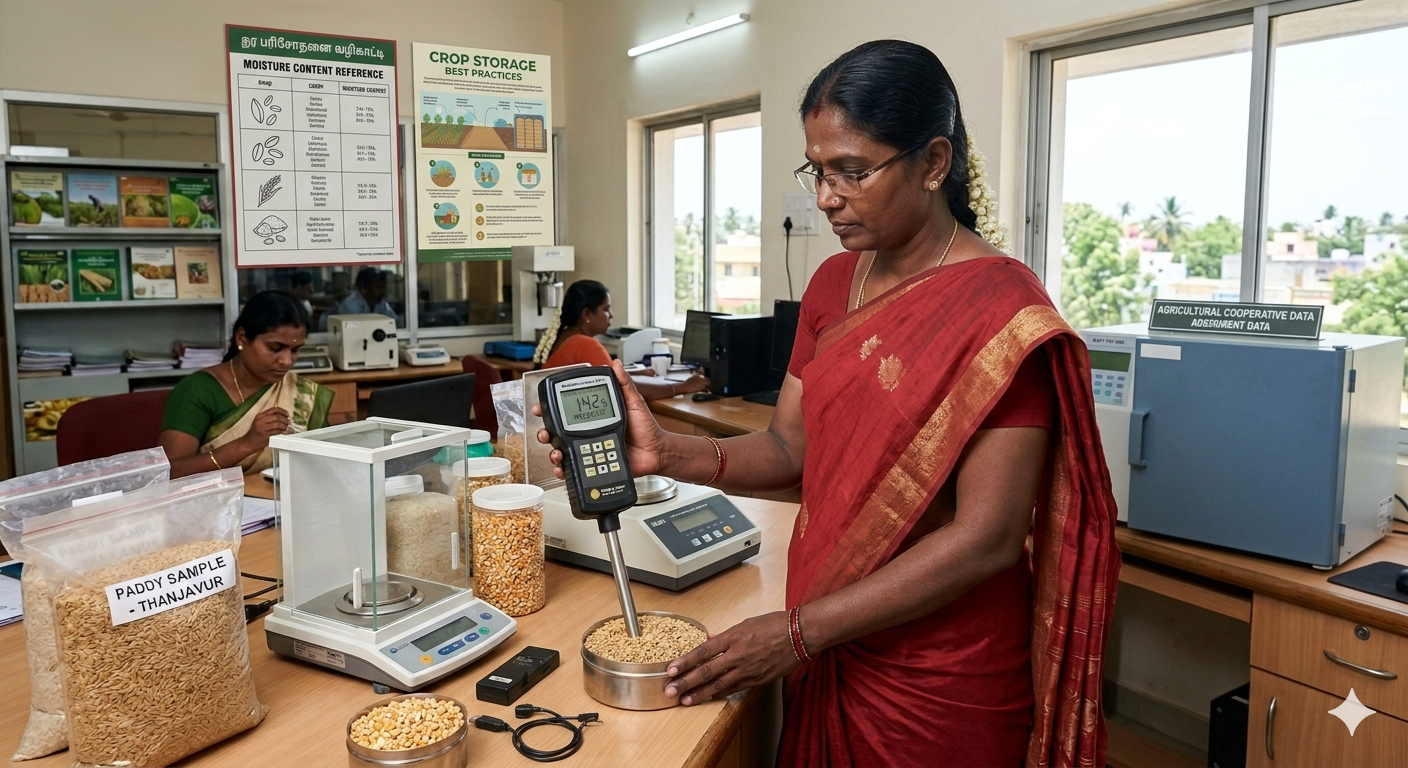
- Specifically calibrated for crops: wheat, corn, rice, coffee, and seeds.
- Often features a built-in cup to measure a specific volume of grain.
- Critical for determining harvest time and preventing mold during silo storage.
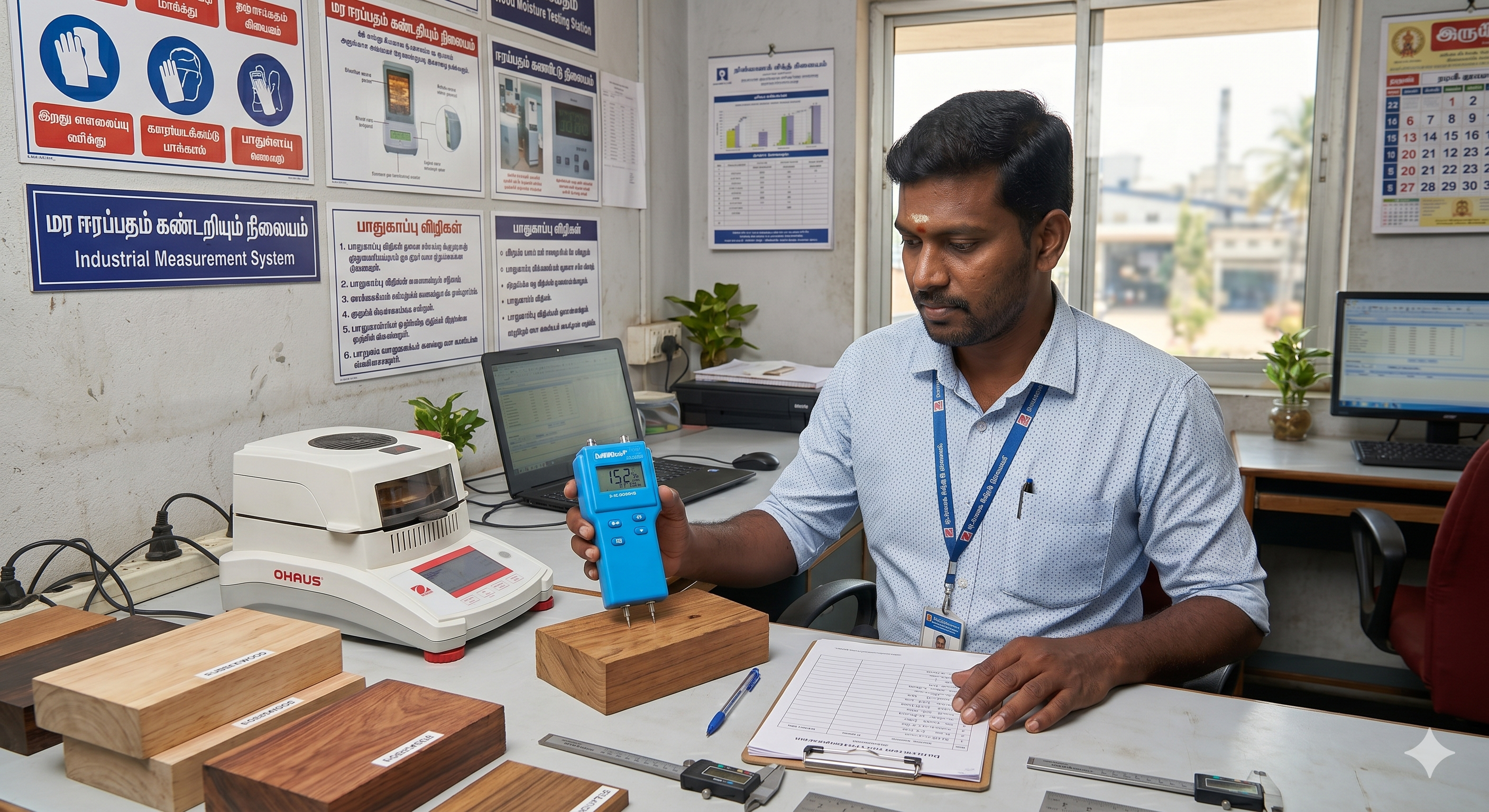
- Calibrated for hundreds of different hard and soft wood species.
- Used extensively by lumber mills, furniture makers, and carpenters.
- Prevents warping, splitting, and structural failure of timber products.
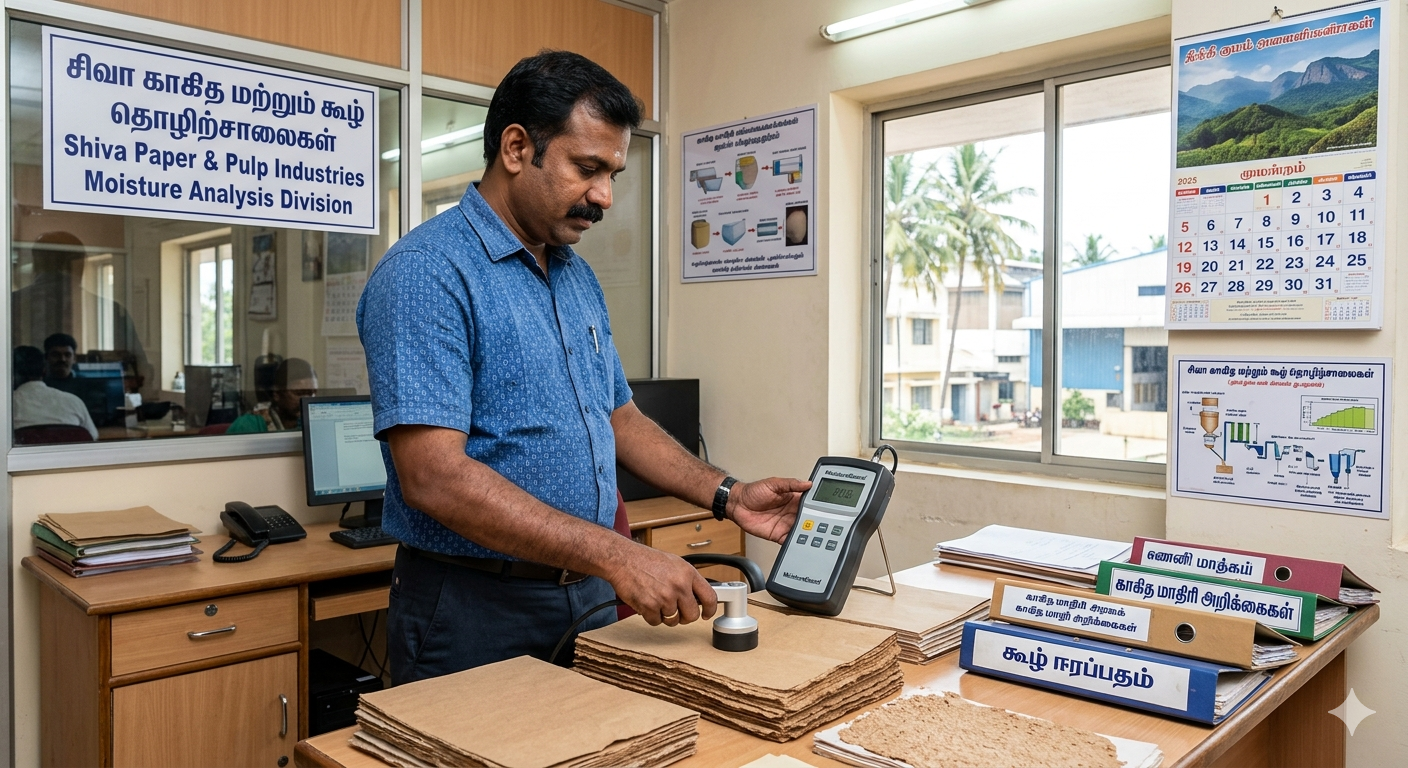
- Features flat or specialized roller sensors to avoid tearing the paper web.
- Crucial for monitoring moisture content during high-speed printing.
- Prevents paper curling, jamming, and ensures optimal ink absorption.

- Features long insertion probes to measure root-zone water content.
- Essential for optimizing irrigation schedules in commercial agriculture.
- Prevents over-watering (root rot) and under-watering (crop failure).

- Calibrated for cotton, wool, silk, rayon, and synthetic blends.
- Optimizes drying times in industrial laundries and fabric mills.
- Ensures correct moisture levels to prevent static buildup and fabric degradation.

- Multi-purpose units calibrated for drywall, plaster, brick, and roofing.
- Indispensable for home inspectors locating hidden water damage.
- Crucial for tracing the source of black mold and structural rot.
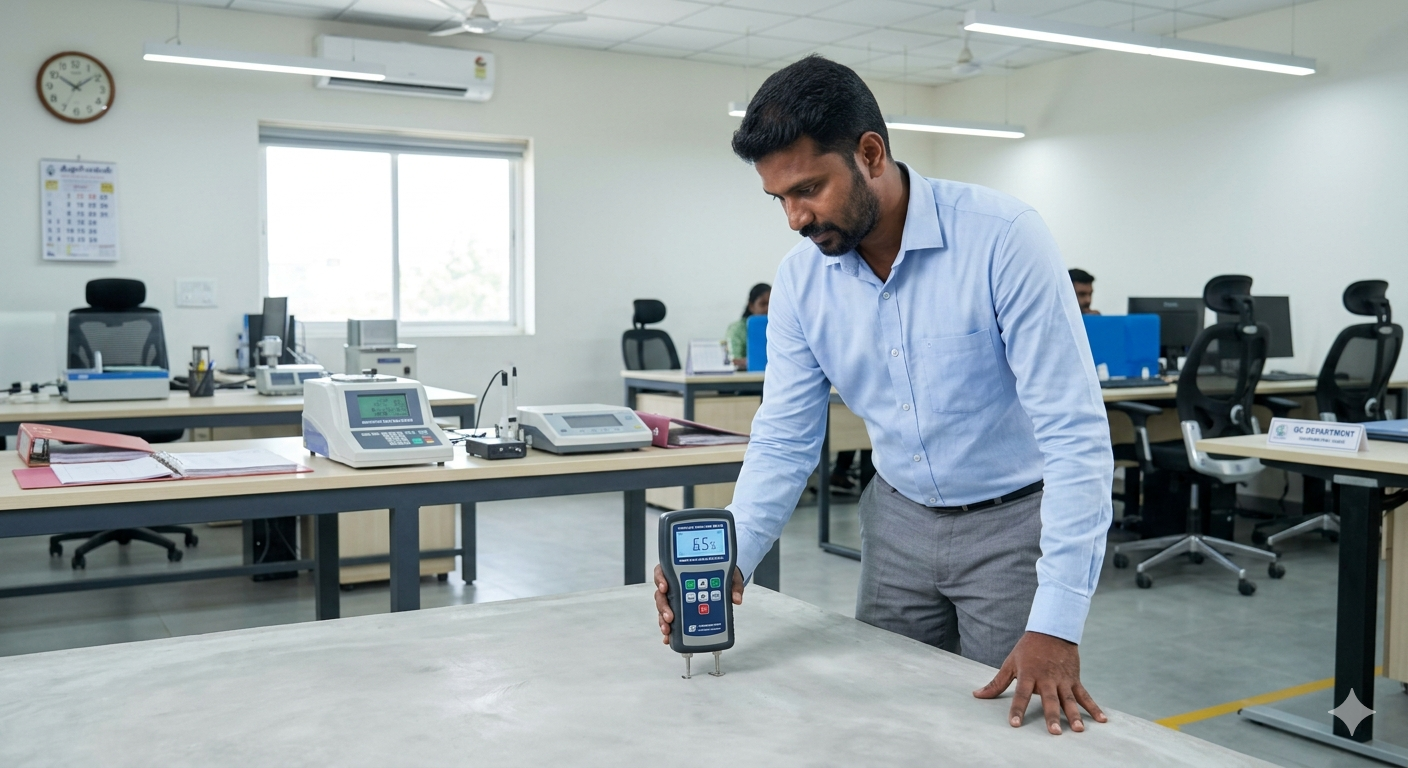
- Specialized impedance sensors designed to penetrate thick concrete slabs.
- Validates when a freshly poured slab is dry enough to apply flooring.
- Prevents catastrophic failure of epoxies, laminates, and hardwood installations.

- Delivers measurement resolution down to 0.1% or 0.01% moisture content.
- Utilized in critical chemical blending and aerospace material testing.
- Often supplied with rigorous, traceable ISO/NIST calibration certificates.
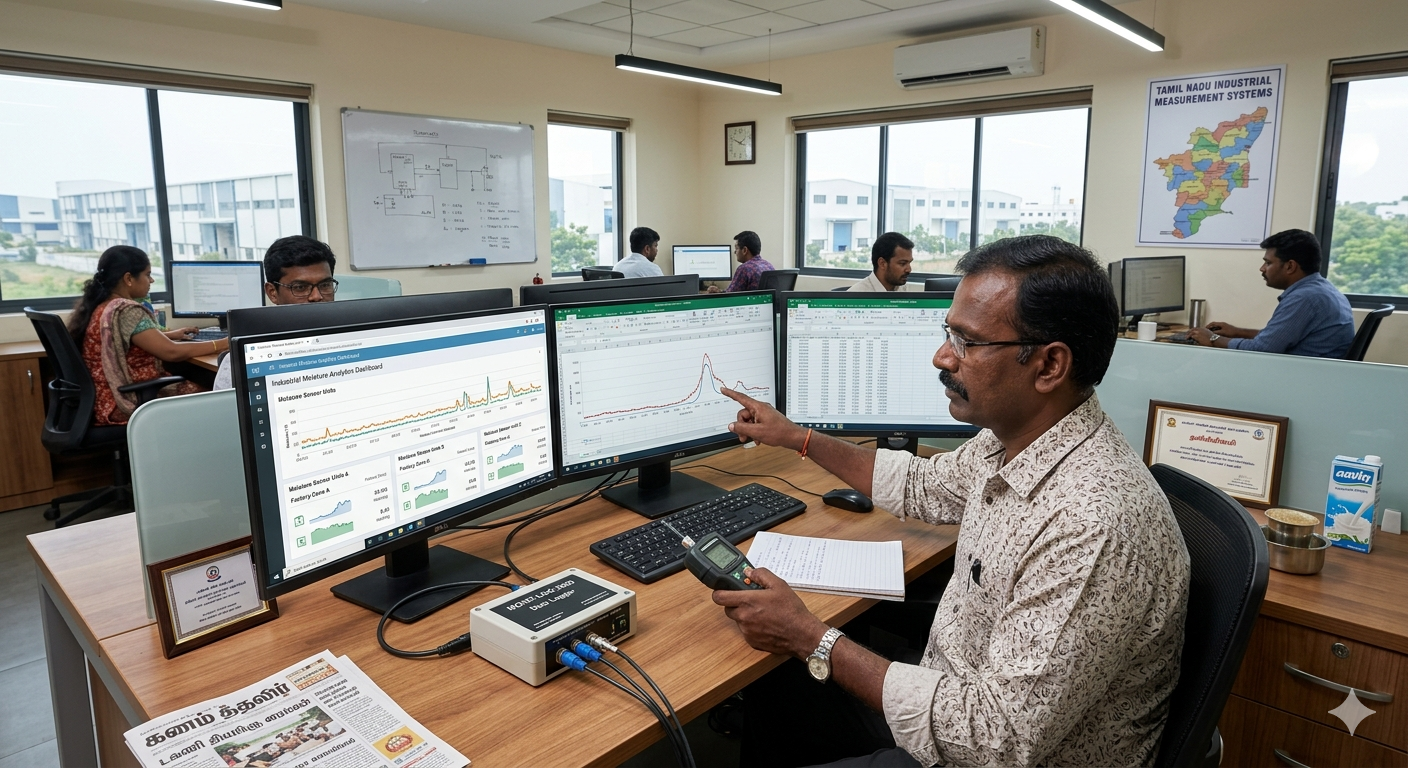
- Features onboard memory to store thousands of site readings.
- Crucial for mapping out the progression of drying in large water-damage restoration jobs.
- Exports data directly to PC software for professional report generation.
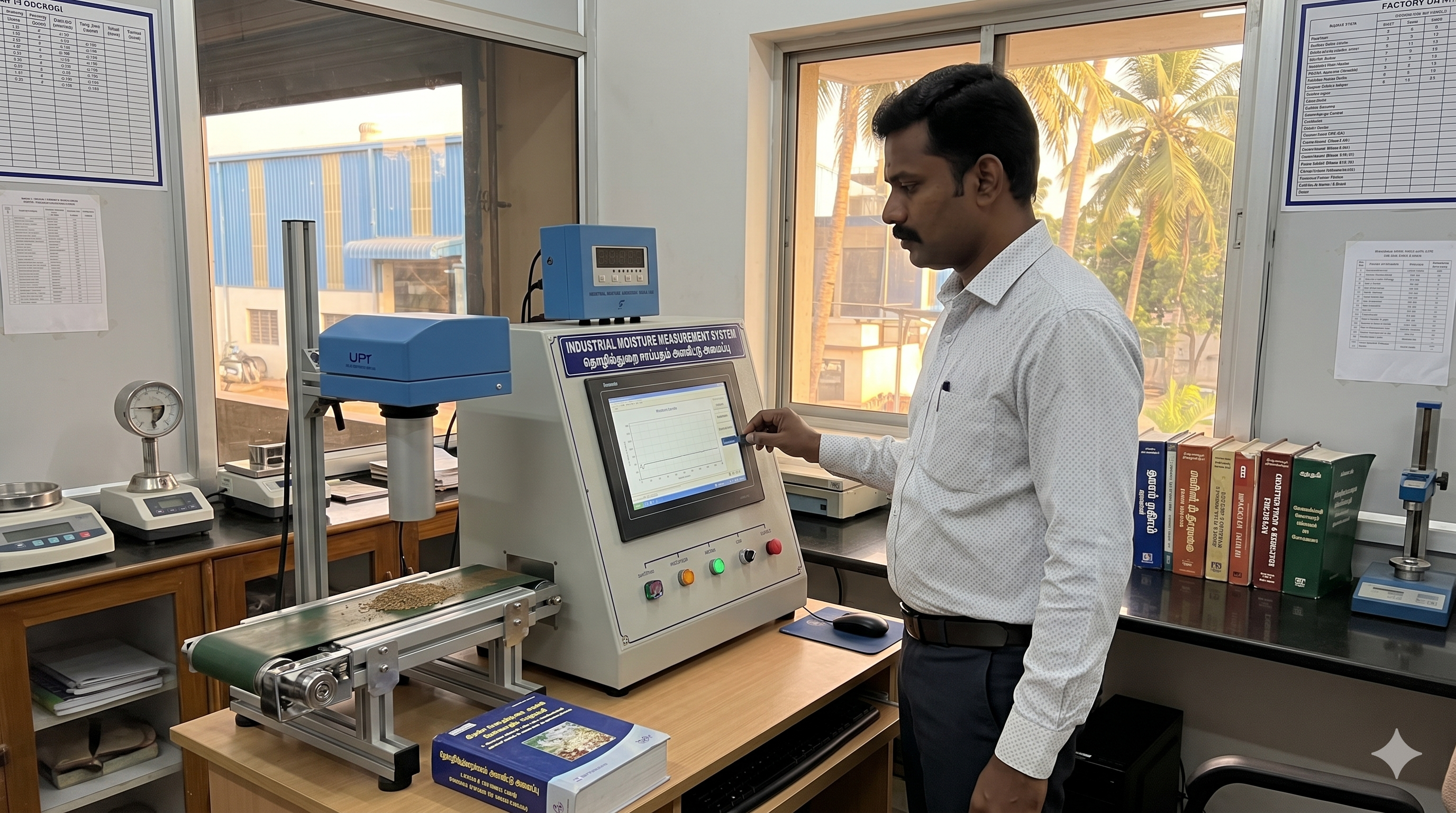
- Inline sensors installed directly into factory hoppers, silos, or conveyor belts.
- Provides continuous, 24/7 moisture feedback to central SCADA systems.
- Automatically triggers drying kilns or humidifiers to maintain exact process parameters.
Enterprise Hydration Metrology Protocol
Understanding the physics of moisture measurement is essential for establishing robust quality control. Selecting the incorrect technology—such as using a pinless meter on an uneven, rough-cut lumber surface—will result in catastrophic data errors and product failure.
Electrical Resistance (Pin)
The Deep Penetration StandardWater conducts electricity; dry materials do not. Pin meters physically drive two electrodes into the material to measure the resistance between them. This allows inspectors to identify the exact depth of a moisture pocket, crucial for finding the core rot inside a piece of timber.
Dielectric Impedance (Pinless)
Non-Destructive ScanningEmits a high-frequency electromagnetic radio wave from a flat sensor pad into the material. The presence of water changes the specific gravity/dielectric constant. It scans large areas rapidly without leaving holes, but requires a perfectly flat surface for accurate sensor contact.
Loss-On-Drying (Halogen)
Absolute Laboratory PrecisionThe ultimate reference standard. A benchtop analyzer precisely weighs a sample, intensely heats it with a halogen lamp to evaporate all water, and then weighs the dry mass. The mathematical difference provides the absolute moisture percentage, immune to material density variations.
Near-Infrared (NIR)
Continuous Industrial ProcessShoots specific wavelengths of infrared light at a moving product (like grain on a conveyor). Water molecules absorb specific wavelengths. By measuring the reflected light, the sensor instantly calculates moisture without ever touching the product.
Application & Technology Matrix
| Measurement Task / Environment | Recommended Technology | Primary Advantage |
|---|---|---|
| Locating Core Rot in Timber | Pin Type Meter (Long Probes) | Bypasses dry surface layers to measure deep internal moisture gradients. |
| Inspecting Expensive Hardwood Floors | Pinless (Dielectric) Meter | Rapidly scans large floor areas without leaving permanent puncture holes. |
| Validating Pharmaceutical Powders | Halogen Moisture Analyzer | Provides FDA-compliant, absolute gravimetric accuracy to 0.01%. |
| Continuous Grain Silo Monitoring | Inline NIR / Capacitance Sensor | Non-contact, real-time data integration directly into factory SCADA systems. |
| Testing Concrete Slabs Before Flooring | In-Situ Relative Humidity Probes | Measures moisture vapor emission rate (MVER) deep within the slab structure. |
Advanced Testing Variables
To maintain enterprise-grade accuracy, technicians must strictly control the environmental and physical parameters that directly influence moisture readings.
Material Specific Gravity
- The Density Error: Oak is denser than Pine. A meter calibrated for pine will read falsely high on oak because the higher density mimics higher water content.
- Species Calibration: High-end meters feature programmable "Species Codes" to automatically adjust the internal algorithm for the exact material being tested.
Temperature Compensation
- Resistance Fluctuation: As wood or grain gets hotter, its electrical resistance drops, which the meter misinterprets as higher moisture.
- ATC Integration: Professional meters include Automatic Temperature Compensation (ATC) to mathematically correct the reading back to a baseline 20°C (68°F).
Chemical Interference
- Salt & Preservatives: Wood treated with fire retardants or copper-based preservatives contains conductive salts. This will cause Pin meters to display artificially high moisture readings.
- The Solution: Technicians must use specialized correction charts or switch to alternative testing methods when dealing with chemically treated materials.