Impact Testers
Engineered to measure the structural toughness and energy absorption of materials during sudden, high-speed collisions and fracture events.
Widely Used By
Metallurgical Labs Polymer Engineers Automotive Safety Aerospace Manufacturing Packaging QC
Key Purposes
Fracture Mechanics Notch Sensitivity Ductile-to-Brittle Transition Drop Dart Analysis ASTM / ISO Compliance
Single Tap to Scroll • Double Tap to Open Catalog
Core Pendulum & Drop Impact Testers

Izod Impact Testers
- Pendulum method testing a vertically clamped, cantilevered specimen.
- The striking edge hits the upper tip of the sample above the notch.
- Crucial for determining the notch sensitivity of rigid plastics and composites.
Access Catalog

Charpy Impact Testers
- Pendulum method where the specimen is supported horizontally at both ends.
- The striker impacts the exact center of the sample, directly behind the notch.
- The global standard for assessing the toughness and brittle fracture of metals.
Access Catalog
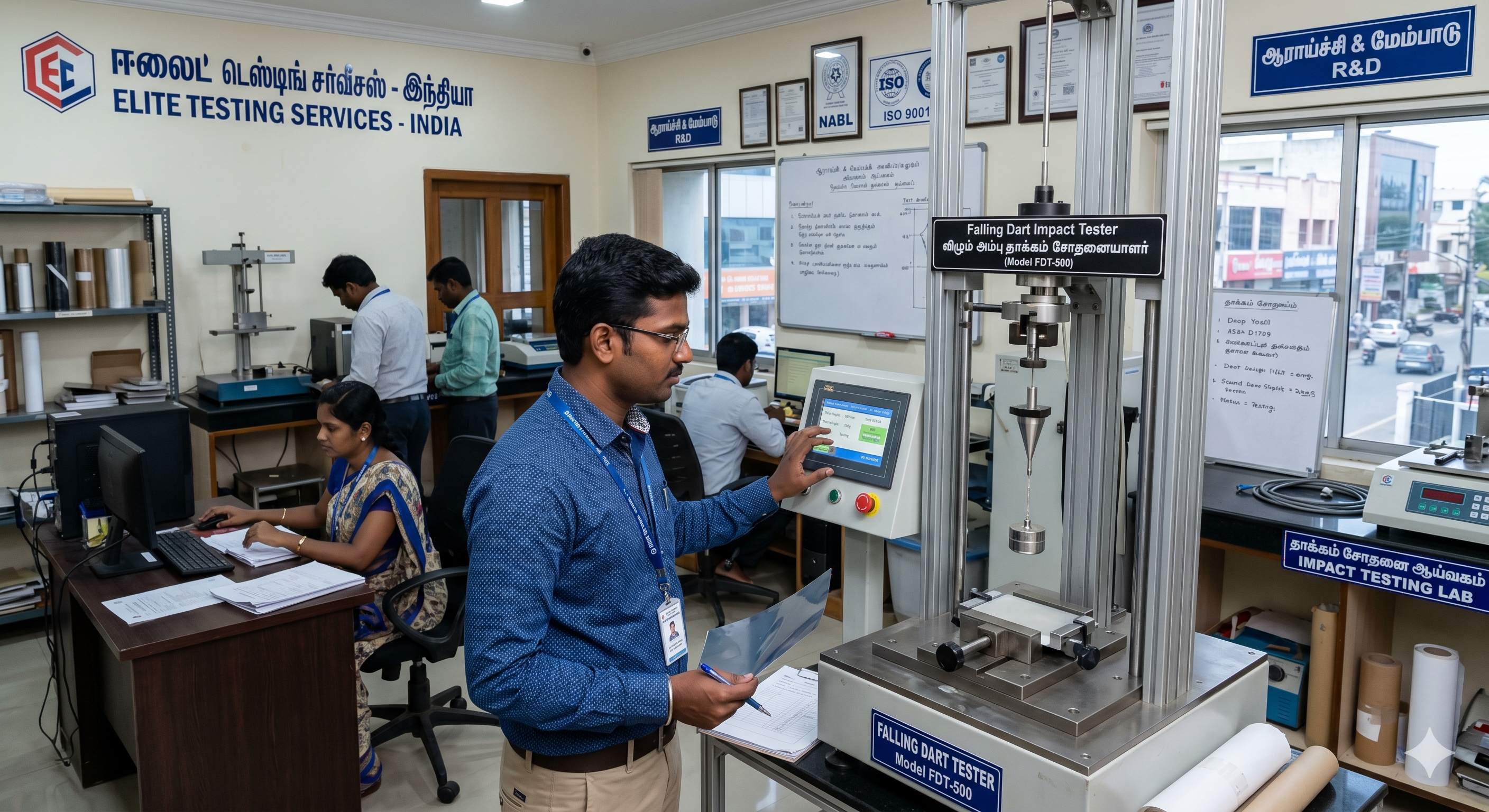
Falling Dart Testers
- Simulates real-world vertical drops using a free-falling weighted dart.
- Determines the exact mass required to fail 50% of the tested specimens.
- Essential for quality control of plastic films, foils, and flexible packaging.
Access Catalog
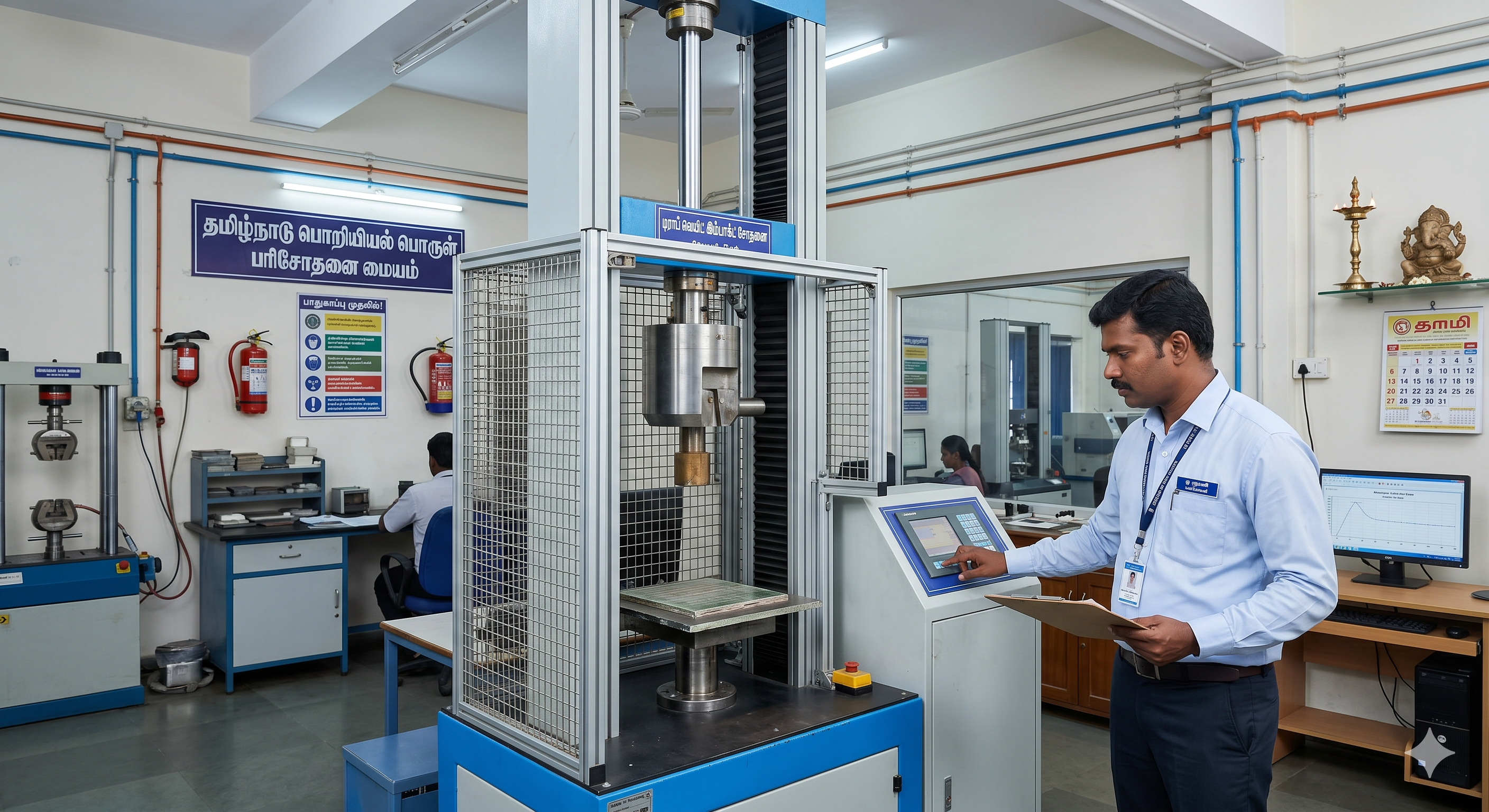
Drop Weight Testers
- High-energy systems designed to crush robust structural components.
- Variables include drop height, weight mass, and specific striker head geometry.
- Used extensively for testing hard hats, automotive bumpers, and steel pipes.
Access Catalog

Pendulum Impact Testers
- Versatile combined systems capable of performing both Izod and Charpy tests.
- Features quickly interchangeable striking heads and sample clamping fixtures.
- Calculates energy absorbed by measuring the pendulum's follow-through height.
Access Catalog
Display & Data Acquisition Impact Testers

Digital Impact Testers
- Equipped with high-resolution optical encoders to track pendulum swing angles.
- Automatically calculates exact Joules/Joules per meter without manual math.
- Eliminates human parallax reading errors found in traditional analog dials.
Access Catalog
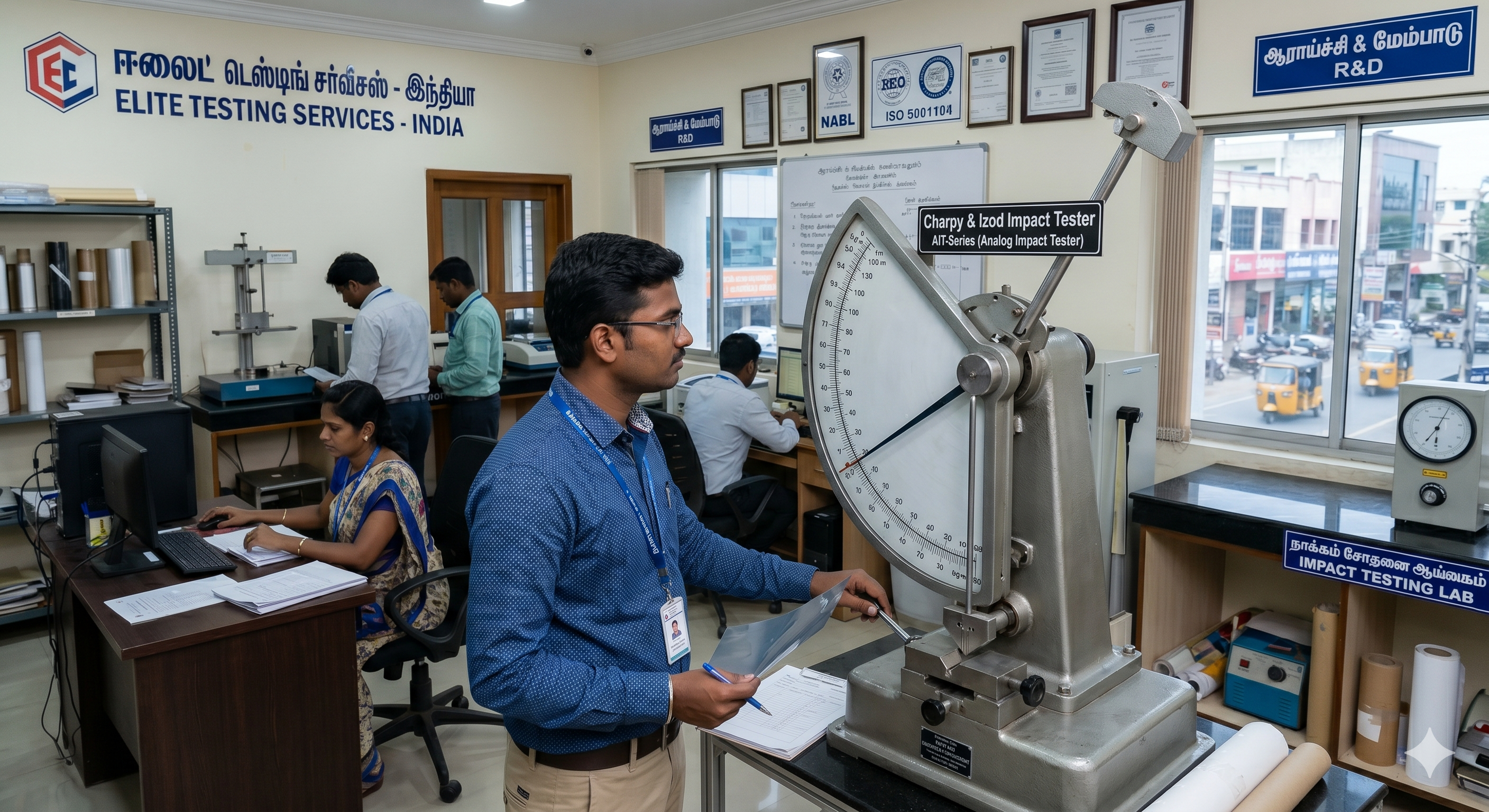
Analog Impact Testers
- Classic, ultra-reliable mechanical design requiring no electricity to operate.
- Utilizes a physical drag pointer on a dial to indicate maximum energy absorbed.
- Ideal for extremely harsh environments, educational labs, or remote sites.
Access Catalog
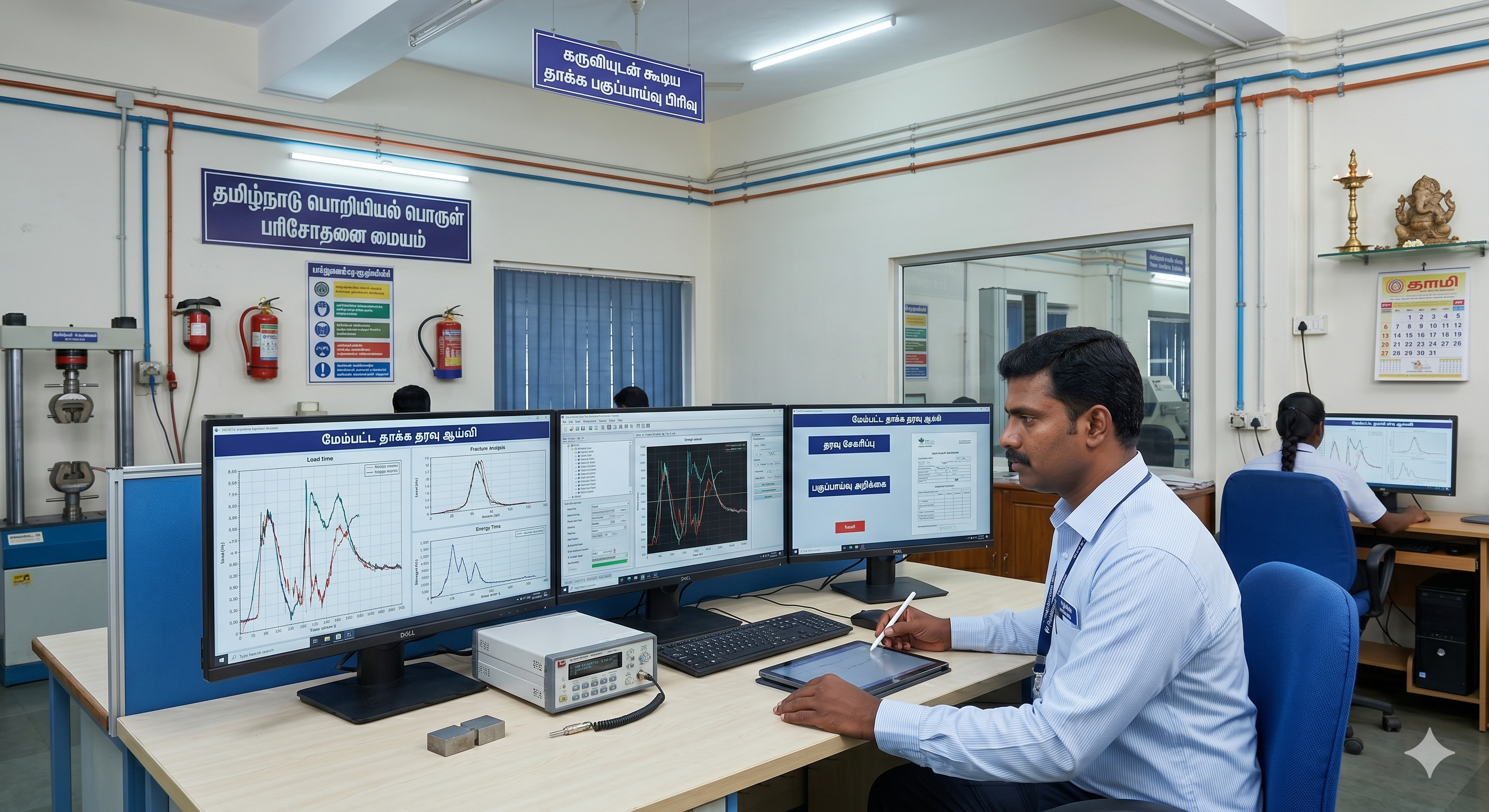
Instrumented Impact Testers
- Features load cells integrated directly into the striking striker head.
- Captures the complete dynamic force-vs-time and force-vs-deflection curves.
- Provides deep R&D insights into crack initiation versus crack propagation.
Access Catalog
Material & Application Specific Testers
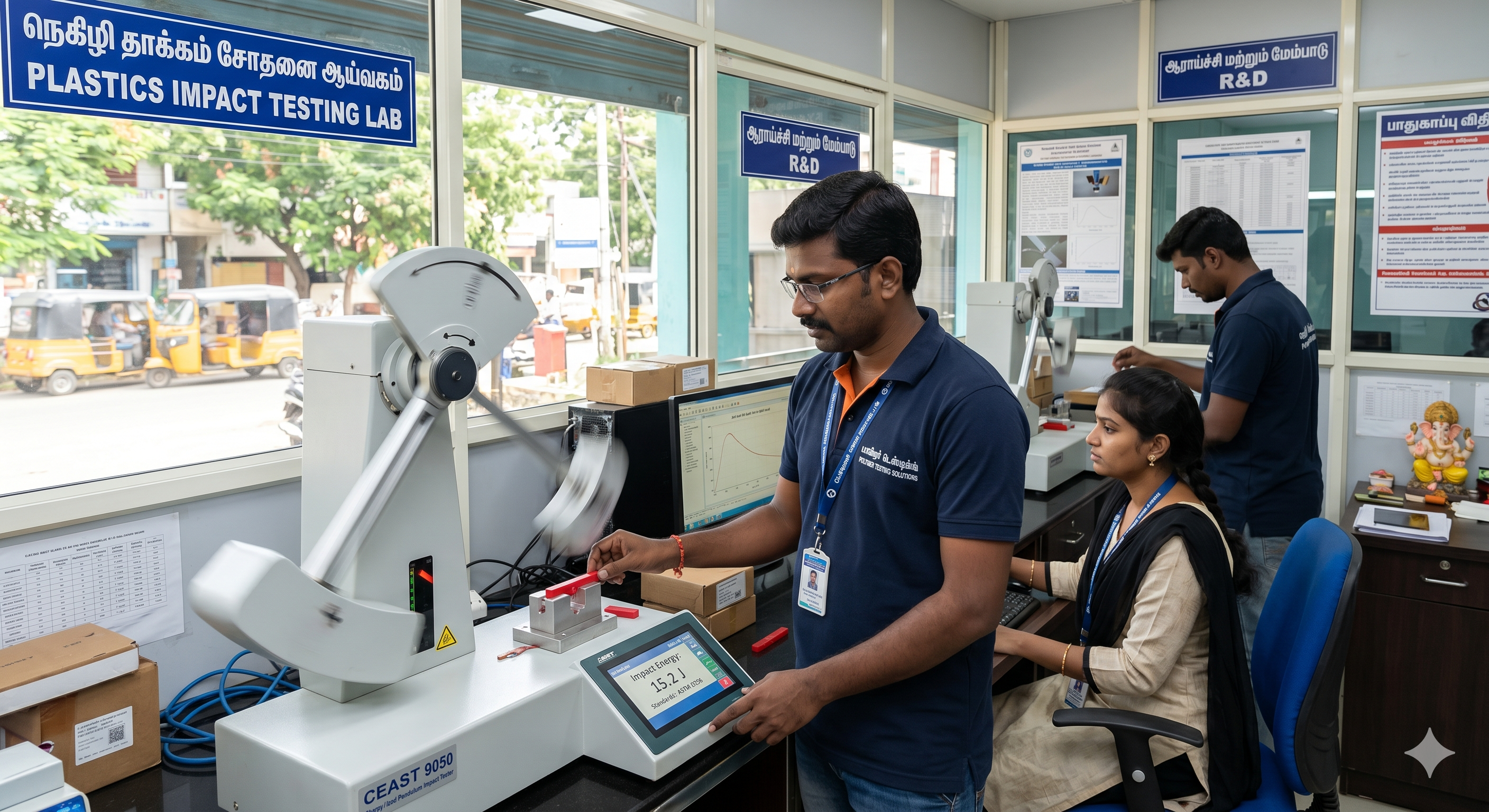
Plastic Impact Testers
- Optimized for testing the toughness of polymers, resins, and nylon blends.
- Typically utilizes lower-energy pendulums (0.5J to 25J) for precision.
- Ensures consumer electronics casings and appliance housings won't shatter on drop.
Access Catalog

Metal Impact Testers
- Massive, heavy-duty machines built to fracture steel alloys and structural iron.
- Utilizes high-mass pendulums generating forces from 150J up to 750 Joules.
- Mandatory for certifying structural steel used in bridges and skyscrapers.
Access Catalog

Film & Packaging Testers
- Includes free-falling darts and specialized pendulum puncture methods (Spencer).
- Evaluates the shock resistance of stretch wraps, plastic bags, and laminated foils.
- Ensures food packaging maintains integrity during rough logistics handling.
Access Catalog
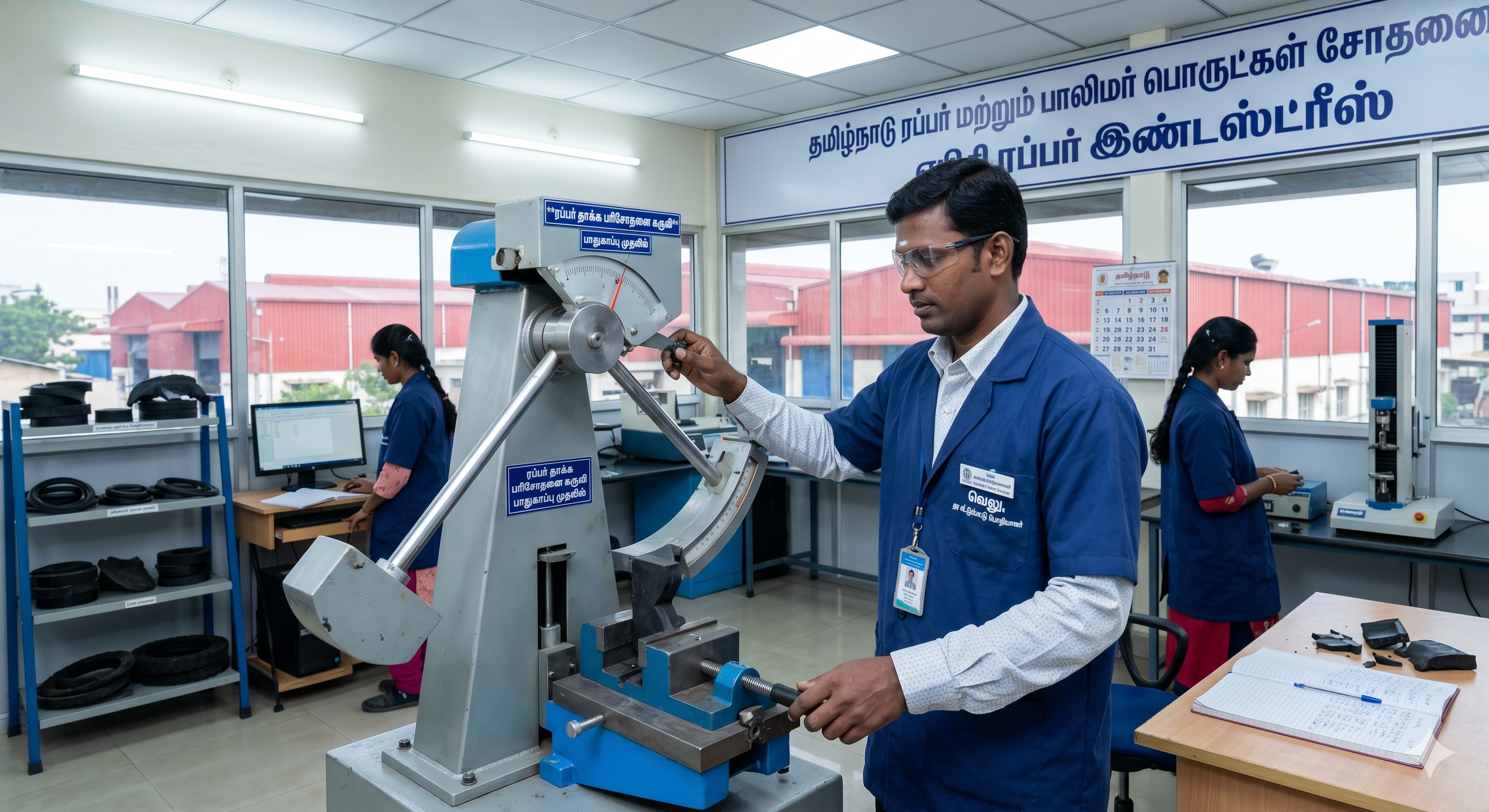
Rubber Impact Testers
- Designed to test the rebound resilience and energy absorption of elastomers.
- Critical for evaluating tire rubber compounds and heavy industrial shock absorbers.
- Often combined with low-temperature chambers to test for cold-weather brittleness.
Access Catalog
Special Environment & Industrial Machines
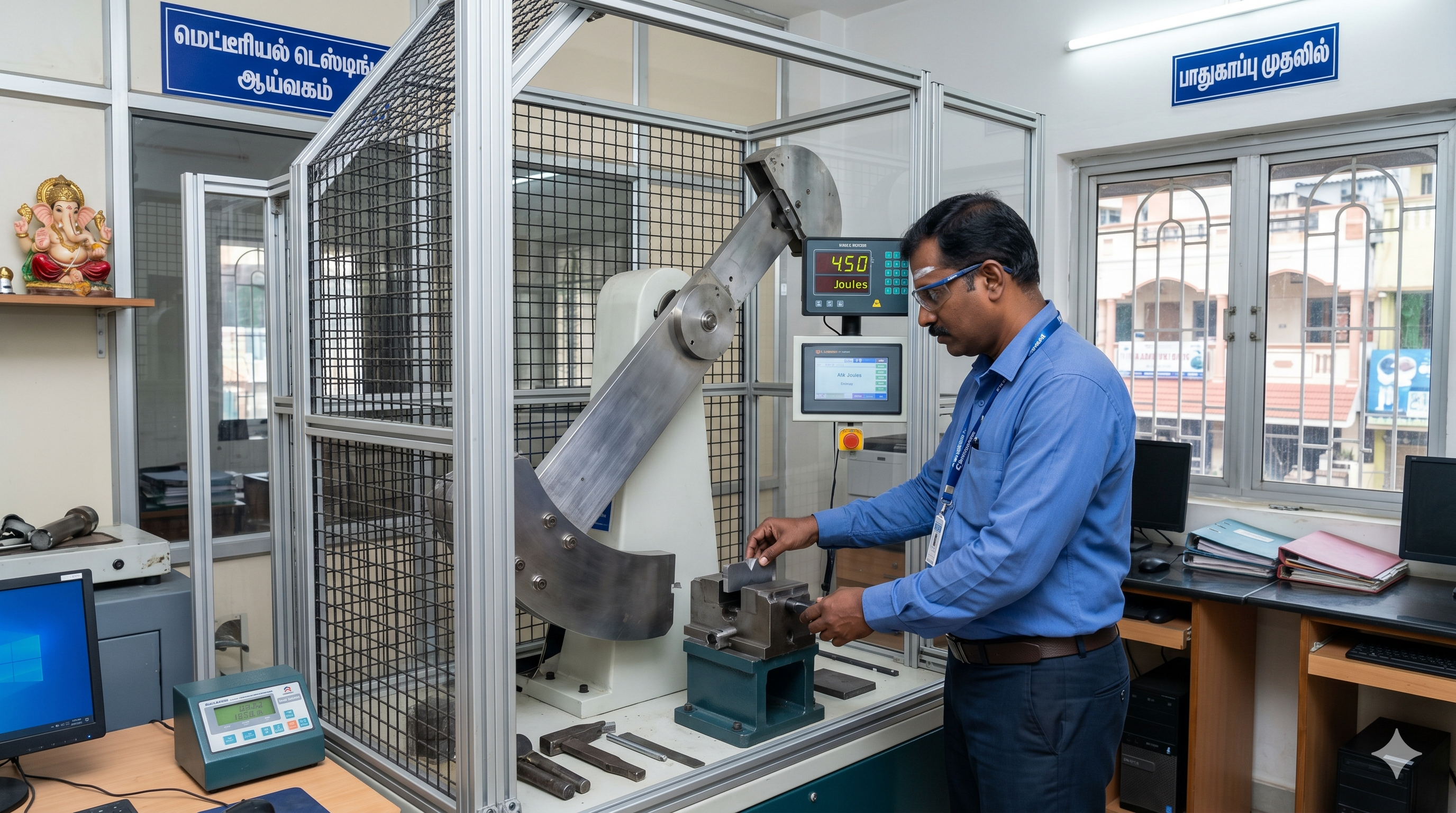
High Energy Testers
- Motorized hoist systems to lift massive drop weights or extreme pendulums.
- Used to destructively test aerospace composites and military armor plating.
- Requires heavy-duty concrete foundations to absorb excess vibration.
Access Catalog
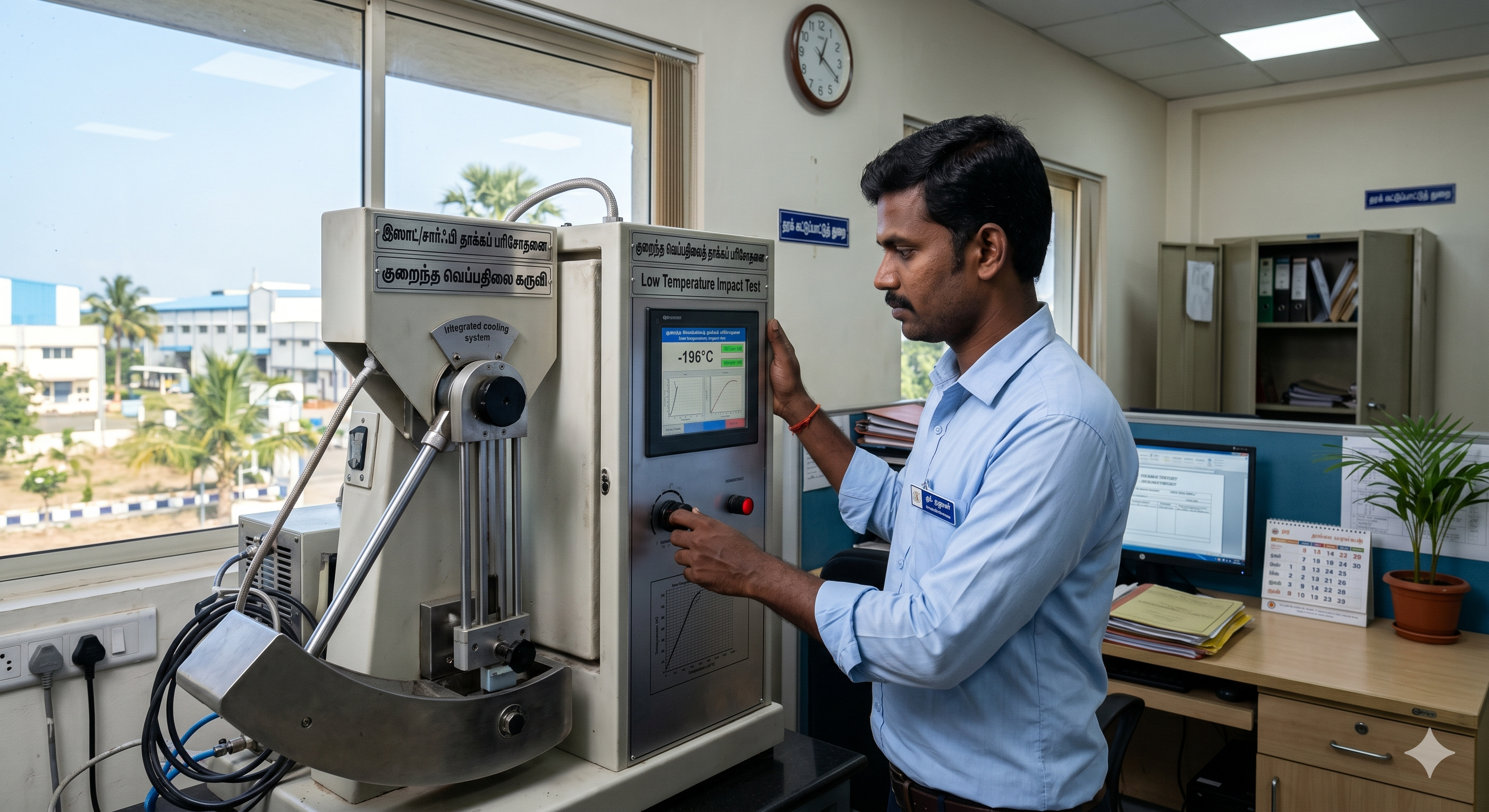
Low Temp Testers
- Integrates a cryogenic cooling chamber (often down to -80°C or -196°C).
- Crucial for determining the Ductile-to-Brittle Transition Temperature (DBTT).
- Mandatory for materials used in arctic environments, aerospace, and LNG piping.
Access Catalog

Laboratory Testers
- Highly precise, multi-functional units geared toward material R&D.
- Fully instrumented with PC software for graphing complex failure curves.
- Essential for formulating new alloys or advanced composite polymers.
Access Catalog
Industrial Machines
- Built for punishing, high-volume continuous QA on the factory floor.
- Features heavy-duty safety cages and automated sample feeding mechanisms.
- Designed to withstand years of brutal daily destructive testing.
Access Catalog
No Categories Found
Try adjusting your search terminology.
Enterprise Impact Mechanics Protocol
Understanding the physics of fracture mechanics is critical for ensuring material safety. Selecting the incorrect testing methodology—such as confusing Izod cantilever tests with Charpy simply-supported tests—will yield invalid data, potentially leading to catastrophic real-world structural failures.
Izod Impact (Cantilever)
Usage: Plastics & CompositesThe specimen is clamped vertically, acting as a cantilever beam. The pendulum strikes the upper tip of the sample, *above* the machined notch. This method is predominantly used in North America (ASTM D256) to evaluate the notch sensitivity of rigid polymers and engineered plastics.
Charpy Impact (Simply Supported)
Usage: Metals & Heavy AlloysThe specimen is supported horizontally at both ends (simply supported). The pendulum strikes the exact center of the sample, directly *behind* the machined notch. This is the global standard (ISO 148 / ASTM E23) for assessing the toughness and brittle fracture tendencies of structural steel.
Falling Dart (Free-Fall)
Usage: Films & Flexible PackagingRather than a swinging pendulum, a weighted dart is dropped from a specific height onto a flat, clamped sheet of material. It calculates the exact mass required to puncture and fail 50% of the specimens, simulating real-world drops for plastic bags and packaging.
Instrumented vs. Non-Instrumented
Advanced Material ProfilingStandard testers only output the total energy absorbed (Joules). Instrumented testers feature load cells in the striker, capturing thousands of data points during the millisecond impact. This provides a force-displacement curve, revealing exactly when crack *initiation* occurs versus crack *propagation*.
Testing Geometry & Standards Matrix
| Material / Application | Recommended Testing Method | Primary Standard |
|---|---|---|
| Rigid Plastics & Resins | Izod (Vertical Clamping) | ASTM D256 / ISO 180 |
| Structural Steel & Metals | Charpy (Horizontal Support) | ASTM E23 / ISO 148 |
| Thin Plastic Films / Bags | Falling Dart Impact | ASTM D1709 / ISO 7765 |
| Aerospace Composites | Drop Weight (Instrumented) | ASTM D7136 / ISO 6603 |
| Cold Weather Piping (LNG) | Charpy with Cryogenic Chamber | ASTM E23 (Low Temp) |
Advanced Testing Variables
To maintain enterprise-grade accuracy, impact testers must tightly control the physical parameters that directly influence a material's failure point. A slight deviation in sample preparation will completely invalidate the test results.
V-Notch Preparation
- Purpose of the Notch: The "V" notch artificially concentrates stress at a specific point, forcing the material to fracture rather than simply bend.
- Machining Precision: The radius at the base of the notch must be exact (e.g., 0.25mm). A microscopic scratch from a dull broaching tool will cause the sample to fail prematurely.
Temperature Dependency (DBTT)
- Ductile to Brittle: Materials act differently at various temperatures. A steel hull that is ductile (bends) in the summer may become brittle (shatters) in freezing arctic waters.
- DBTT Testing: Impact tests are often run across a temperature curve to find the exact "Ductile-to-Brittle Transition Temperature" to prevent catastrophic field failures.
Friction & Windage Losses
- Pendulum Drag: As a pendulum swings, it loses energy to bearing friction and air resistance (windage).
- Calibration Requirement: Before testing, the pendulum must be swung without a sample to calculate these inherent losses. High-end digital testers automatically deduct this loss from the final Joules reading.