Gauss Meters & Magnetic Field Testers
High-precision electromagnetic analysis tools designed to measure flux density, detect residual magnetism, and validate compliance with strict safety and performance standards.
Primary Applications
Motor Manufacturing MRI / Medical Shielding Non-Destructive Testing (NDT) Aerospace Electronics Metal Fabrication
Analytical Focus
AC / DC Flux Density Vector / 3-Axis Mapping Residual Magnetism Hall Effect Sensing Data Telemetry
Single Tap to Scroll • Double Tap to Open Catalog
Section 01
Core Gauss Meter Types
Digital, analog, handheld, and benchtop systems for day-to-day magnetic field inspection.

Digital Gauss Meters
- High-resolution LCD/LED screens for immediate, precise readouts.
- Eliminates the parallax reading errors associated with sweep needles.
- Often features auto-ranging and push-button zeroing.
- The modern standard for QC and general laboratory use.
Access Catalog

Analog Gauss Meters
- Classic dial-indicator design providing continuous visual feedback.
- Excellent for quickly identifying trends or rapid field fluctuations.
- Often purely mechanical, requiring no batteries for field deployment.
- Highly favored in rough, high-interference industrial environments.
Access Catalog
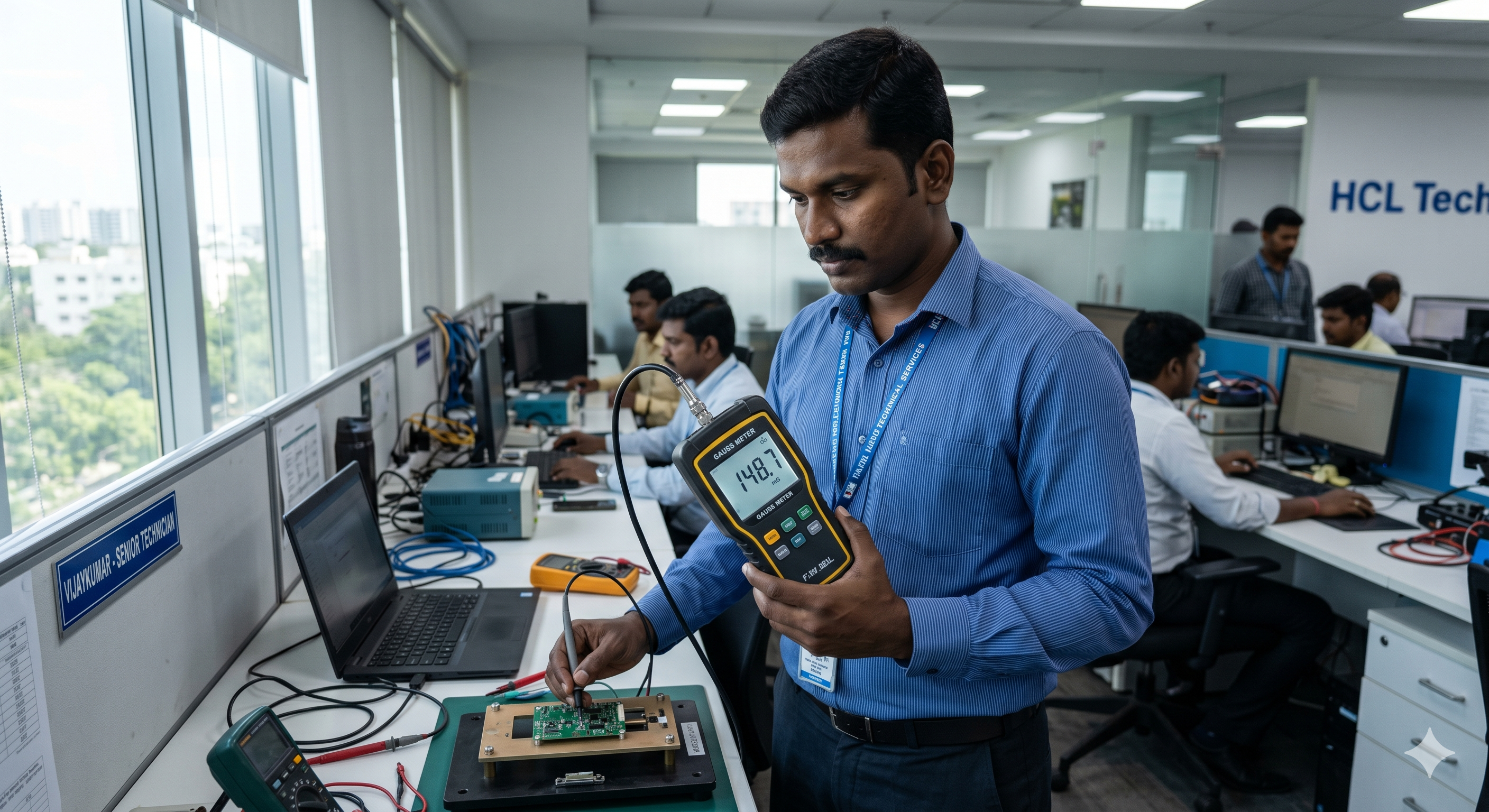
Portable / Handheld Meters
- Compact, battery-operated units designed for maximum mobility.
- Essential for inspecting large machinery or conducting NDT in the field.
- Ergonomic grips and backlit screens for use in tight, dark spaces.
- Includes protective holsters to survive plant-floor drops.
Access Catalog

Benchtop Gauss Meters
- High-fidelity instruments anchored to laboratory power supplies.
- Delivers the highest degree of accuracy (up to 6 digits) for R&D.
- Often features extensive I/O ports (USB, RS-232, IEEE-488).
- Used for calibrating permanent magnets and testing raw materials.
Access Catalog
Section 02
AC / DC Field Measurement & Sensors
Dedicated AC, DC, AC/DC, Hall Effect, vector, and single-axis measurement solutions.

AC Magnetic Field Meters
- Specifically tuned to measure alternating electromagnetic fields.
- Crucial for mapping EMF radiation from power lines and transformers.
- Measures True RMS values to account for distorted waveforms.
- Used heavily in occupational health and safety (OHS) compliance.
Access Catalog

DC Magnetic Field Meters
- Optimized for measuring static fields from permanent magnets or DC coils.
- Essential for inspecting MRI rooms and validating magnetic shielding.
- Detects residual magnetism in steel parts after welding or machining.
- Highly sensitive to Earth's ambient magnetic field (requires careful zeroing).
Access Catalog
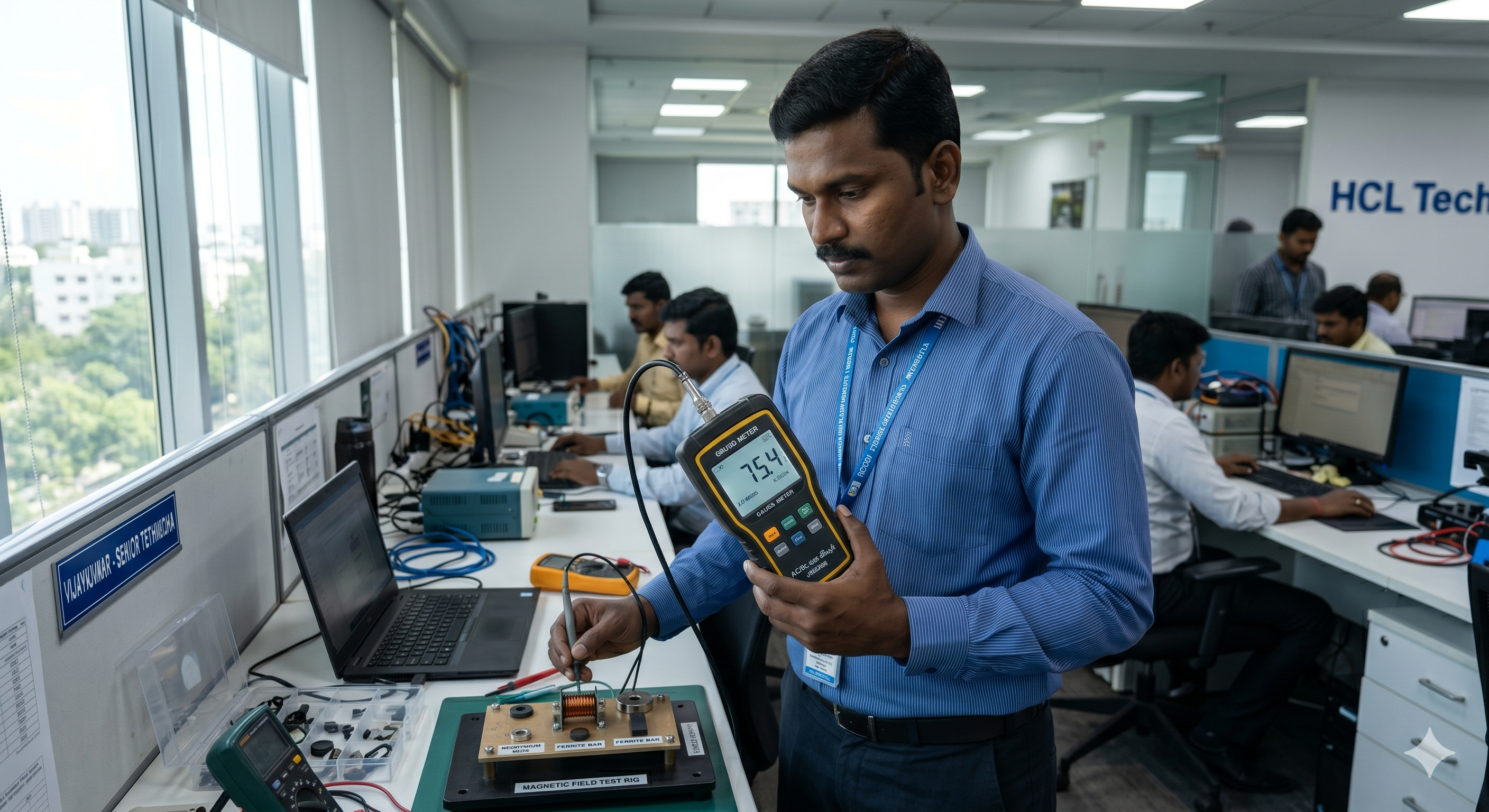
AC/DC Gauss Meters
- Dual-function instruments capable of switching measurement modes.
- Provides maximum versatility for maintenance teams facing unknown fields.
- Often features peak-hold functions to capture rapid transient spikes.
- Eliminates the need to carry multiple specialized meters.
Access Catalog

Hall Effect Gauss Meters
- Utilizes a semiconductor element to generate voltage proportional to the field.
- The industry standard for achieving high linearity and wide dynamic range.
- Capable of accurately measuring fields from milliGauss up to tens of Tesla.
- Requires careful temperature compensation for maximum precision.
Access Catalog
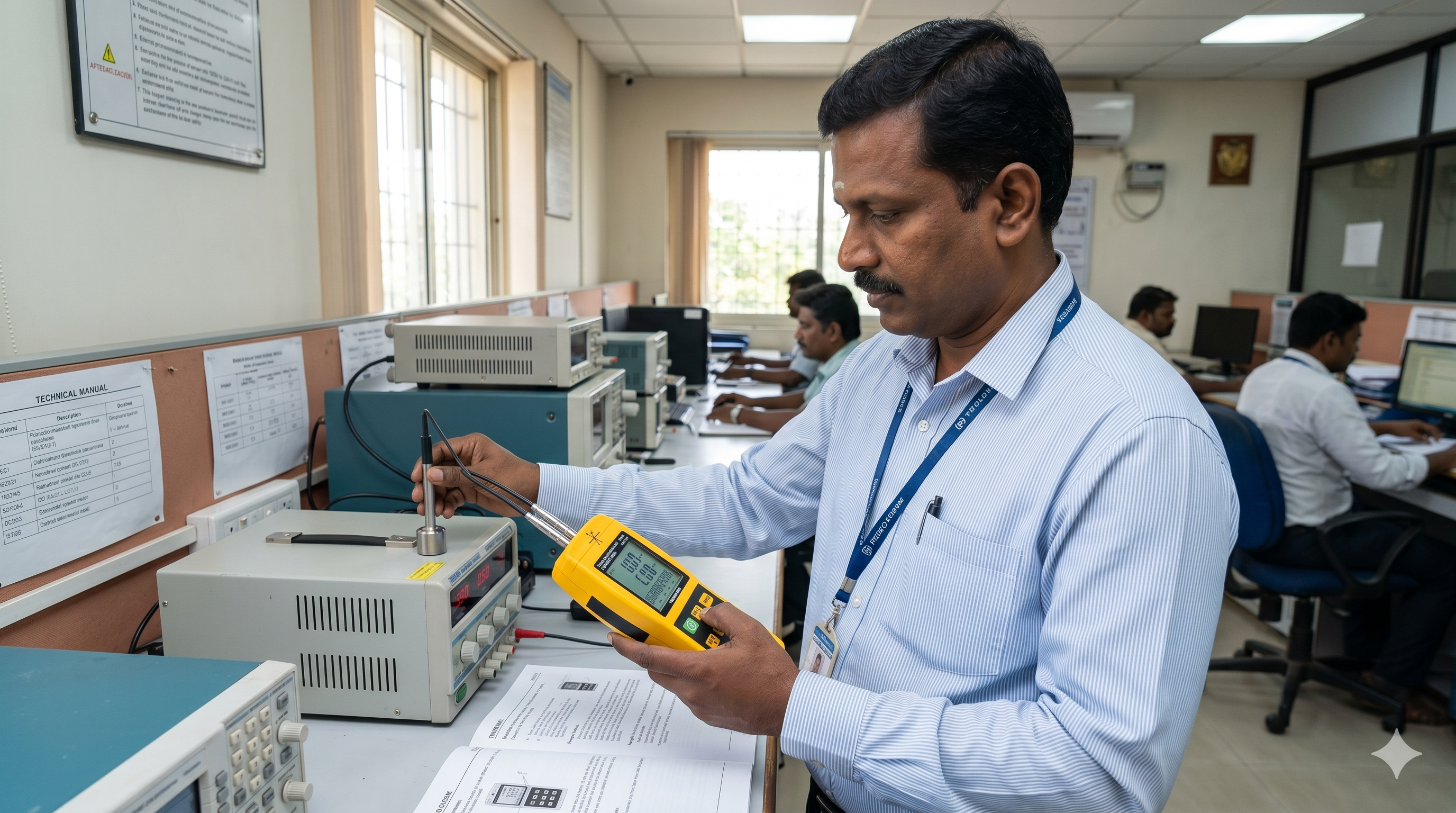
3-Axis Gauss Meters
- Features tri-axial isotropic probes (X, Y, Z coordinates simultaneously).
- Measures the true magnitude of the field regardless of probe orientation.
- Crucial for mapping complex spatial fields around motors and solenoids.
- Eliminates the "hunting" process required with single-axis probes.
Access Catalog

Single Axis Gauss Meters
- Measures field strength strictly in one specific, defined vector direction.
- Requires the operator to physically rotate the probe to find the peak field.
- Ideal for inspecting narrow air gaps in specialized magnetic assemblies.
- Provides highly focused data when field directionality is known.
Access Catalog
Section 03
Precision Probe, Surface & Data Systems
High-sensitivity probes, residual magnetism testers, and logging instruments for traceable results.
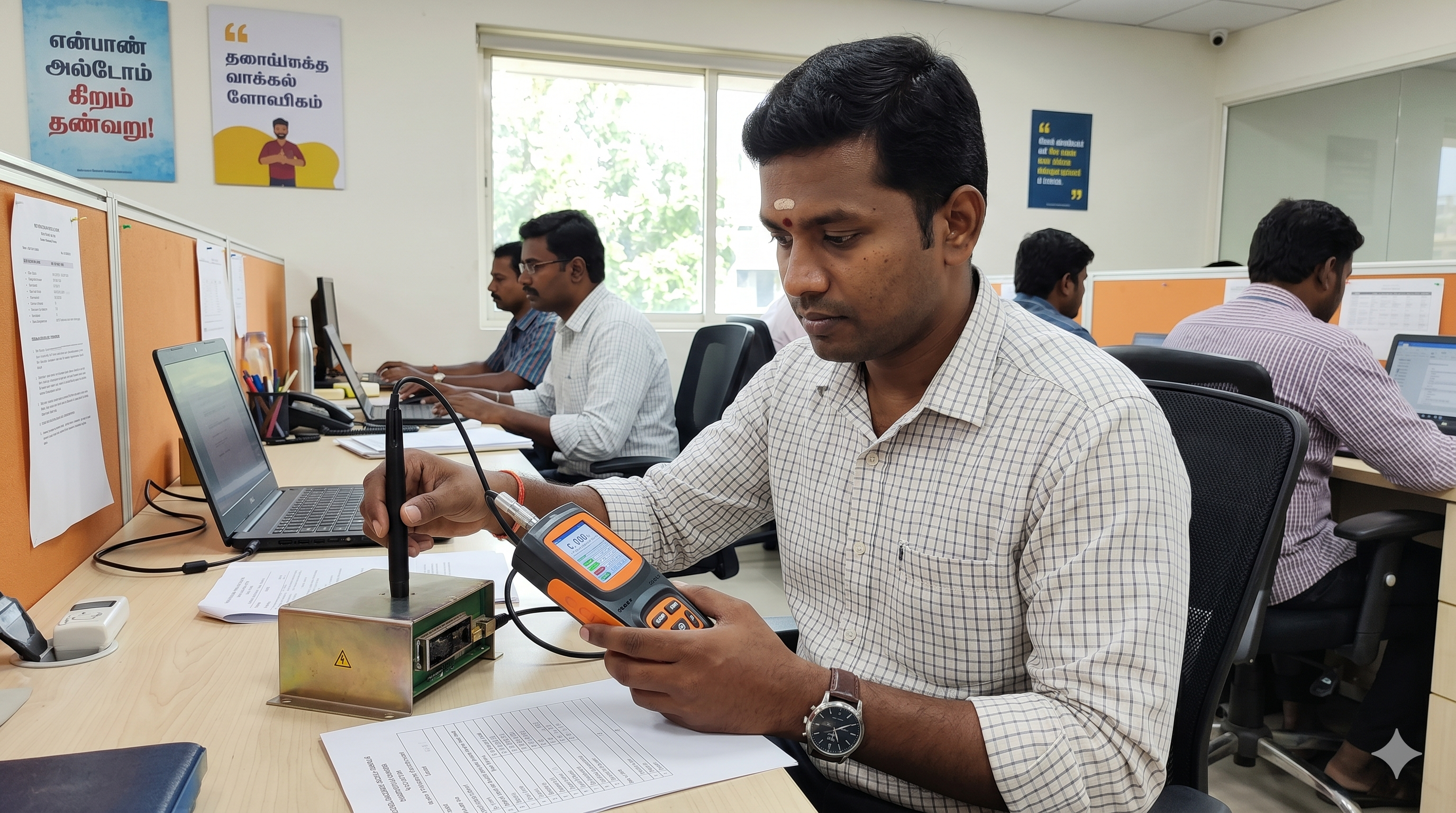
High Sensitivity Gauss Meters
- Often utilizes Fluxgate technology rather than Hall effect sensors.
- Capable of resolving down to nanotesla (nT) or microGauss (µG) levels.
- Essential for geological surveys, compass calibration, and aerospace shielding.
- Used to detect tiny deviations in the Earth's natural magnetic field.
Access Catalog

Probe Type Gauss Meters
- Characterized by detachable, interchangeable sensor wands.
- Offers transverse (flat) probes for air gaps and axial (cylindrical) probes for solenoids.
- Allows for customized measurement geometry without replacing the base unit.
- Probes are incredibly fragile and require specialized protective sheaths.
Access Catalog
.png)
Surface Testers (Residual)
- Specifically calibrated to measure flux exactly at the boundary of a material.
- Critical for verifying demagnetization after Non-Destructive Testing (NDT).
- Prevents magnetized steel parts from attracting destructive metal shavings.
- Often utilized in oil and gas pipeline welding preparation.
Access Catalog

Data Logging Gauss Meters
- Features internal memory to record thousands of field strength readings over time.
- Allows for long-term EMF exposure tracking in occupational health studies.
- Transfers data via USB or Bluetooth for advanced PC charting and analysis.
- Essential for creating compliance reports for medical or industrial installations.
Access Catalog
Section 04
Laboratory & Industrial Applications
Reference-grade lab meters and rugged industrial instruments for production and field environments.
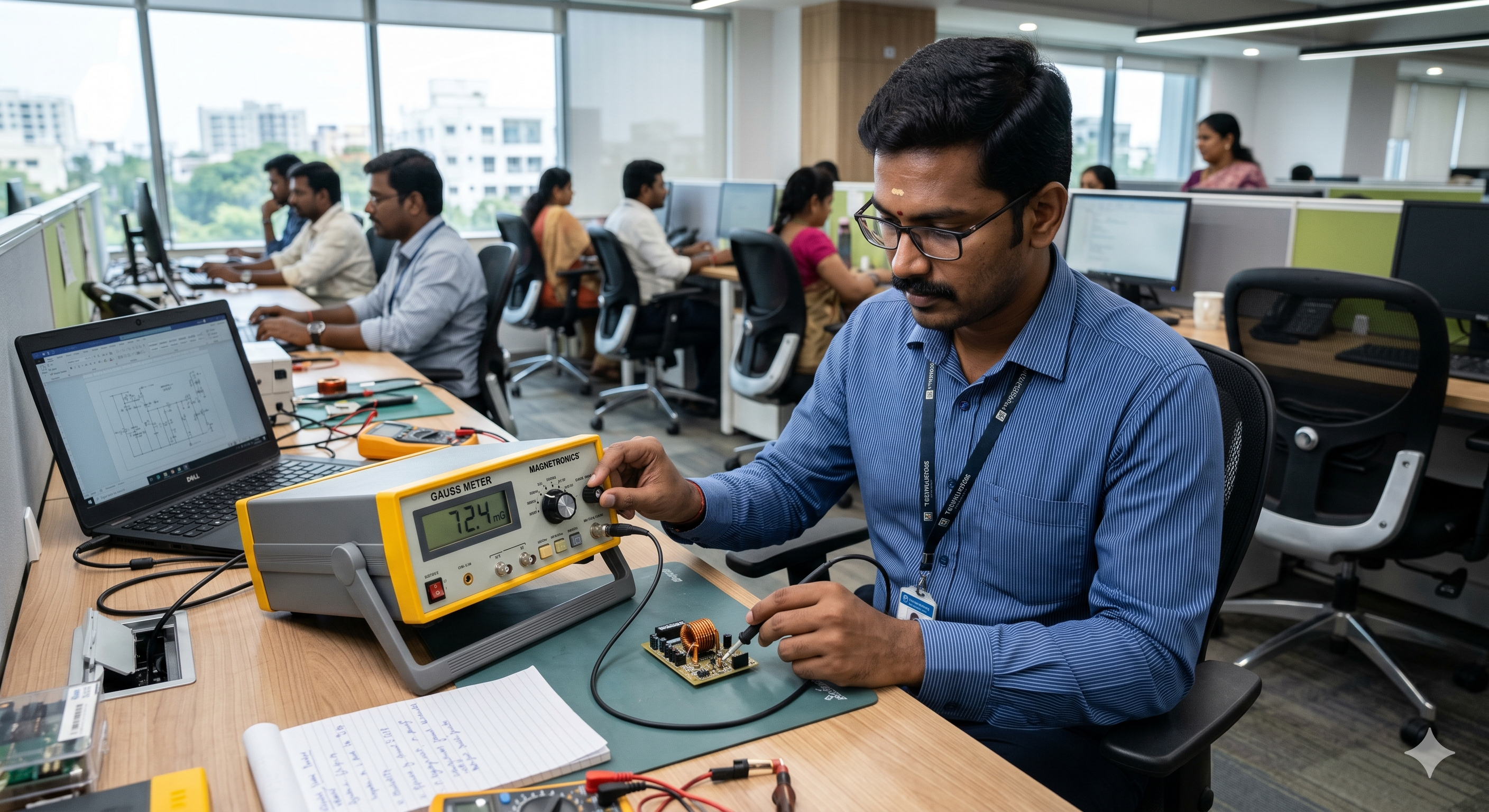
Laboratory Gauss Meters
- The pinnacle of magnetic measurement, prioritizing extreme stability over mobility.
- Utilized for mapping the absolute homogeneity of magnetic resonance fields.
- Often features integrated temperature tracking to correct thermal sensor drift.
- The core instrument for characterizing new magnetic alloys and rare-earth materials.
Access Catalog
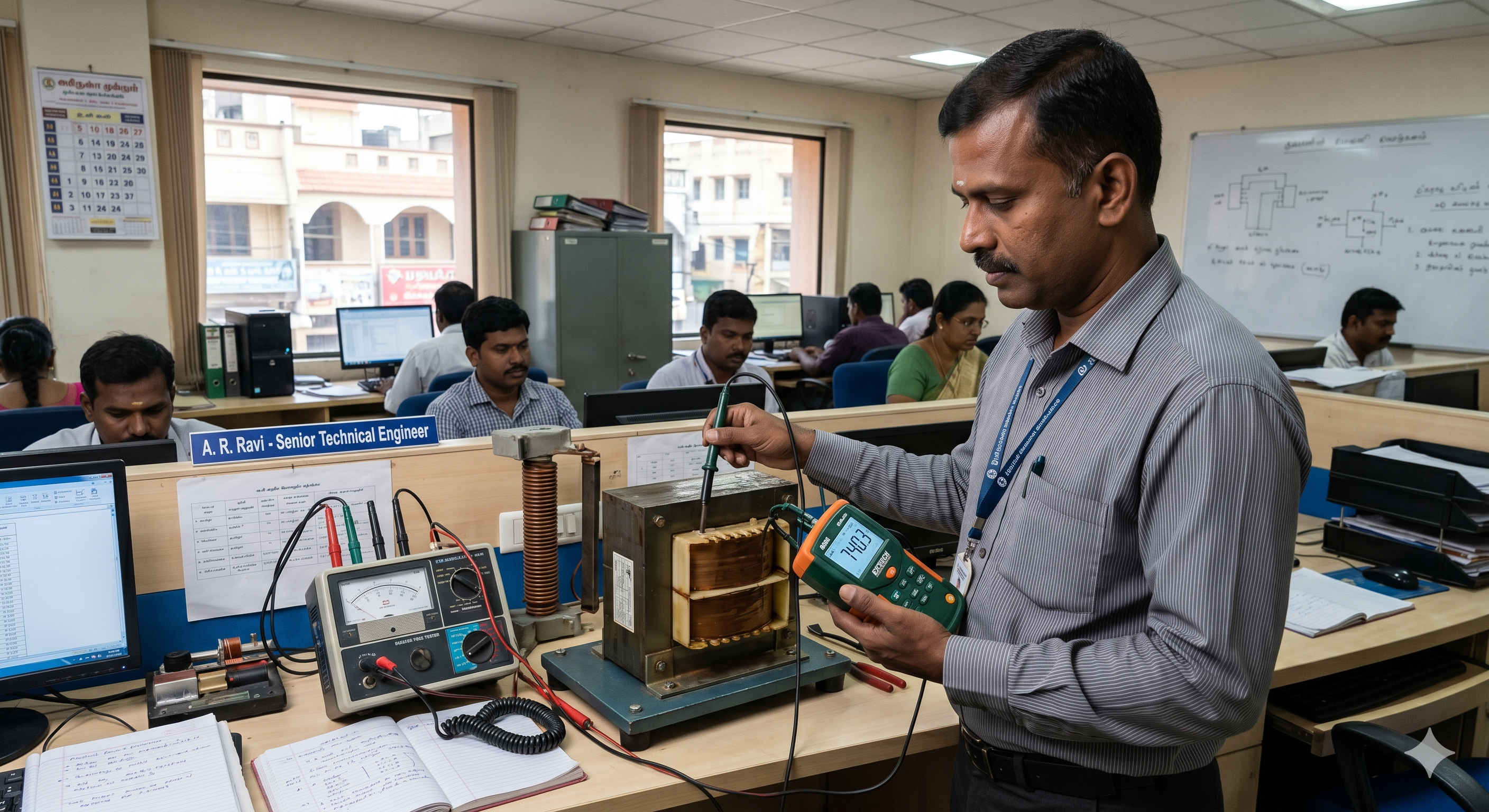
Industrial Field Meters
- Ruggedized instruments built to survive severe manufacturing environments.
- Can be integrated into PLC/SCADA systems for automated pass/fail sorting.
- Used to continuously monitor magnetic separators in food processing lines.
- Features IP-rated enclosures to protect against metal dust and cutting fluids.
Access Catalog
No Categories Found
Try adjusting your search terminology.
Electromagnetic Metrology Guide
Accurate magnetic field measurement is highly complex, relying heavily on proper probe selection, orientation, and understanding the physical nature of the field being analyzed. Misinterpreting these variables leads to catastrophic errors in component grading and safety compliance.
Probe Orientation (Axial vs. Transverse)
Sensor GeometryThe Hall sensor must be placed exactly perpendicular to the magnetic flux lines. Transverse probes (flat and thin) are required for measuring the flux inside narrow air gaps (like motor stators). Axial probes (cylindrical) are designed to measure the field inside a hollow coil or solenoid.
AC vs. DC Differentiation
Waveform AnalysisPermanent magnets emit static (DC) fields. Power lines, transformers, and induction motors emit alternating (AC) fields that reverse polarity continuously (50/60Hz). You must use an AC-capable meter with True RMS calculation to accurately assess the hazard of an alternating field.
The 3-Axis Advantage
Vector SummationWhen the direction of the magnetic field is unknown or complex, a single-axis probe will read artificially low unless the operator perfectly aligns it. A 3-Axis (isotropic) probe contains three orthogonal sensors, instantly calculating the true total magnitude of the field regardless of how the probe is held.
Thermal Drift & Zeroing
Calibration VariablesHall effect sensors are highly sensitive to temperature changes. Moving a probe from a cold room to a hot motor will cause the baseline reading to drift. Premium Gauss meters utilize built-in thermistors to mathematically compensate for this drift in real-time, ensuring absolute accuracy.
Unit Conversion & Magnitude Matrix
| Field Source Example | Gauss (G) | Tesla (T) | Primary Instrument Type |
|---|---|---|---|
| Earth's Ambient Magnetic Field | ~0.5 G | ~50 µT (Microtesla) | Fluxgate / High Sensitivity Meter |
| Standard Refrigerator Magnet | ~50 G | ~5 mT (Millitesla) | Standard Hall Effect Meter |
| Industrial Lifting Electromagnet | ~10,000 G | ~1.0 T | Heavy Duty Hall Effect Meter |
| Medical MRI Scanner | 15,000 - 30,000 G | 1.5 T - 3.0 T | Lab Grade / High-Range Meter |
| Occupational Exposure Limit (ICNIRP) | ~10 G (AC @ 50Hz) | ~1 mT (AC) | AC Isotropic Field Meter |