Precision CO₂ Purity Testers
Engineered to measure, validate, and verify the absolute concentration of Carbon Dioxide (CO₂) across critical industrial, medical, and food & beverage processing environments.
Widely Used By
Brewery Quality Control Medical Gas Technicians Semiconductor Fabs Gas Fill Plants Industrial Hygienists
Key Purposes
ISBT Beverage Compliance USP Medical Grade Verification Trace Impurity Detection Process Line Monitoring Safety & Leak Alarms
Single Tap to Scroll • Double Tap to Open Catalog
CO₂ Catalog Section
Field & Installation CO₂ Testers
Portable, handheld, and fixed online systems for site audits, plant safety, and continuous facility monitoring.
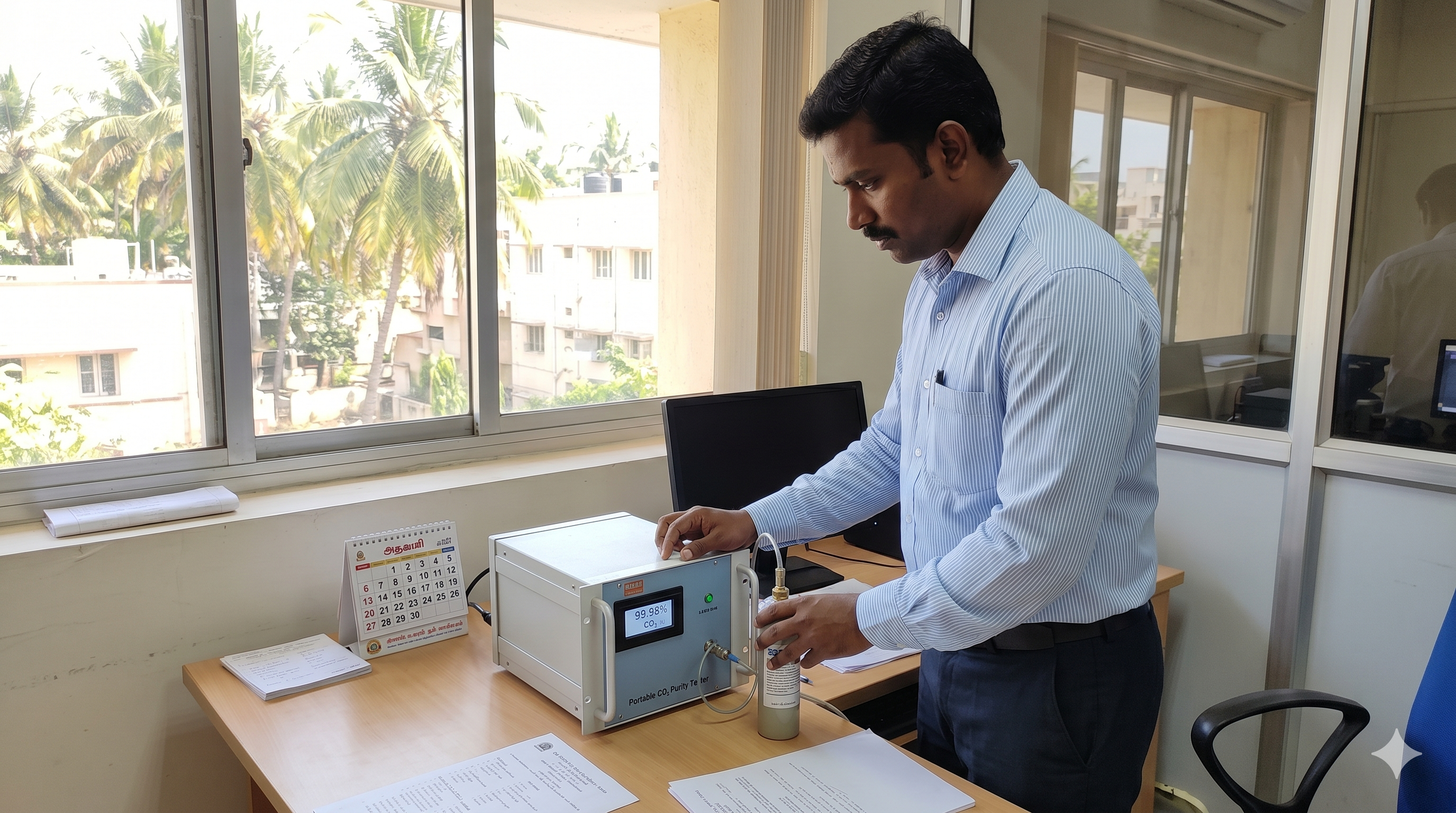
Portable CO₂ Purity Testers
- Rugged, battery-powered units designed for rapid on-site audits.
- Features ultra-fast warmup times for immediate gas profiling.
- Ideal for validating tanker deliveries at the receiving dock.
- Built-in sample pumps for extracting gas from deep process lines.
View Catalog
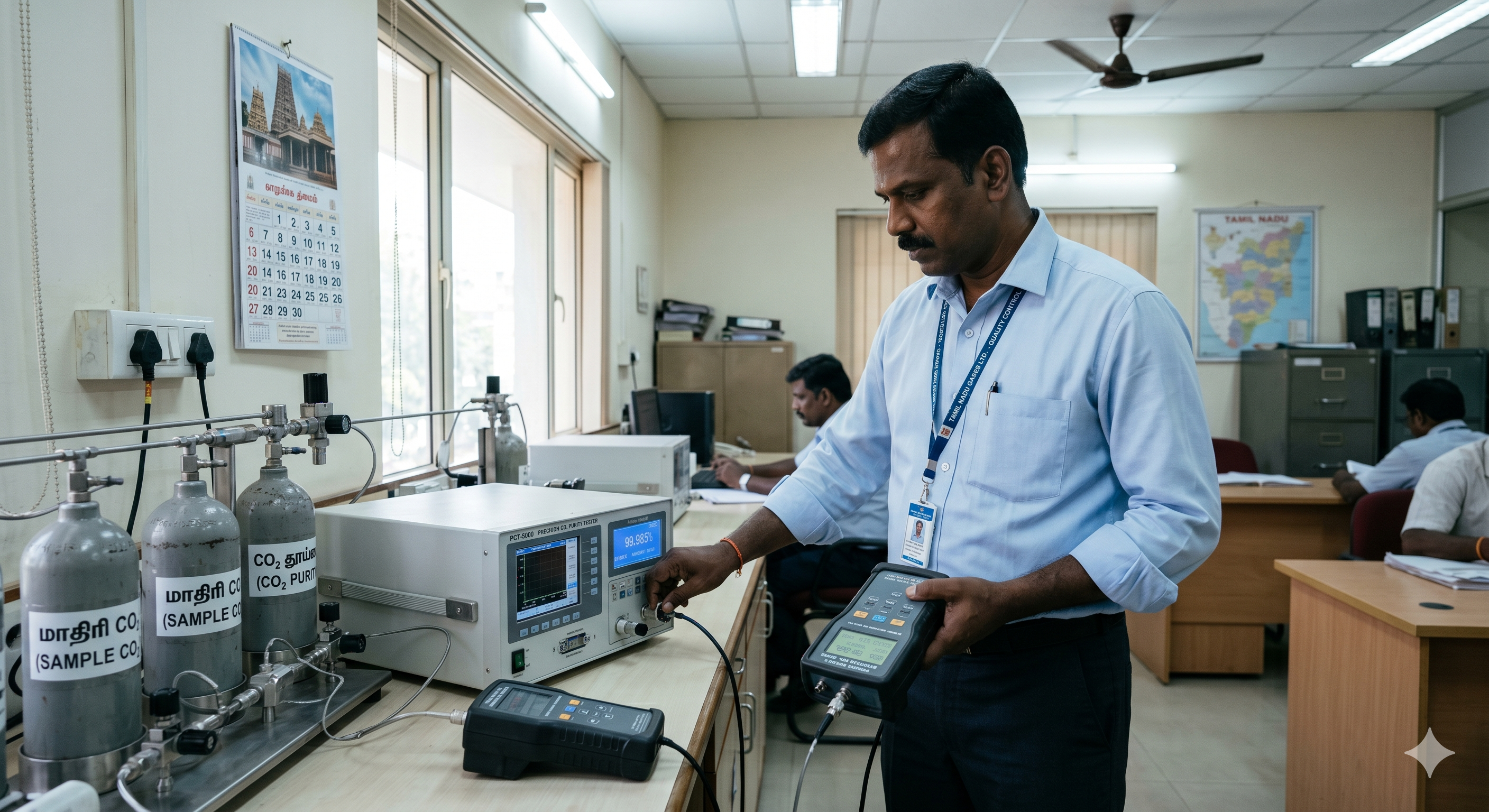
Handheld CO₂ Analyzers
- Ergonomic, lightweight format for quick safety spot-checks.
- Essential for confined space entry in breweries and fermentation cellars.
- Instantly alerts operators to dangerously low O2 or high CO2 levels.
- Straightforward interfaces designed for non-technical facility staff.
View Catalog
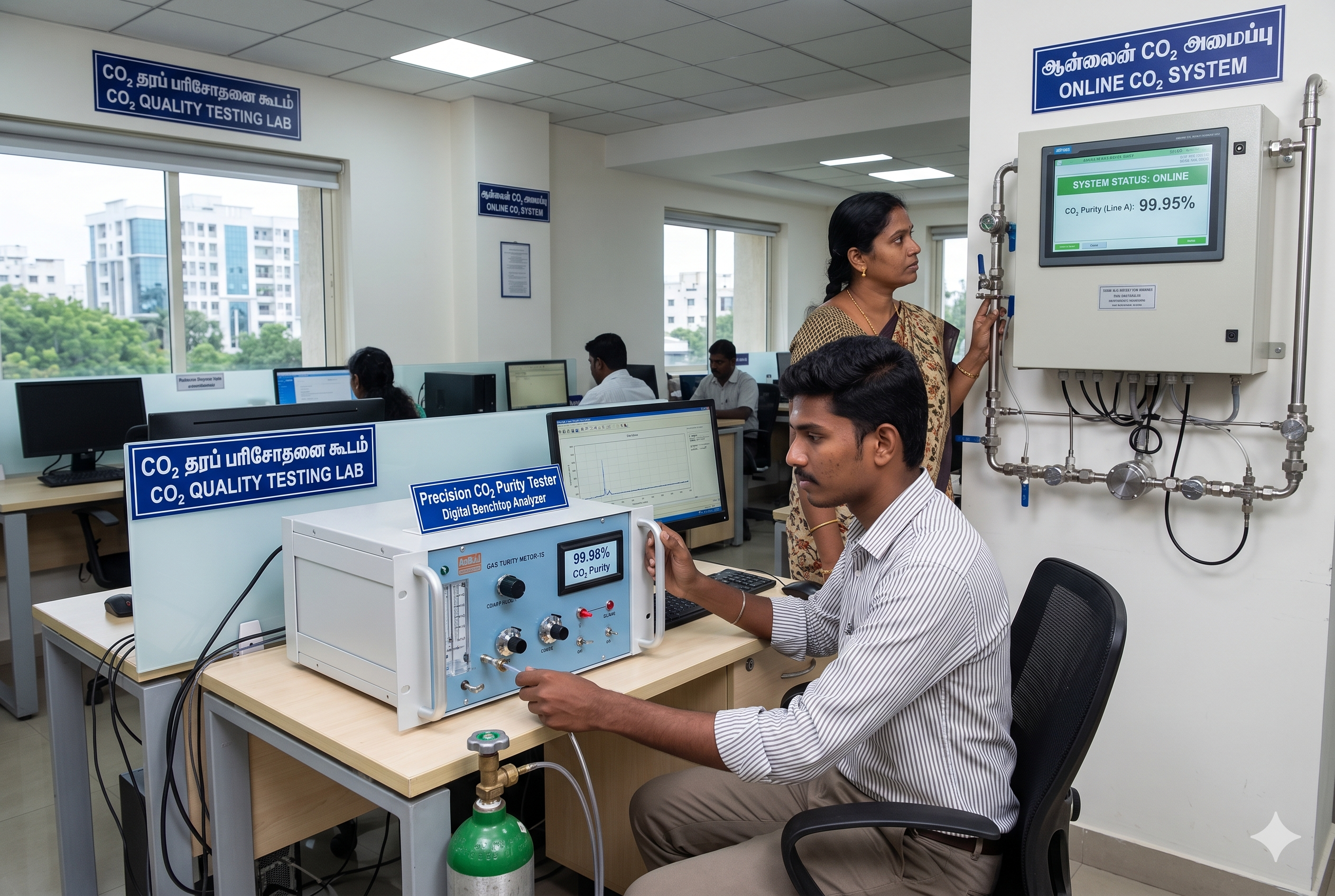
Fixed / Online CO₂ Systems
- Permanent installations for uninterrupted 24/7 continuous monitoring.
- Automates exhaust fan triggering via heavy-duty relay outputs.
- Seamlessly integrates into central DCS or plant SCADA architectures.
- Housed in NEMA 4X / IP66 washdown enclosures for food plants.
View Catalog
CO₂ Catalog Section
Application Grade CO₂ Purity Systems
High purity, industrial, food & beverage, and medical grade analyzers for compliance-focused gas validation.
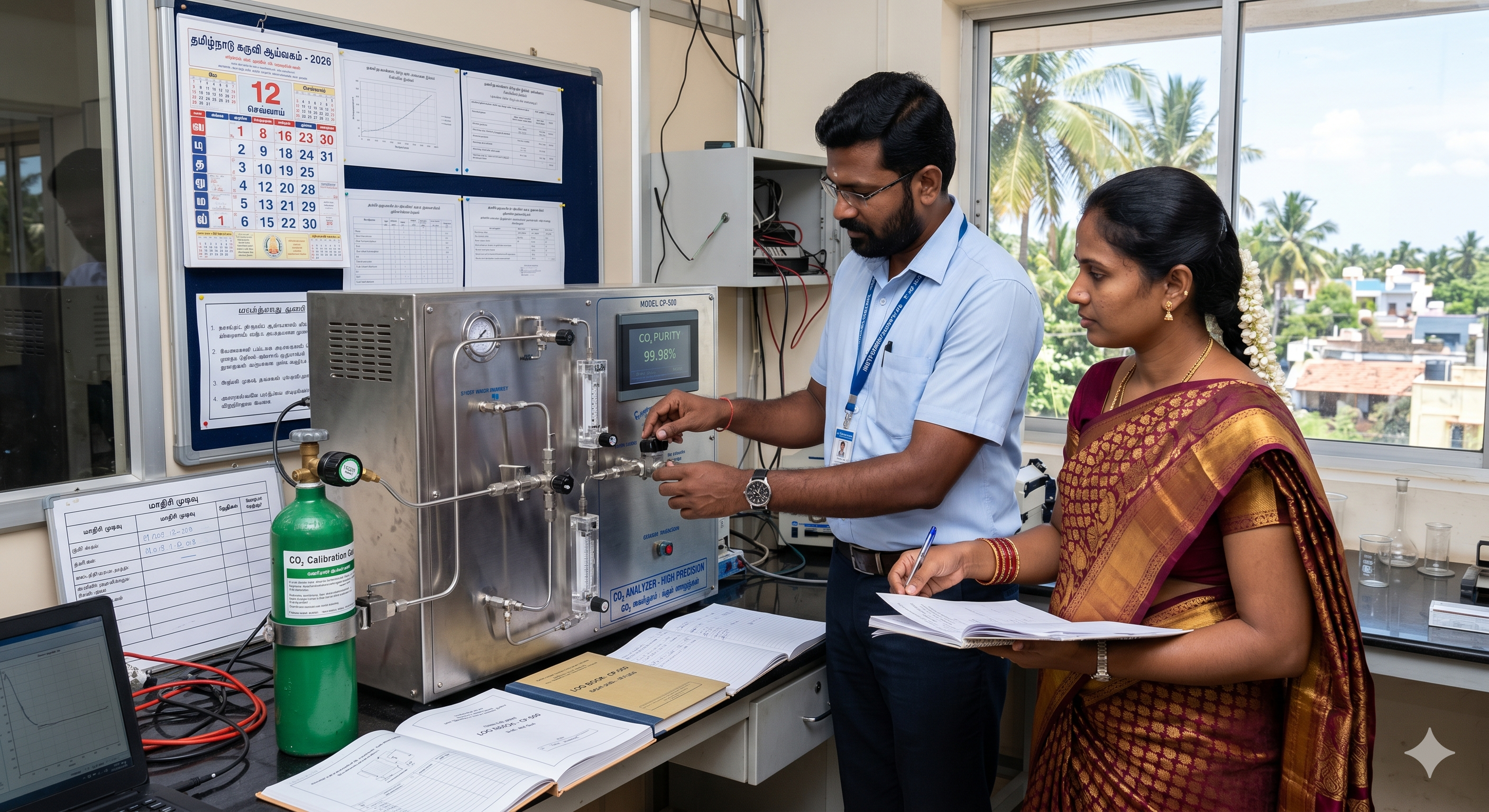
High Purity CO₂ Analyzers
- Validates ultra-pure gas up to 99.999% (Grade 5.0) concentration.
- Simultaneously detects trace impurities like moisture, O2, and hydrocarbons.
- Mandatory for semiconductor manufacturing and specialty gas mixing.
- Utilizes advanced cross-sensitivity cancellation algorithms.
View Catalog
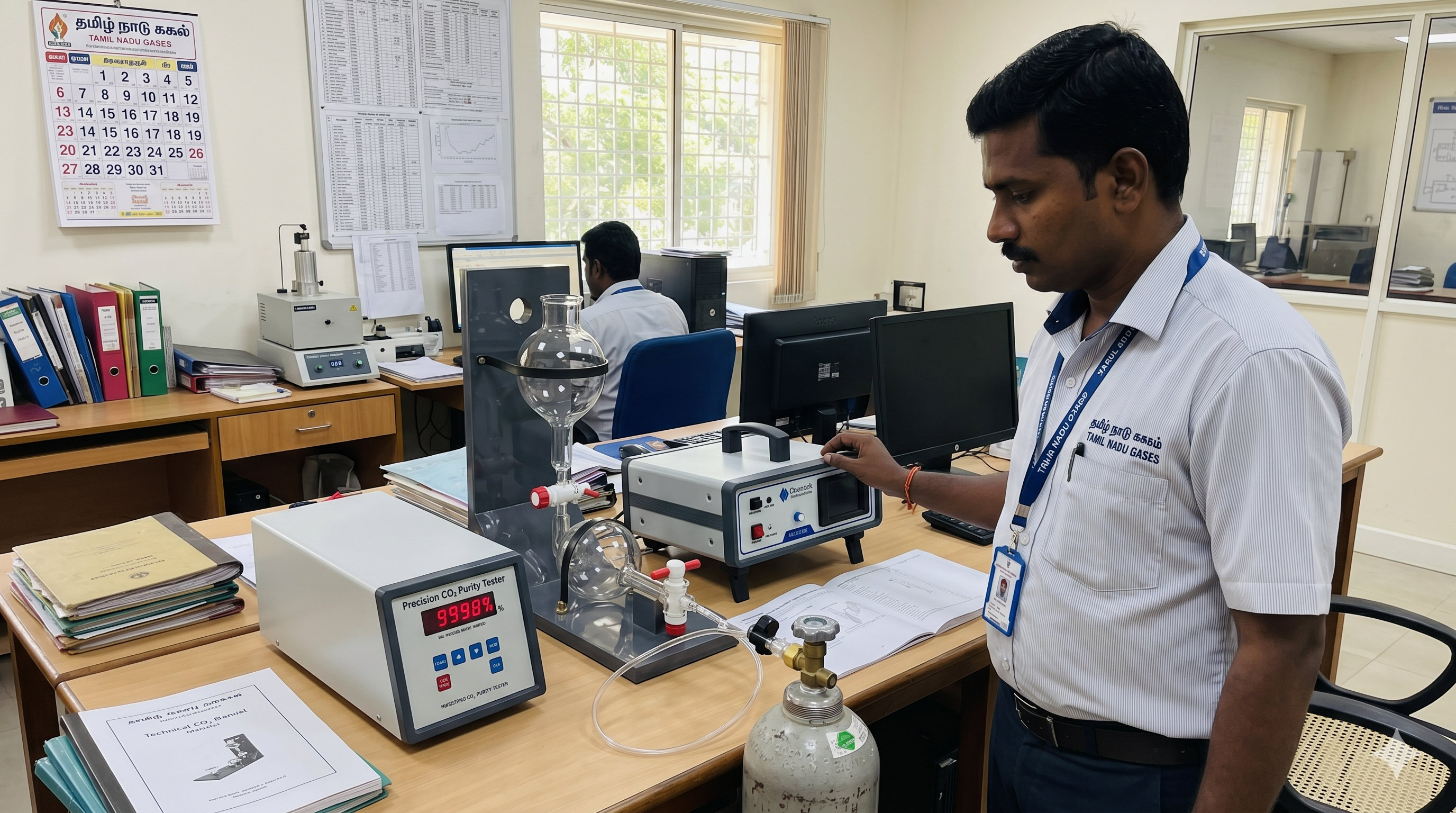
Industrial CO₂ Gas Analyzers
- Heavy-duty sensors built to survive highly corrosive factory environments.
- Optimized for welding gas mixtures (Argon/CO2 balance).
- Provides real-time feedback for combustion efficiency optimization.
- Available in specialized ATEX explosion-proof configurations.
View Catalog
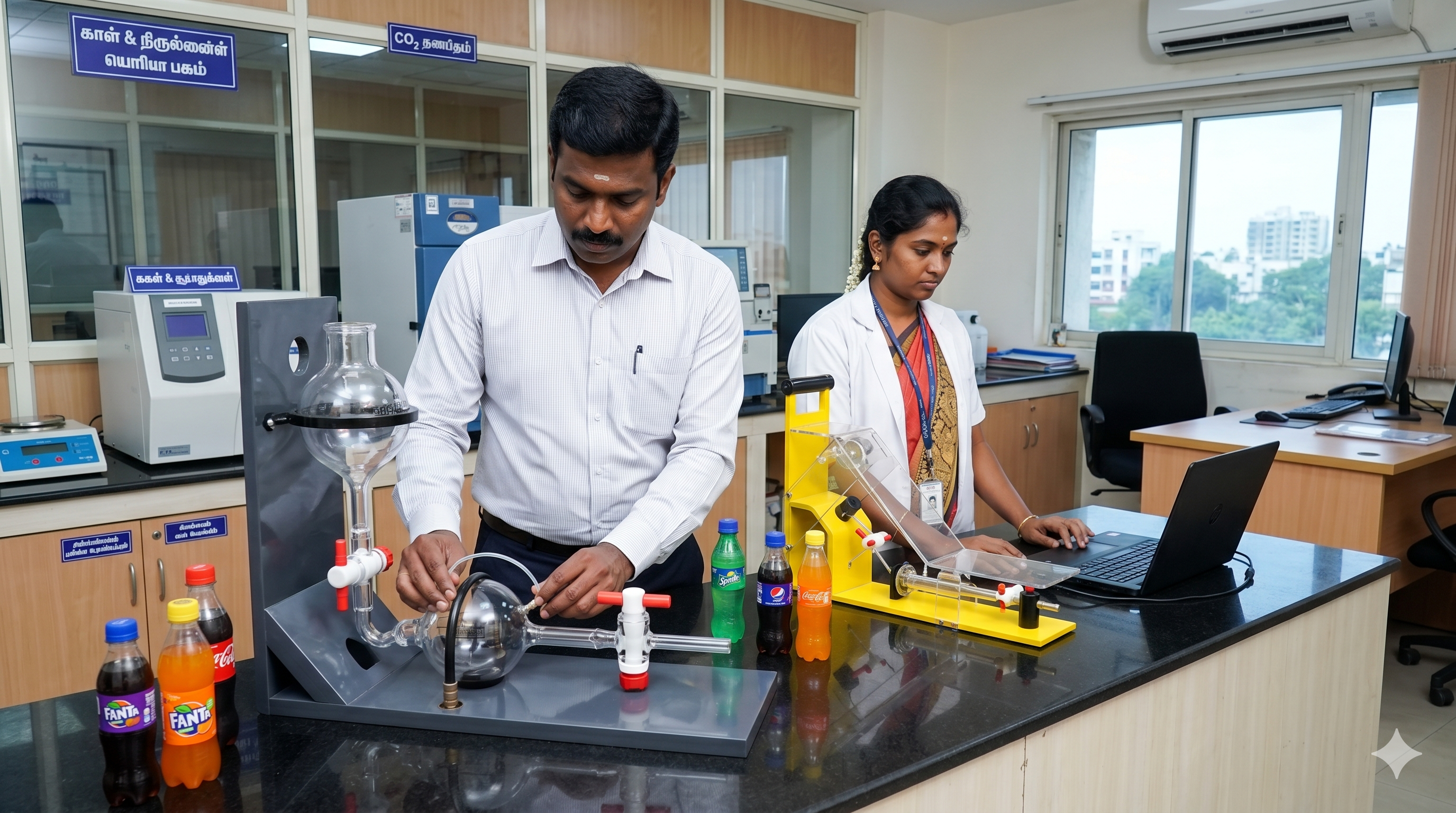
Food & Beverage CO₂ Testers
- Ensures 100% compliance with strict ISBT (Beverage) purity guidelines.
- Protects soft drink and beer flavor profiles from off-gas contamination.
- Detects trace sulfur, benzene, and acetaldehyde impurities.
- Crucial for verifying CO2 used in Modified Atmosphere Packaging (MAP).
View Catalog
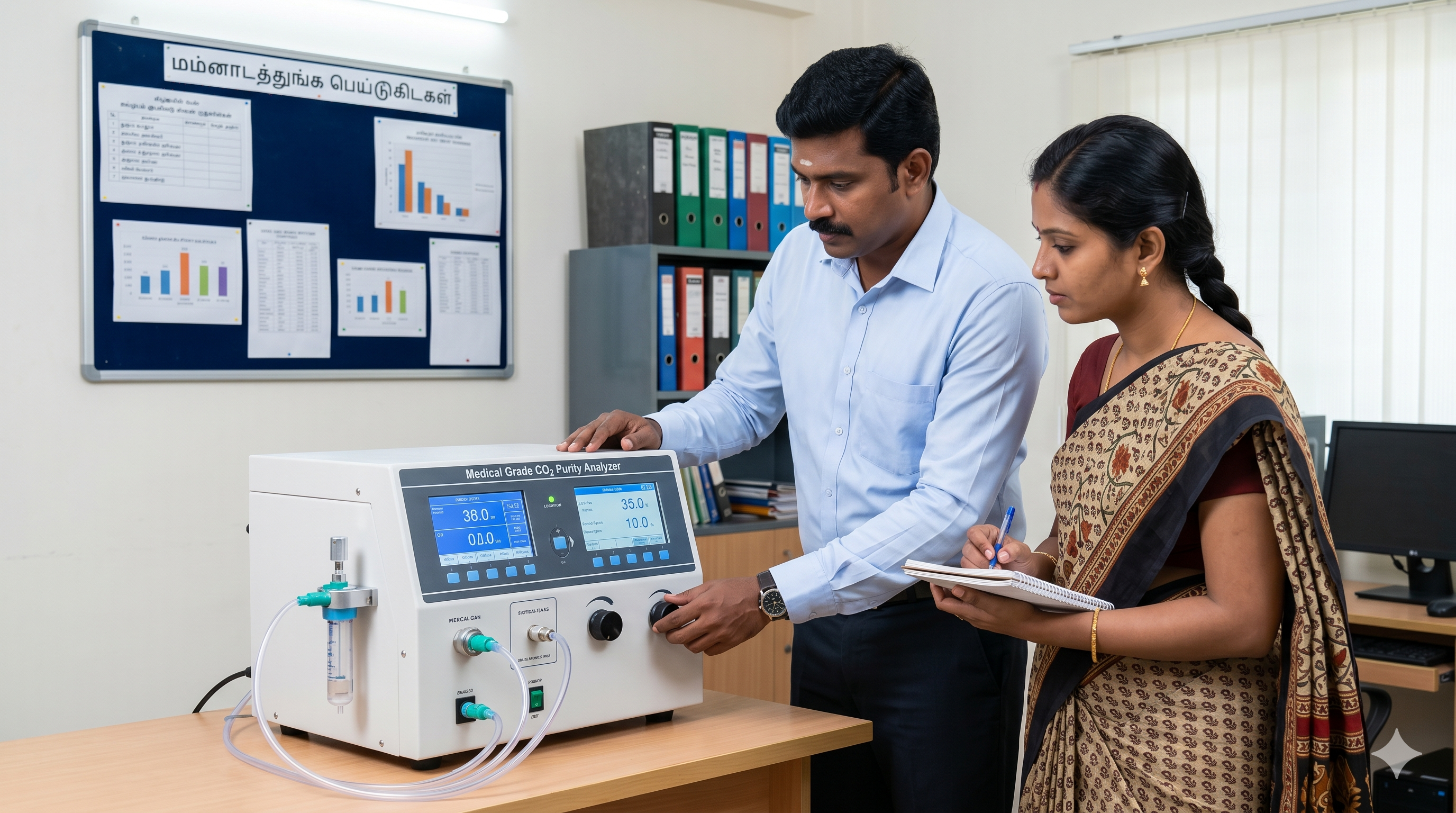
Medical Grade CO₂ Analyzers
- Verifies USP grade medical gases for critical patient safety.
- Ensures exact purity required for surgical insufflation procedures.
- Used extensively in clinical respiratory and capnography calibration.
- Guarantees zero dangerous contamination in hospital gas pipelines.
View Catalog
CO₂ Catalog Section
Sensor Technology & Analytical Methods
NDIR, infrared, multi-gas, and laboratory analysis options for accurate concentration and impurity measurement.
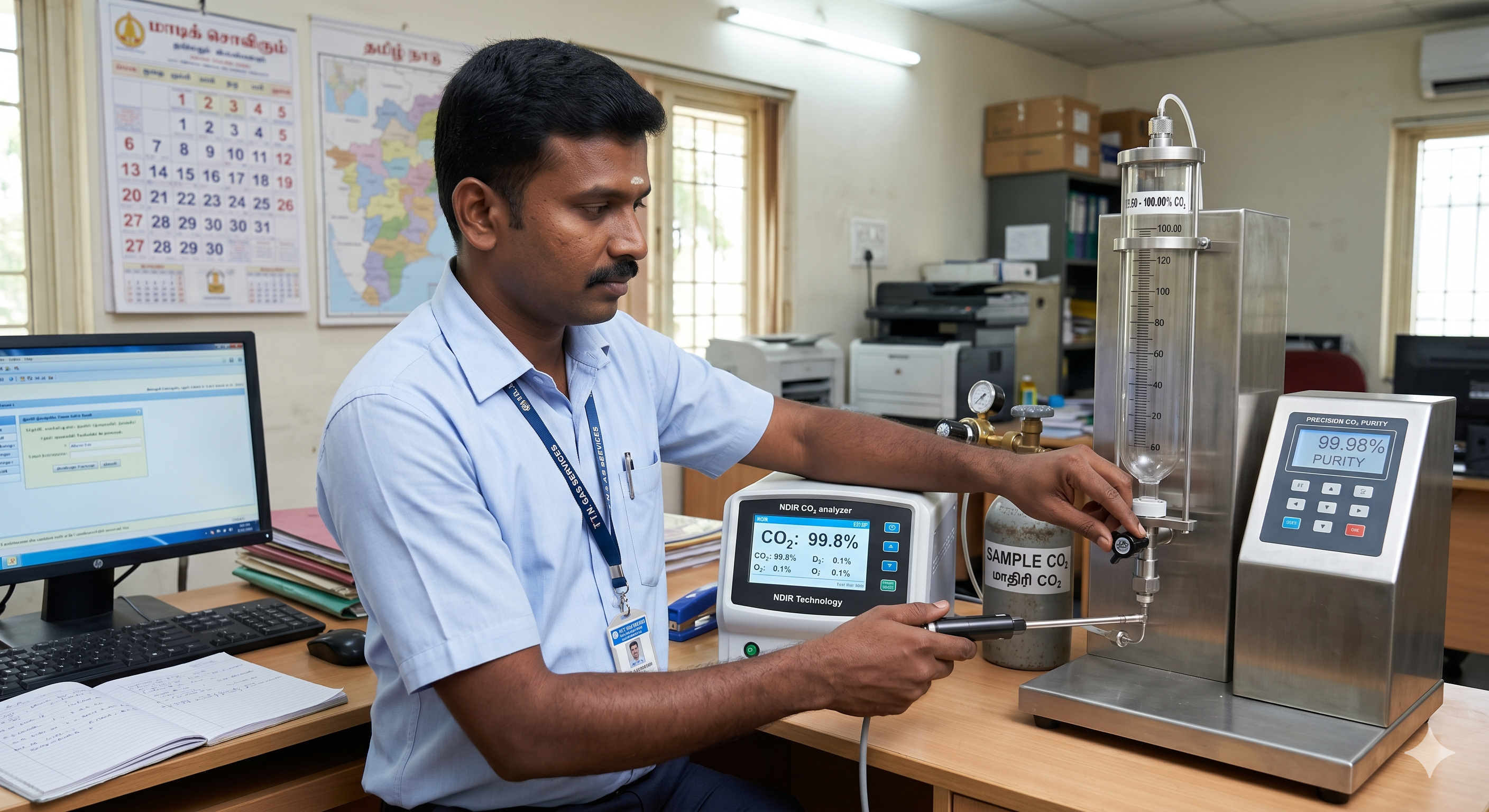
NDIR CO₂ Analyzers
- Non-Dispersive Infrared technology (the industry gold standard).
- Targets the specific 4.26 µm absorption band of CO2 molecules.
- Offers incredibly long-term baseline stability with minimal drift.
- Highly resistant to poisoning from other background chemicals.
View Catalog
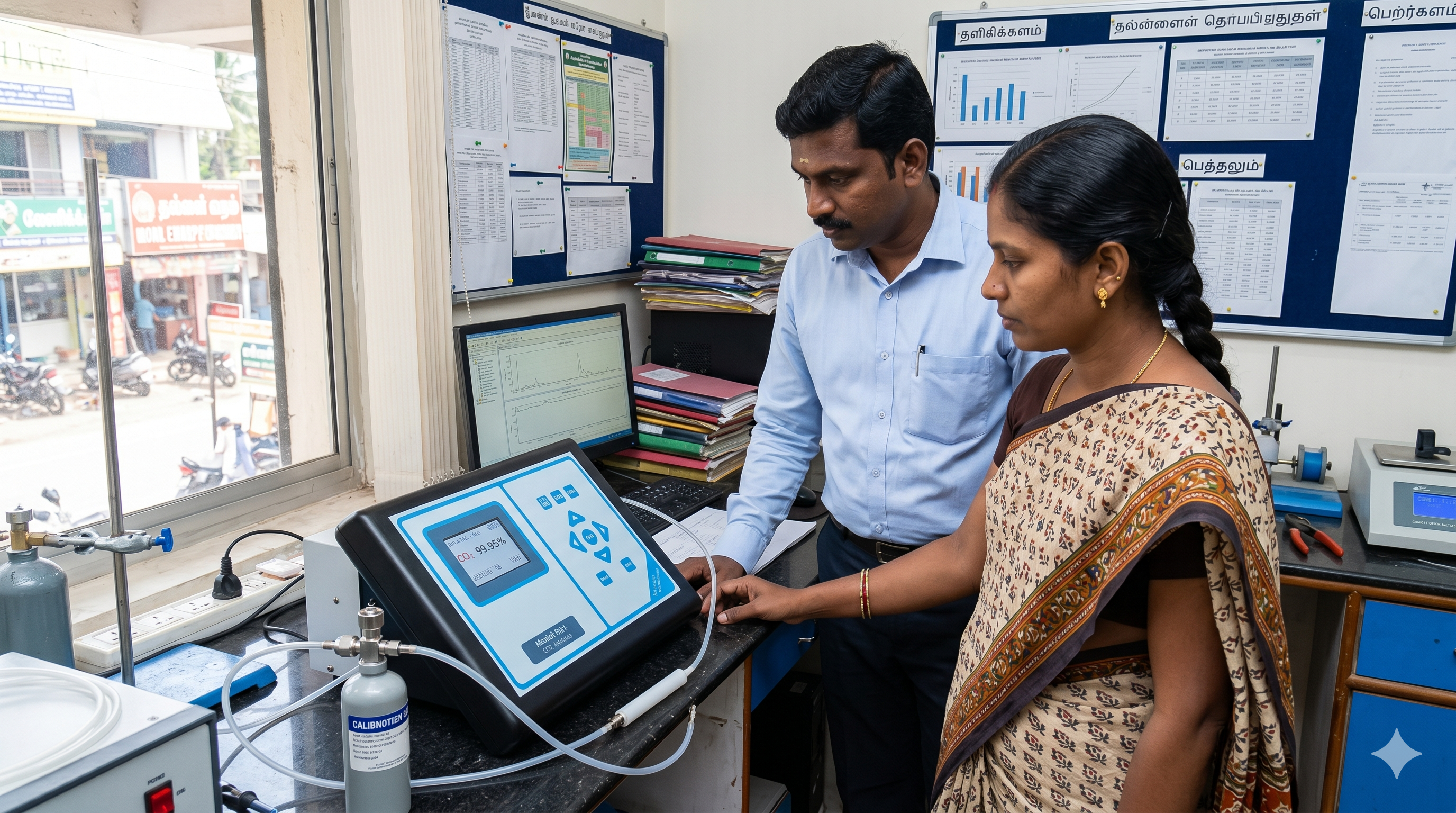
Infrared CO₂ Purity Testers
- Provides direct, continuous measurement without chemical consumables.
- Eliminates the cost of constantly replacing electrochemical cells.
- Instantaneous response times for real-time process control.
- Optical path lengths optimized for both trace (ppm) and bulk (%) measurement.
View Catalog
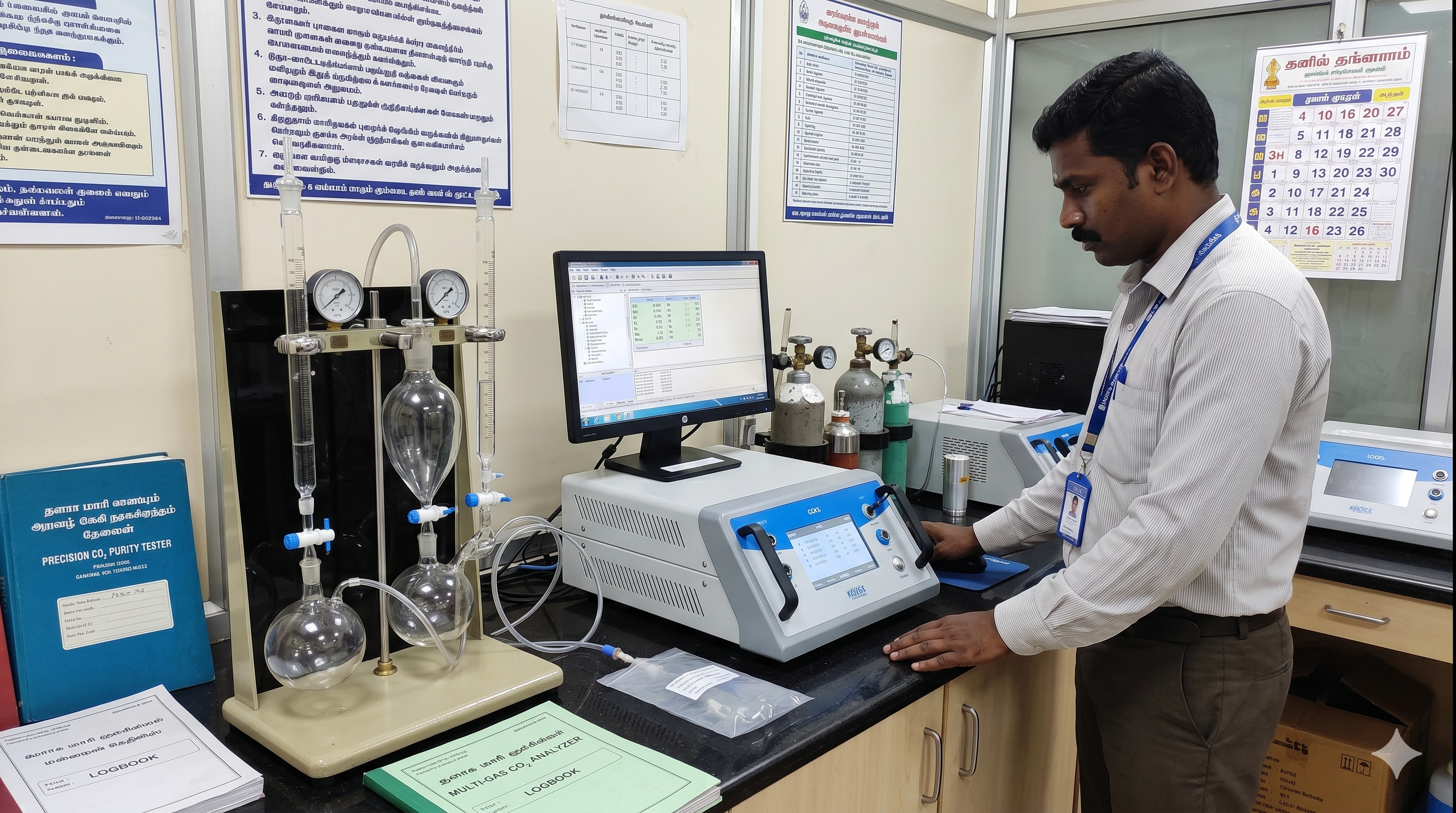
Multi-Gas CO₂ Analyzers
- Simultaneously measures CO2, Oxygen (O2), and Nitrogen (N2) balance.
- Consolidates multiple instruments into one space-saving benchtop unit.
- Essential for verifying complex tri-gas mixtures in laboratories.
- Ensures exact ratios for modified atmosphere food packaging (MAP).
View Catalog
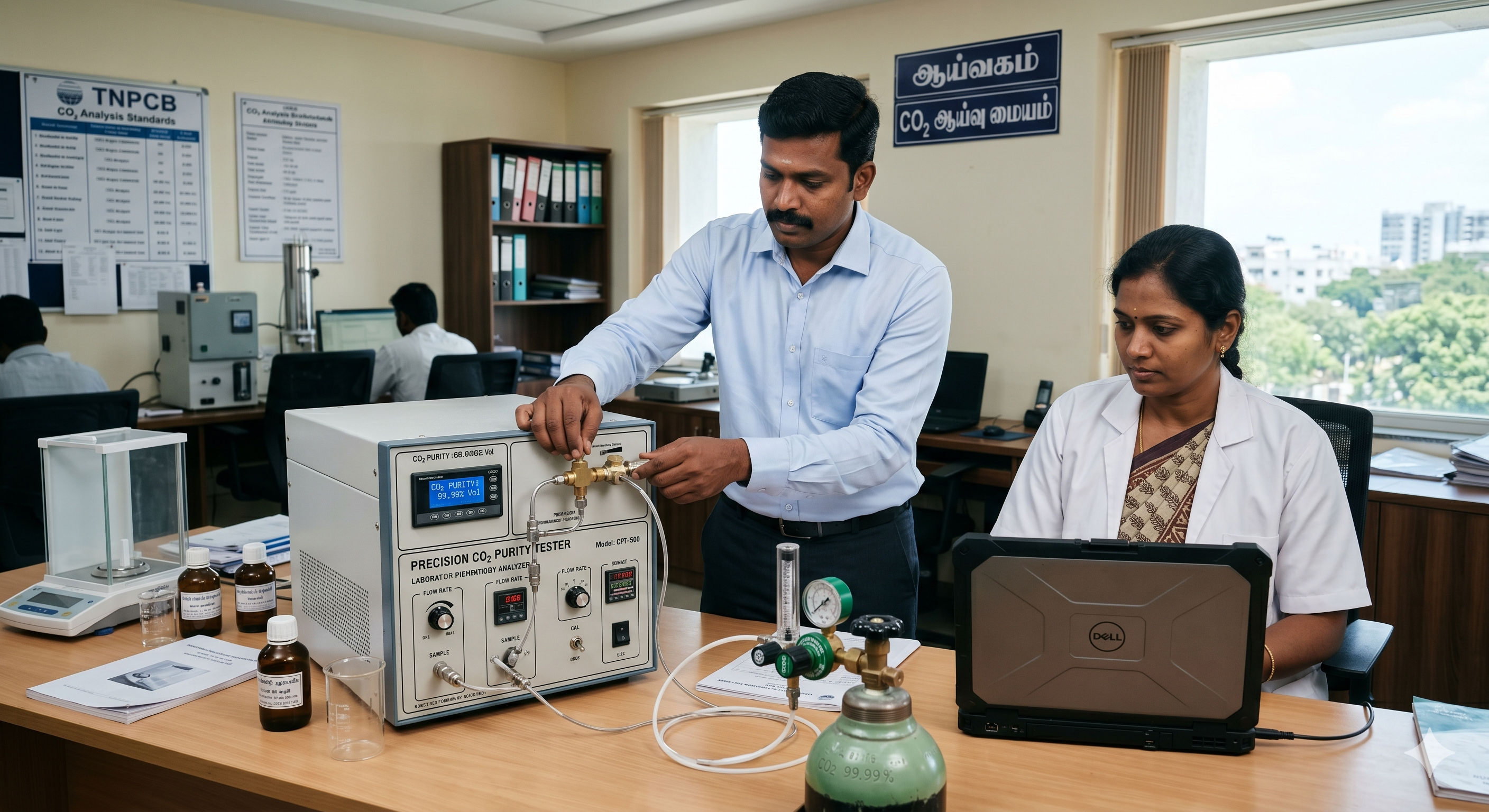
Laboratory CO₂ Analysis
- High-fidelity benchtop units designed for controlled environment testing.
- Often incorporates Gas Chromatography (GC) for ultimate precision.
- Validates field samples and verifies standard calibration gas cylinders.
- Provides court-defensible data for legal quality assurance audits.
View Catalog
CO₂ Catalog Section
Cylinder, Process & Data Monitoring
Cylinder gas verification, process-line systems, and data logging analyzers for traceable quality records.
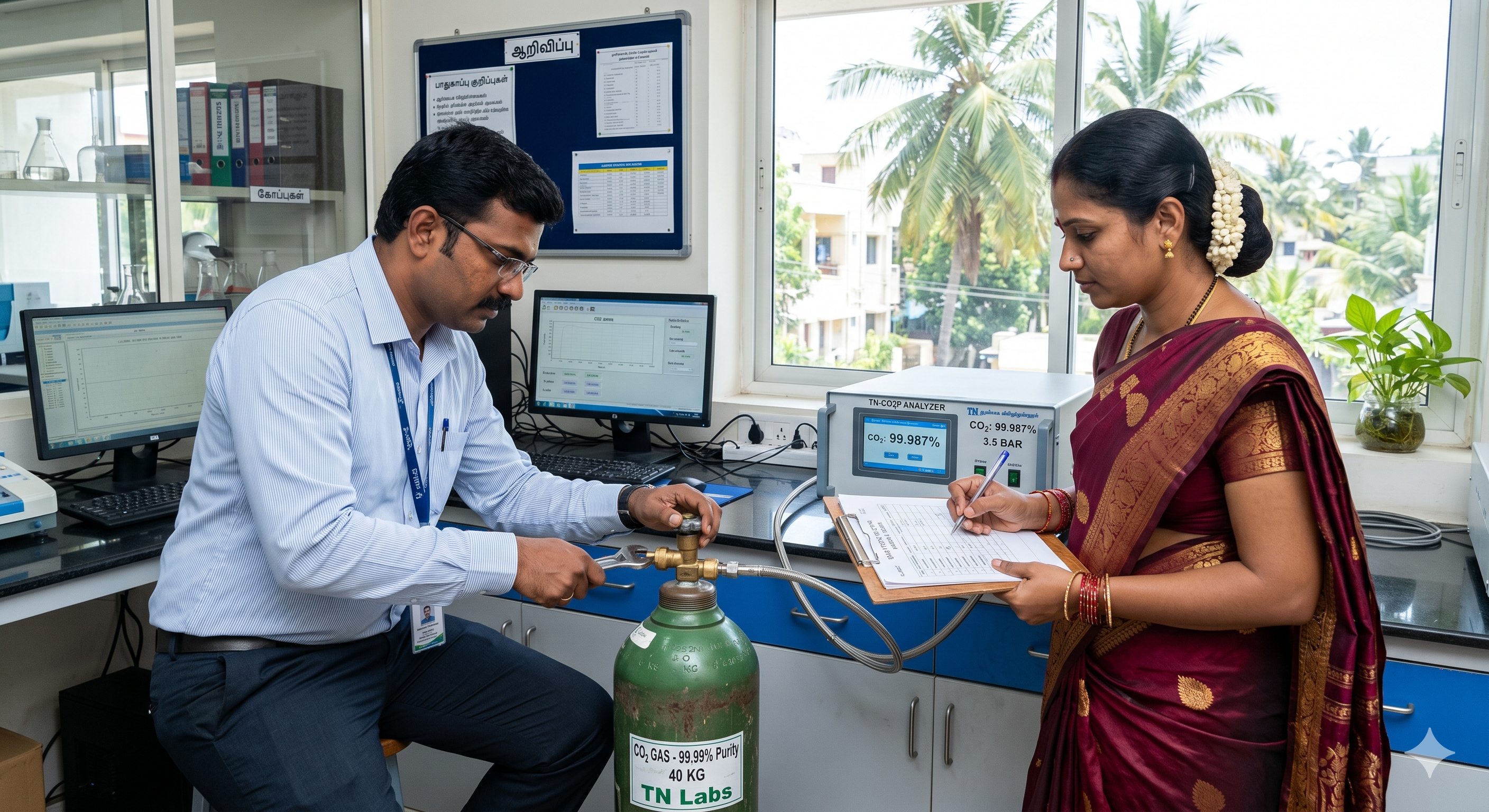
Cylinder Gas Purity Testers
- Specifically designed to handle high-pressure input from gas cylinders.
- Includes specialized multi-stage regulators and moisture traps.
- Used on the filling line before bottles are dispatched to customers.
- Eliminates batch recalls by verifying purity before shipment.
View Catalog
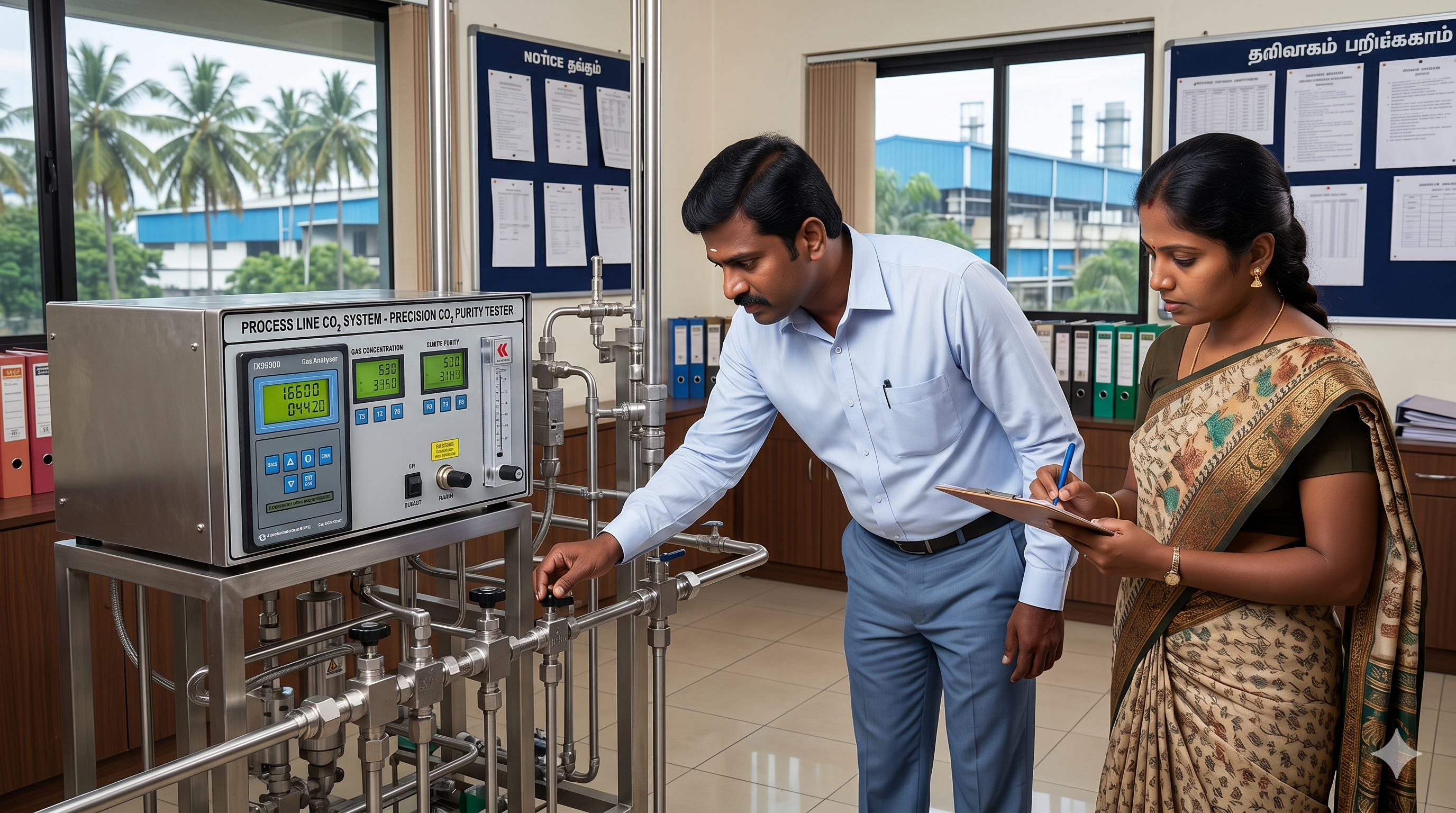
Process Line CO₂ Systems
- Installed directly inline into high-flow brewery or chemical pipes.
- Features sanitary fittings capable of surviving CIP/SIP washdowns.
- Instantly diverts gas flow if purity drops below a pre-set threshold.
- Prevents contaminated gas from ruining entire production batches.
View Catalog
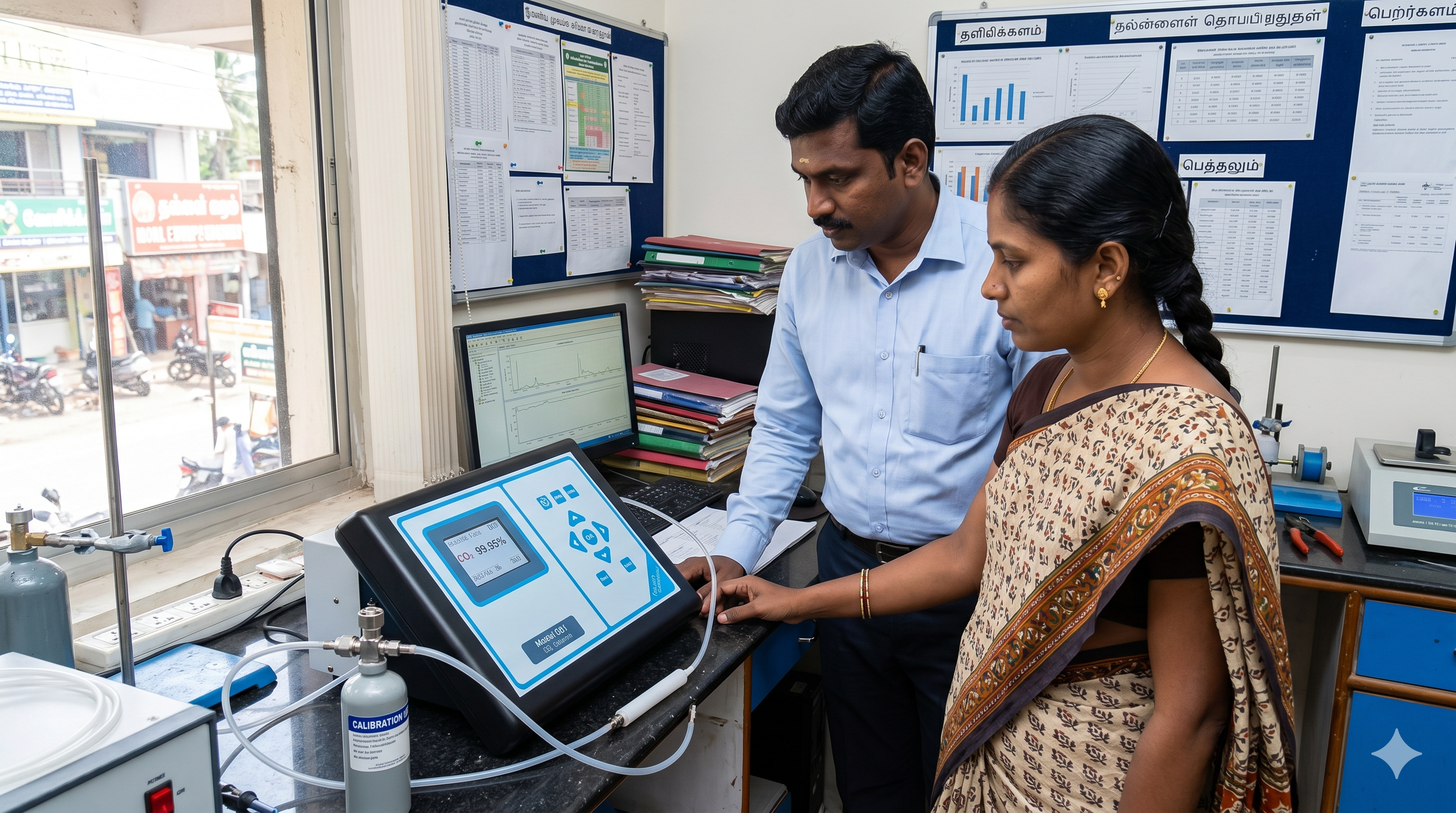
Data Logging CO₂ Analyzers
- Automatically records thousands of time-stamped purity readings.
- Provides undeniable historical proof of quality for regulatory audits.
- Features easy USB export for generating instant batch reports.
- Can push data directly to factory IoT cloud networks via Wi-Fi/LTE.
View Catalog
Enterprise CO₂ Purity Protocol
Understanding the core operating principles of Carbon Dioxide measurement ensures the selection of the correct instrument for Food & Beverage compliance, Medical gas verification, or Industrial safety. Selecting the wrong sensor technology can lead to ruined product batches, regulatory fines, or extreme safety hazards.
NDIR (Infrared) Technology
Best For: Stable 0-100% MeasurementNon-Dispersive Infrared sensors target the specific 4.26 µm wavelength where CO2 absorbs light. Because it relies on optics rather than chemical reactions, NDIR provides years of drift-free stability.
Applications:
General purity testing, brewing process lines, and ambient safety monitoring.
Zirconia / Electrochemical
Best For: Trace Impurity (O2)When measuring High Purity CO2 (99.9% to 99.999%), the sensor often analyzes the *impurities* rather than the CO2 itself. Zirconia sensors are used to detect trace Oxygen (ppm) within the CO2 stream.
Applications:
Beverage grade (ISBT) validation, Medical grade (USP) verification, and Semiconductor gas.
Gas Chromatography (GC)
Best For: Absolute Trace ProfilingA highly advanced laboratory technique that physically separates the gas mixture into its individual compounds. It can detect parts-per-billion (ppb) levels of Benzene, Sulfur, and hydrocarbons.
Applications:
Forensic quality control, deep compliance audits, and specialized chemical manufacturing.
Thermal Conductivity (TCD)
Best For: Binary Gas MixturesMeasures the difference in heat transfer between a reference gas and the sample gas. Extremely reliable but only effective when evaluating simple, two-gas mixtures (e.g., CO2 mixed with Argon).
Applications:
Industrial welding gas mixtures and simple blanketing processes.
Purity Standards Matrix
| Industry / Application | Required Purity | Critical Target Impurities | Primary Consequence of Failure |
|---|---|---|---|
| Industrial / Welding | ≥ 99.0% | Moisture, Nitrogen | Poor weld quality, porosity. |
| Medical (USP Grade) | ≥ 99.5% | CO, NO, NO2, Moisture | Patient injury, surgical complications. |
| Food & Beverage (ISBT) | ≥ 99.9% | Total Hydrocarbons, O2, Sulfur | Flavor spoilage, consumer sickness. |
| Research / Specialty | ≥ 99.99% (4.0) | THC, Moisture (< 10 ppm) | Failed lab experiments, data corruption. |
| Semiconductor (SFC) | ≥ 99.999% (5.0) | Trace Metals, Halocarbons | Microchip destruction, massive financial loss. |
Mission-Critical Selection Criteria
When specifying a CO2 analyzer for a commercial or industrial application, evaluate the following vital parameters to guarantee system reliability and compliance.
1. Direct vs. Indirect Measurement
Are you trying to prove the CO2 is 99% (use an NDIR CO2 sensor), or are you trying to prove it is 99.99% (use a trace Oxygen/Moisture sensor to measure the impurities)? High purity is usually proven by the *absence* of other gases.
2. Sample Conditioning
Directly injecting gas from a high-pressure cylinder or a hot brewing line will destroy an analyzer. Ensure the system includes proper pressure regulators, flow meters, and moisture traps before the sensor inlet.
3. Audit Traceability
If the data is for FDA, USP, or ISBT compliance, the tester must have non-editable internal data logging with password protection and automated calibration tracking to prove due diligence.