Bottle Testing Instruments
Engineered to ensure the structural integrity, dimensional accuracy, and leak-proof sealing of PET, glass, and HDPE bottles across the supply chain.
Widely Used By
Packaging Engineers Beverage Manufacturers Quality Control Inspectors Pharmaceutical Labs Blow Molding Facilities
Key Purposes
Seal Integrity Validation Crush Resistance Testing Shelf-Life Optimization Dimensional Compliance Carbonation Pressure Safety
Single Tap to Scroll • Double Tap to Open Catalog
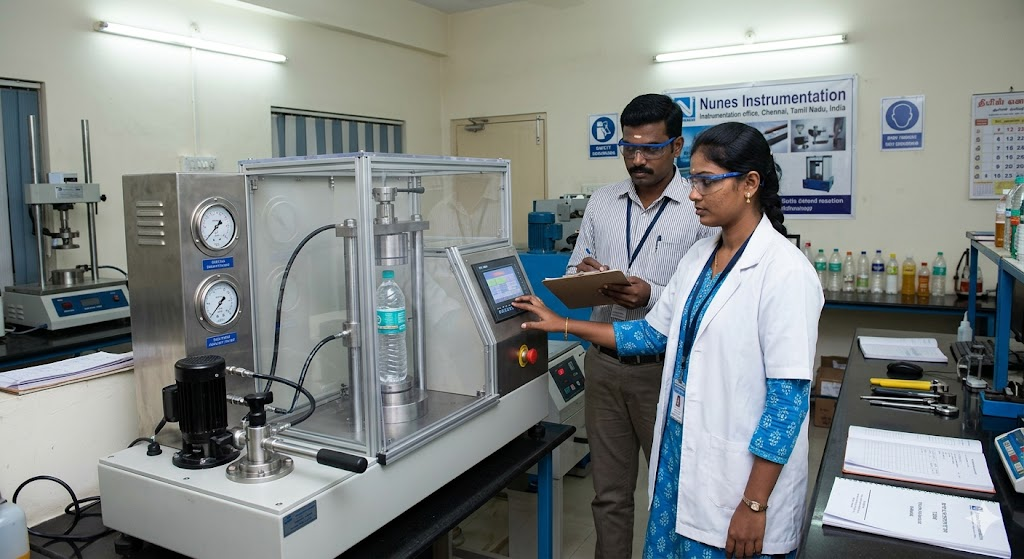
Bottle Burst Strength Testers
- High-pressure pneumatic testing
- Volumetric expansion measurement
- Digital pressure curve control
Access Catalog
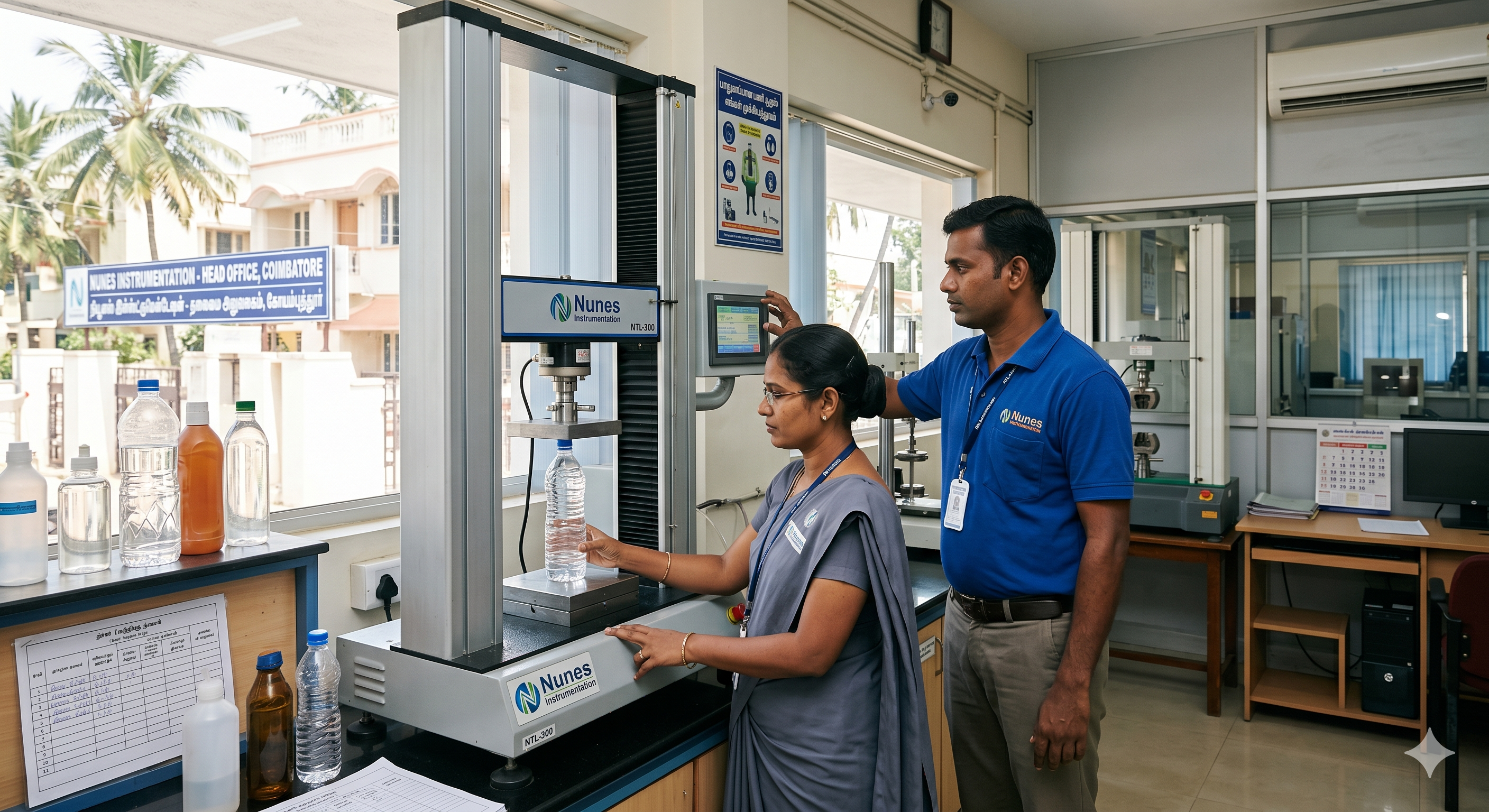
Bottle Top Load Testers
- Vertical crush resistance
- Peak load memory retention
- Adjustable speed & load cells
Access Catalog
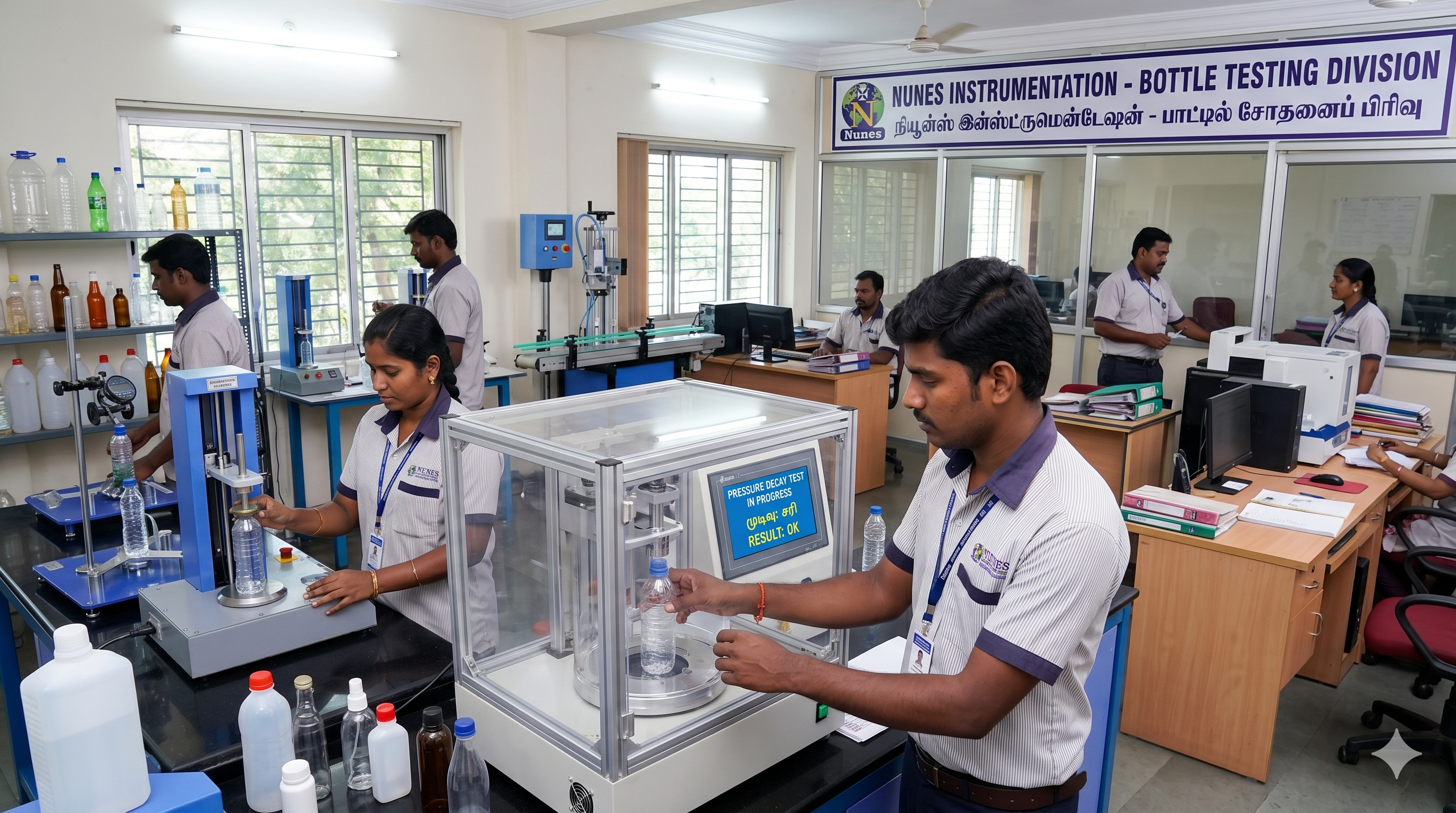
Bottle Leak Testing Machines
- Precision micro-leak detection
- Dry & wet testing options
- Bubble emission validation
Access Catalog
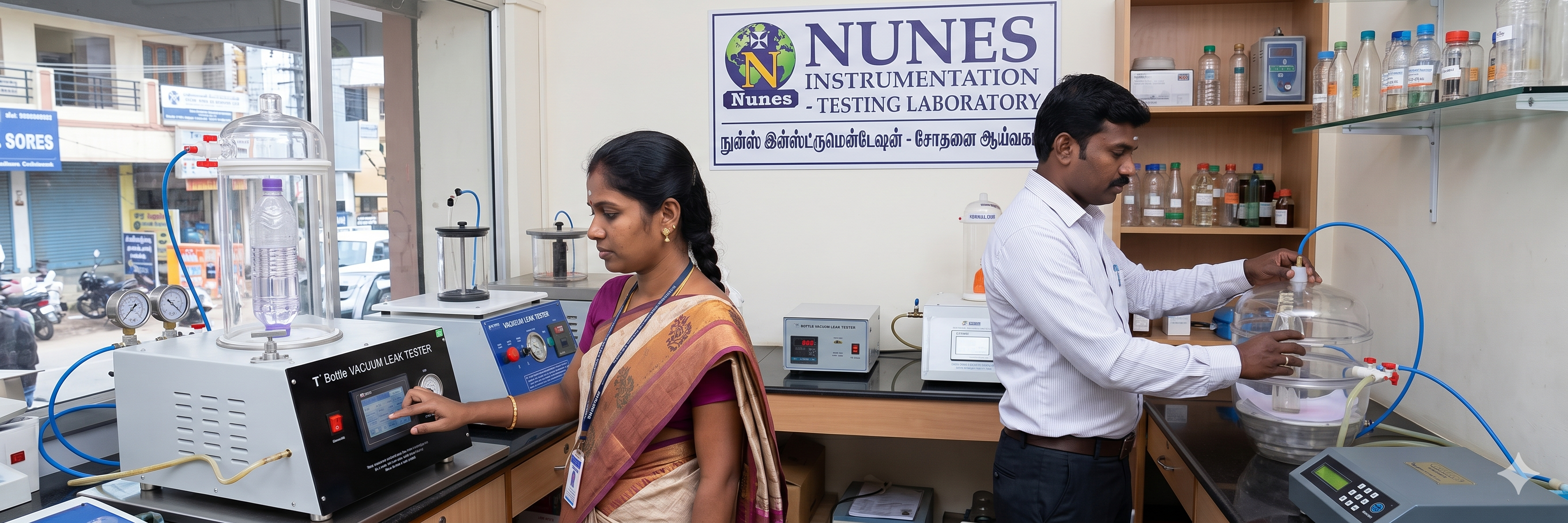
Bottle Vacuum Leak Testers
- Non-destructive pressure decay
- Ideal for pharmaceutical vials
- Automated pass/fail metrics
Access Catalog
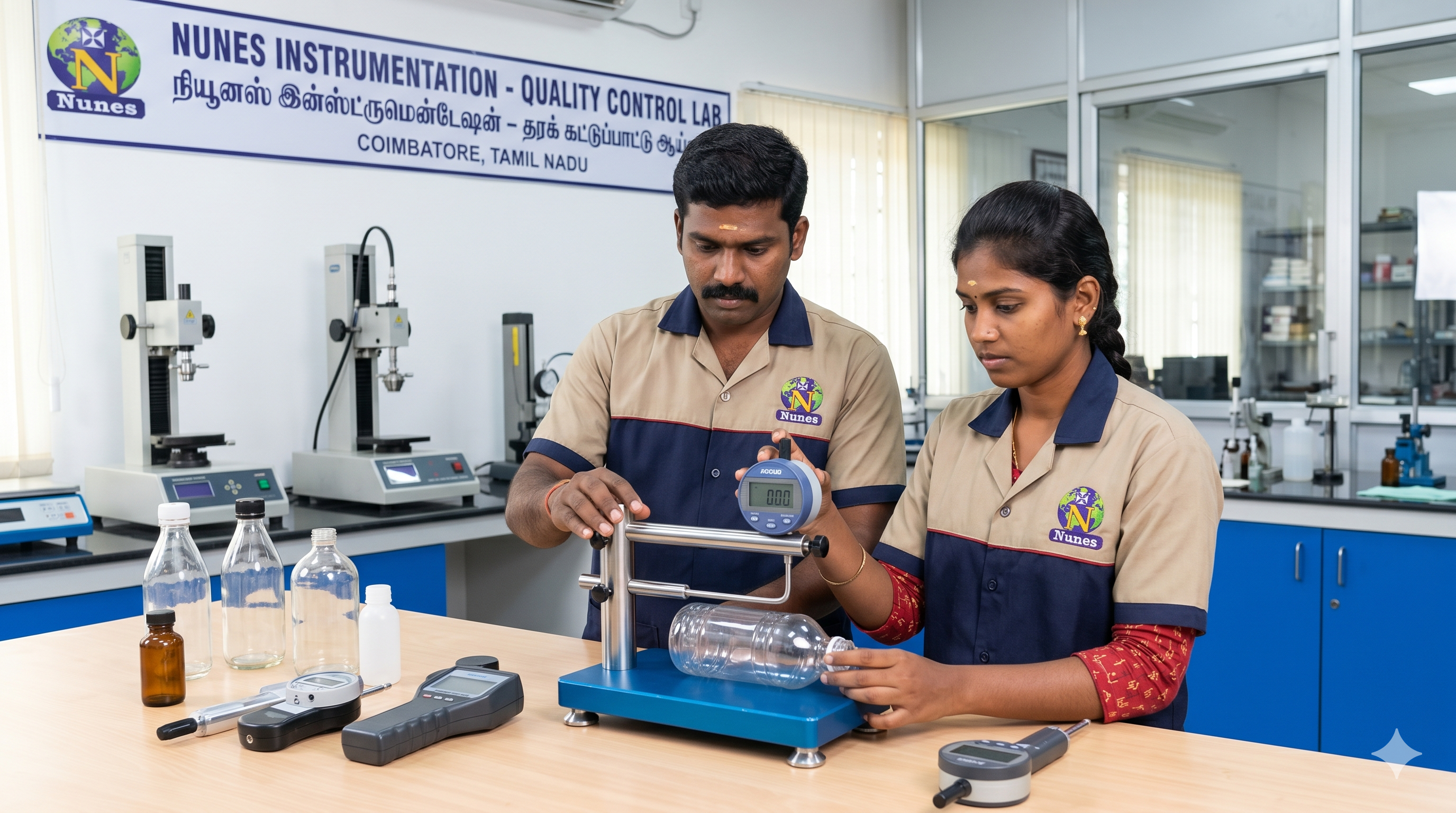
Bottle Thickness Gauges
- Magnetic Hall Effect technology
- Corner and base wall mapping
- Non-destructive profiling
Access Catalog

Bottle Cap Torque Testers
- Application & removal force
- Tamper-evident band testing
- Motorized precision drive
Access Catalog
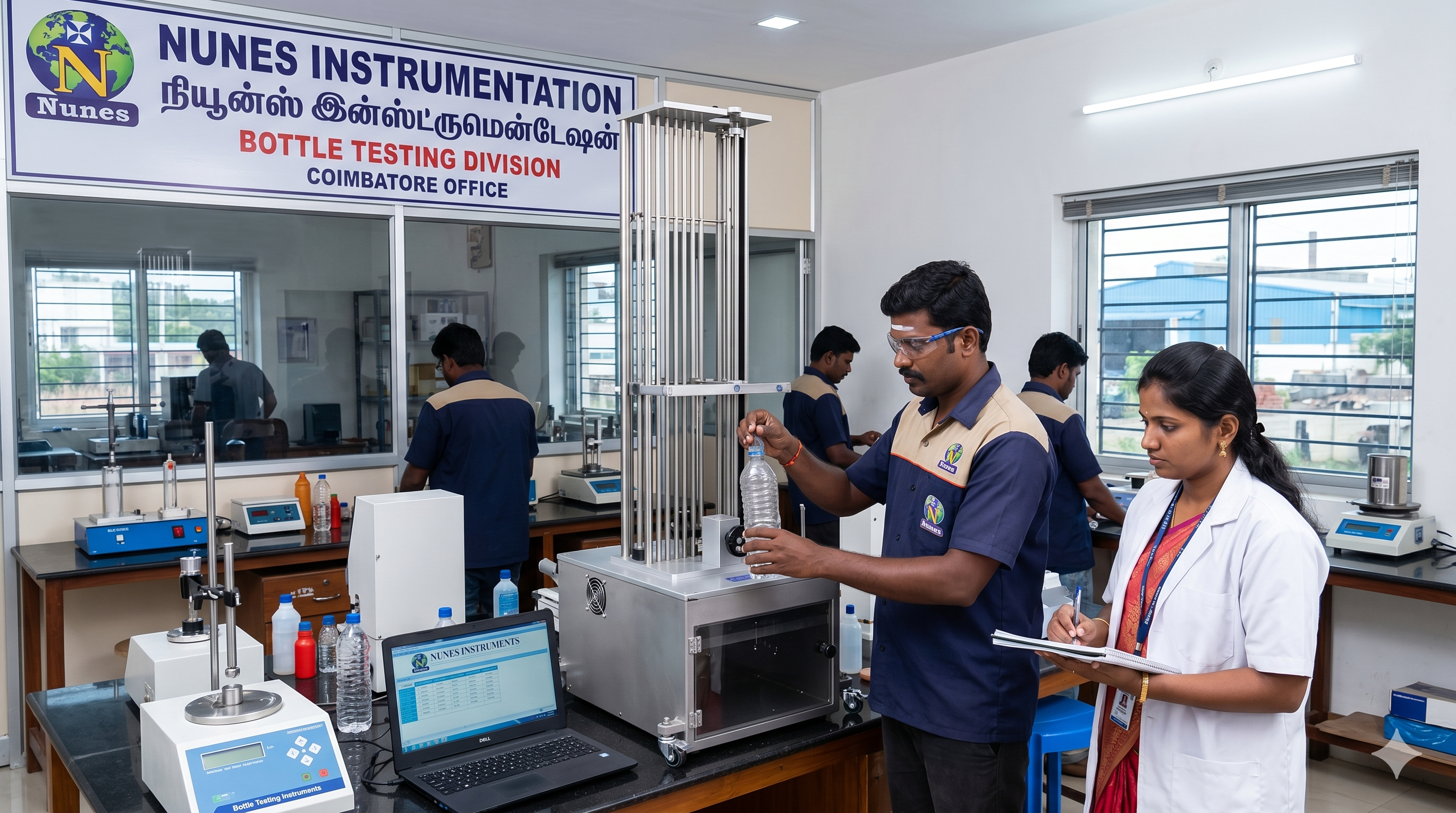
Bottle Drop Testers
- Controlled free-fall impact
- Drop orientation locking
- Heavy-duty pneumatic base
Access Catalog
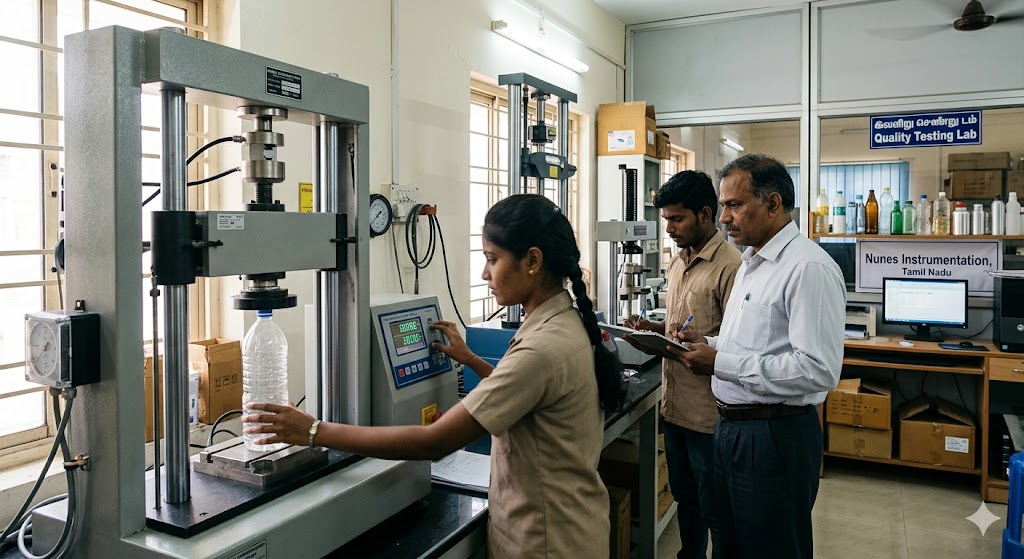
Bottle Compression Testers
- Warehouse stacking simulation
- High-capacity load cells
- Box & pallet deformation analysis
Access Catalog
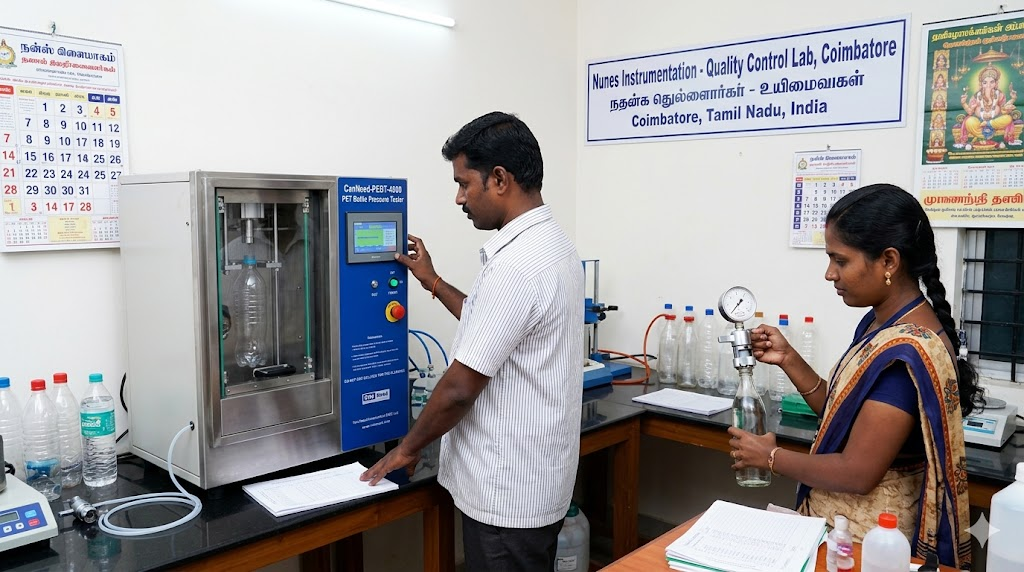
Bottle Pressure Testers
- Internal pressure retention
- Carbonated beverage safety
- Yield & burst limit validation
Access Catalog
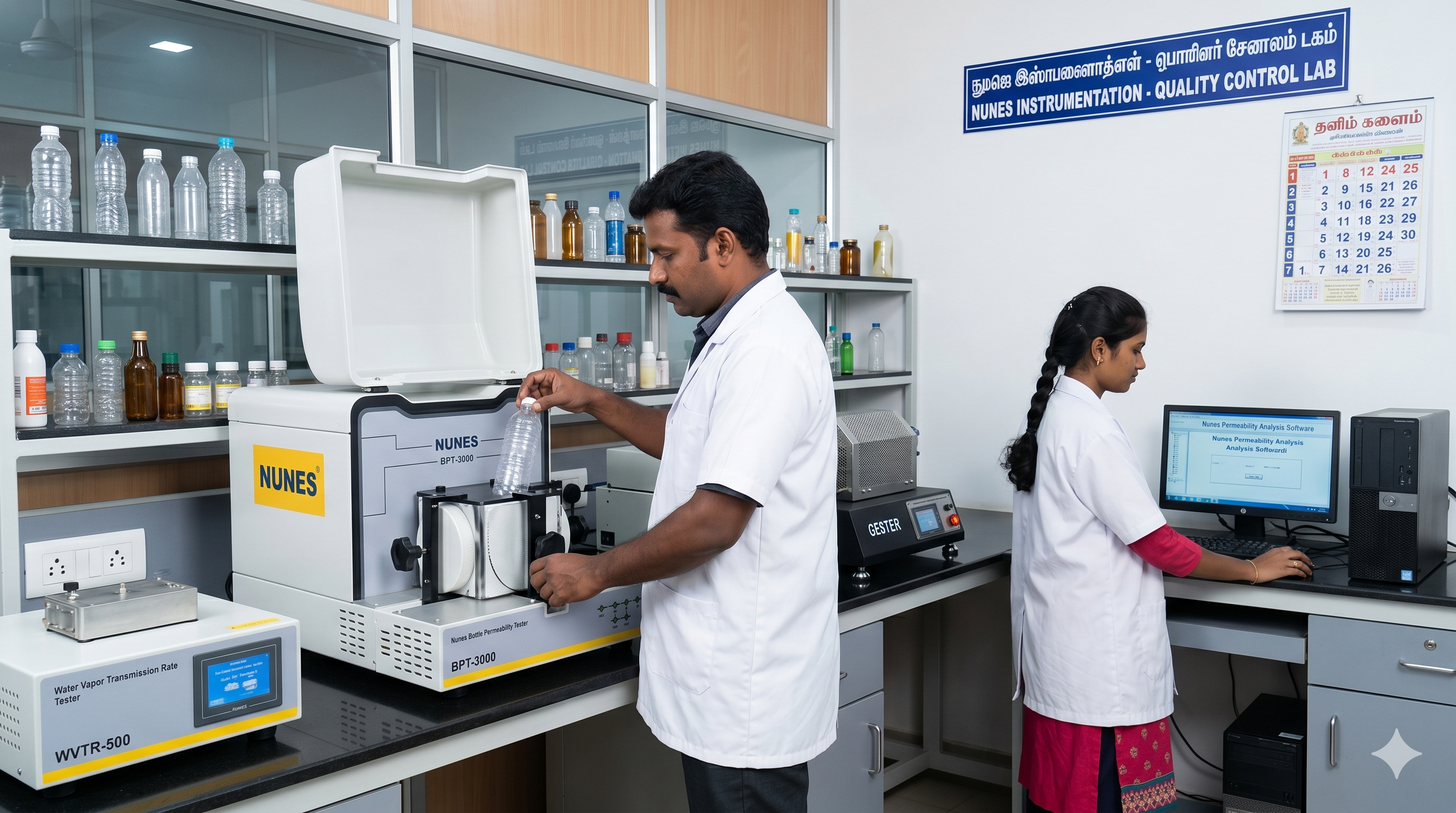
Bottle Permeability Testers
- Oxygen (OTR) & Moisture (WVTR)
- High-barrier material analysis
- Shelf-life prediction models
Access Catalog
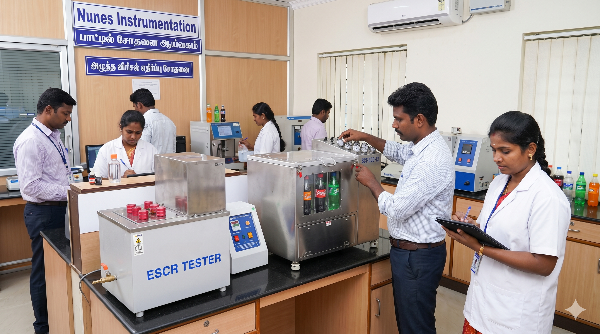
Bottle Stress Crack Resistance
- Environmental Stress Cracking (ESCR)
- Accelerated chemical testing
- Multi-station immersion baths
Access Catalog
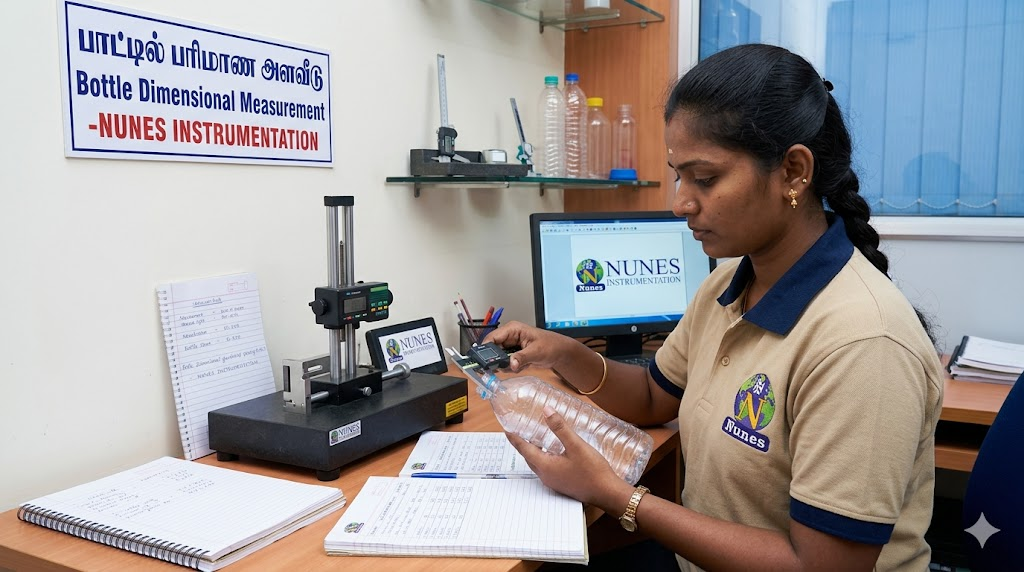
Bottle Dimensional Measurement
- Perpendicularity & Verticality
- Preform and neck profiling
- High-precision optical gauges
Access Catalog
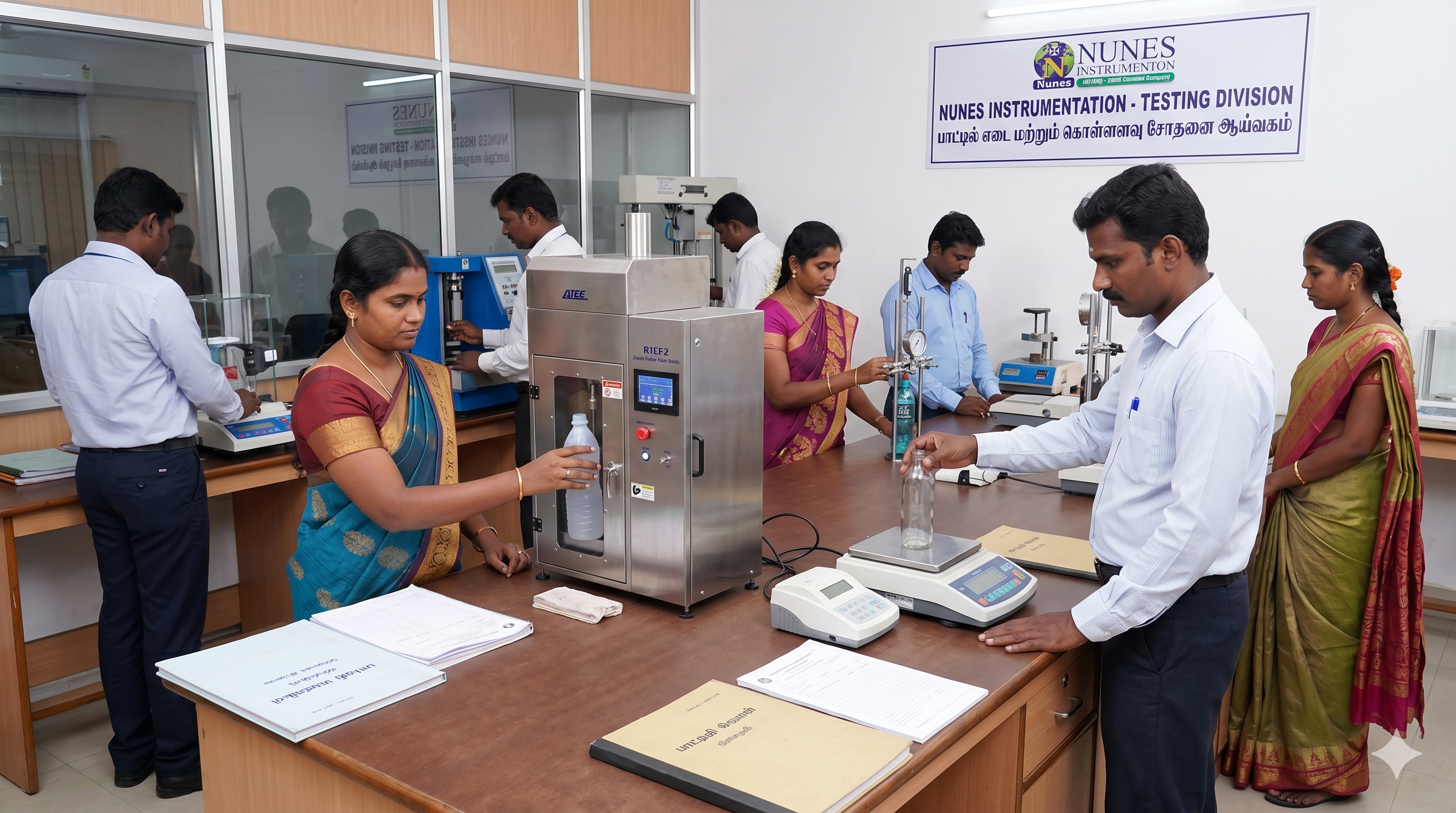
Bottle Weight & Volume Testers
- Specific gravity determination
- Brimful capacity testing
- Automated precision dispensing
Access Catalog
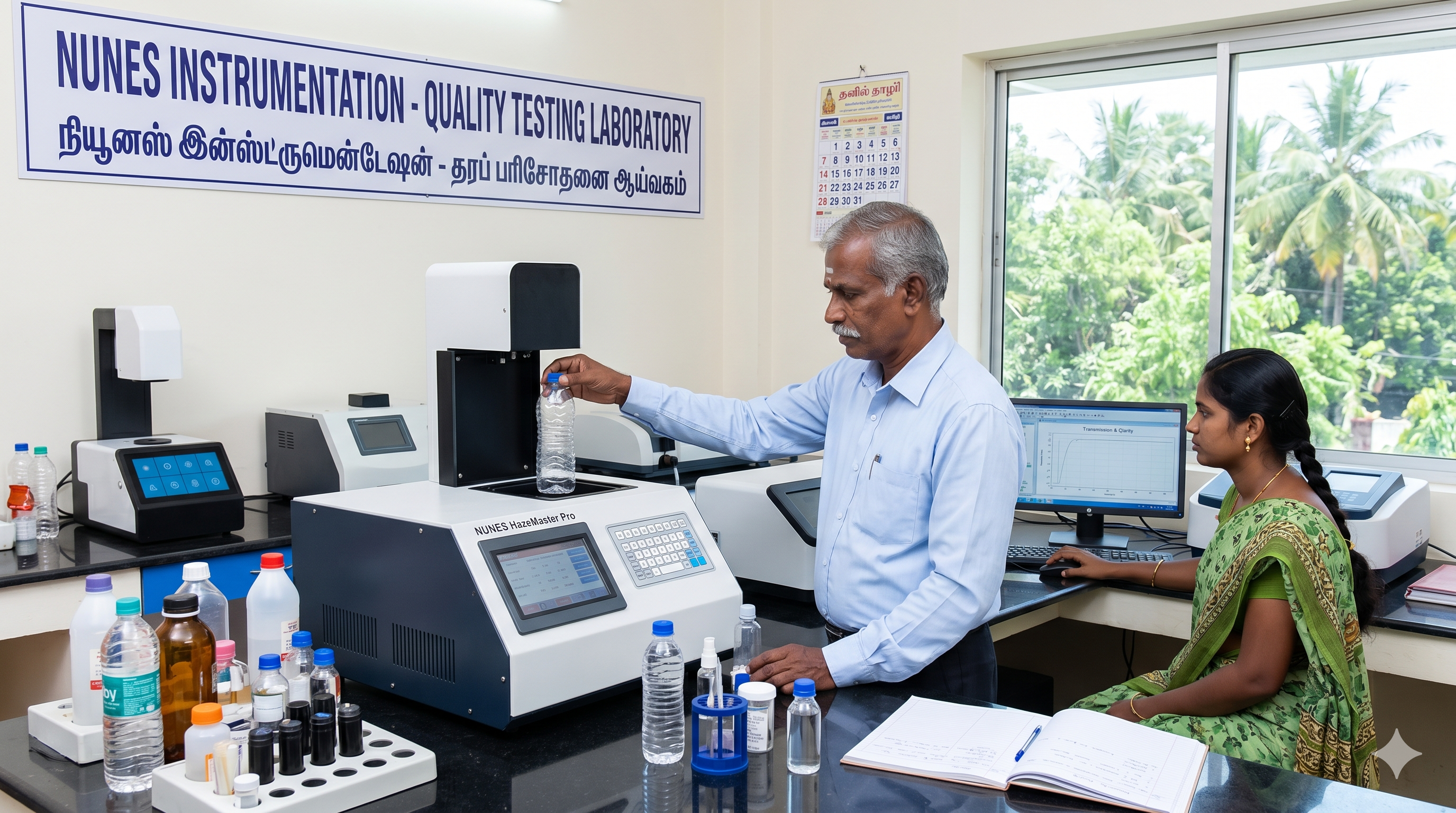
Bottle Transparency & Clarity
- Haze & transmittance tracking
- Colorimetric spectrum analysis
- Preform resin quality checks
Access Catalog
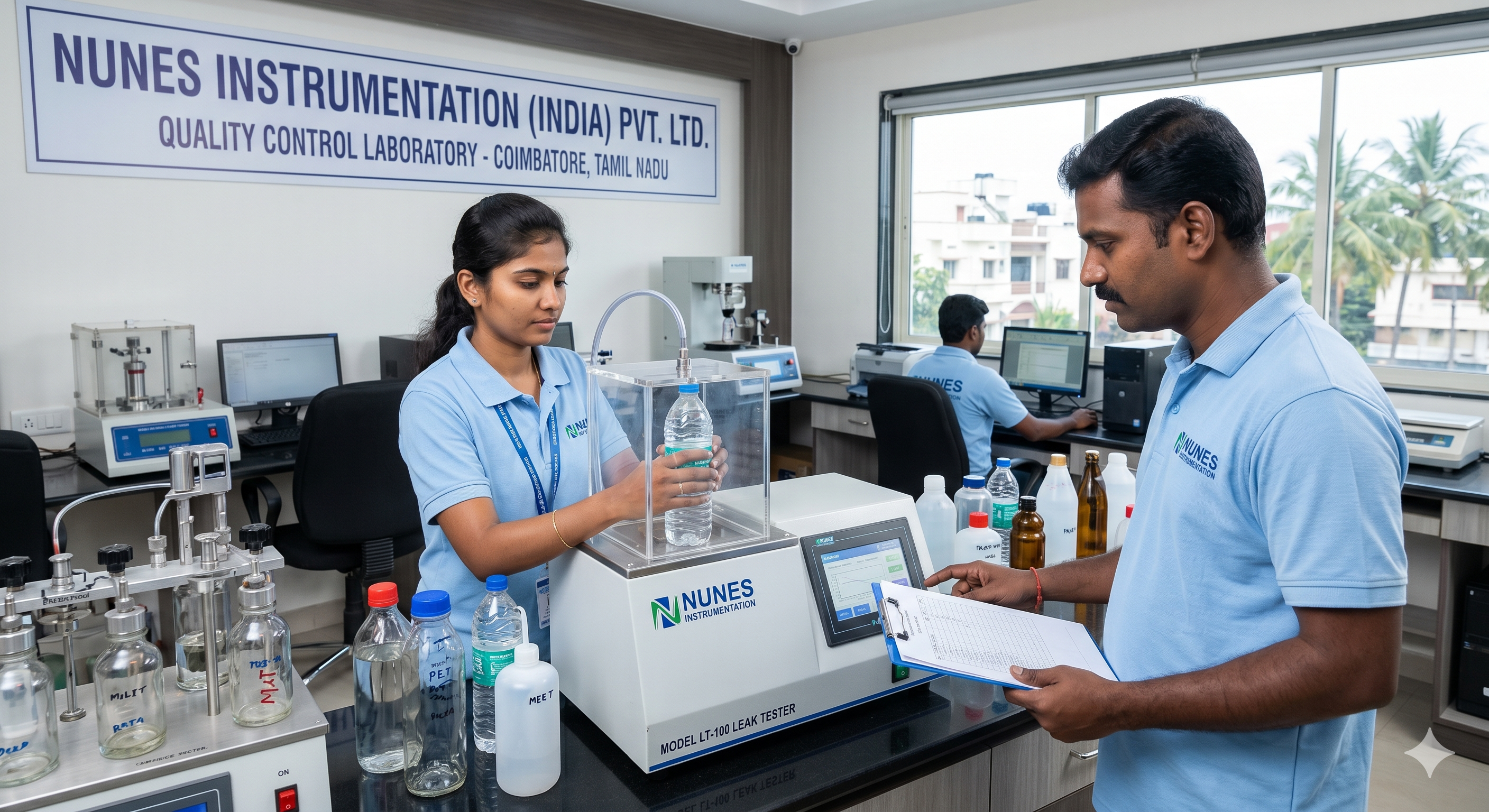
Bottle Seal Integrity Testers
- Induction seal validation
- Creep and burst point testing
- Ultrasonic seam inspection
Access Catalog
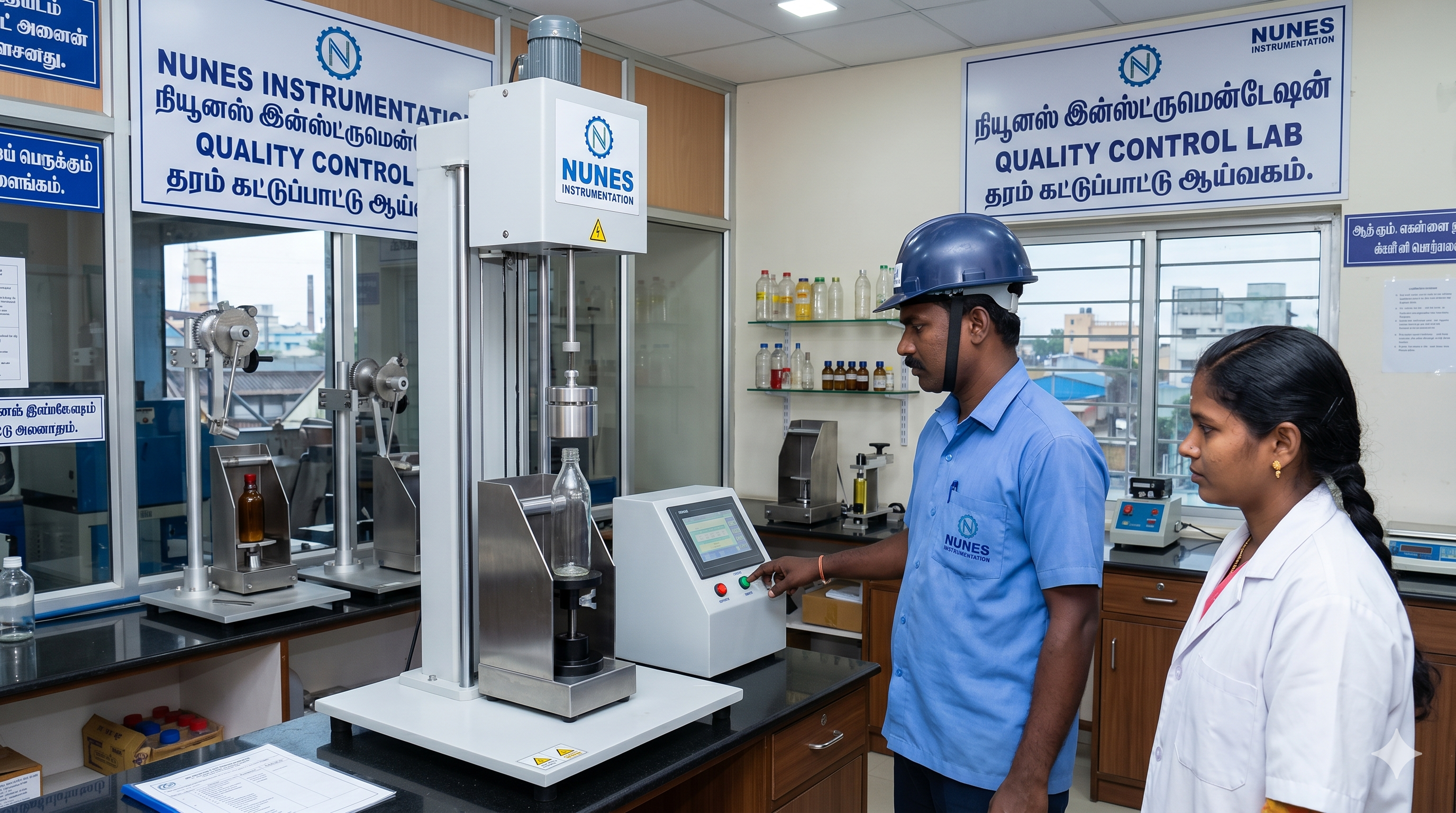
Bottle Impact Testers
- Pendulum impact resistance
- Glass shattering analysis
- Izod & Charpy methodology
Access Catalog
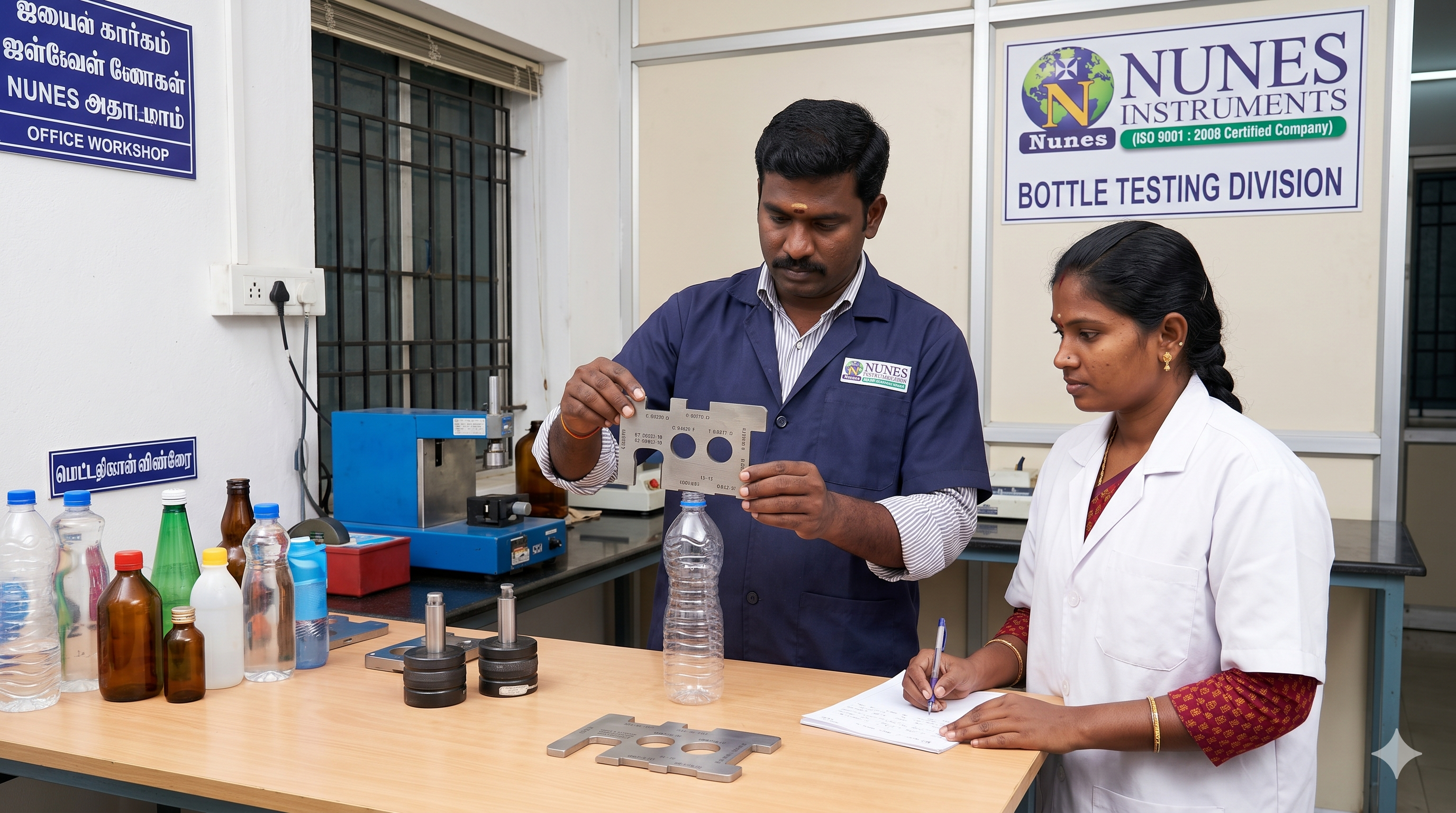
Bottle Neck Finish Gauges
- Go/No-Go thread checking
- Inner and outer diameter
- T-dimension & E-dimension
Access Catalog
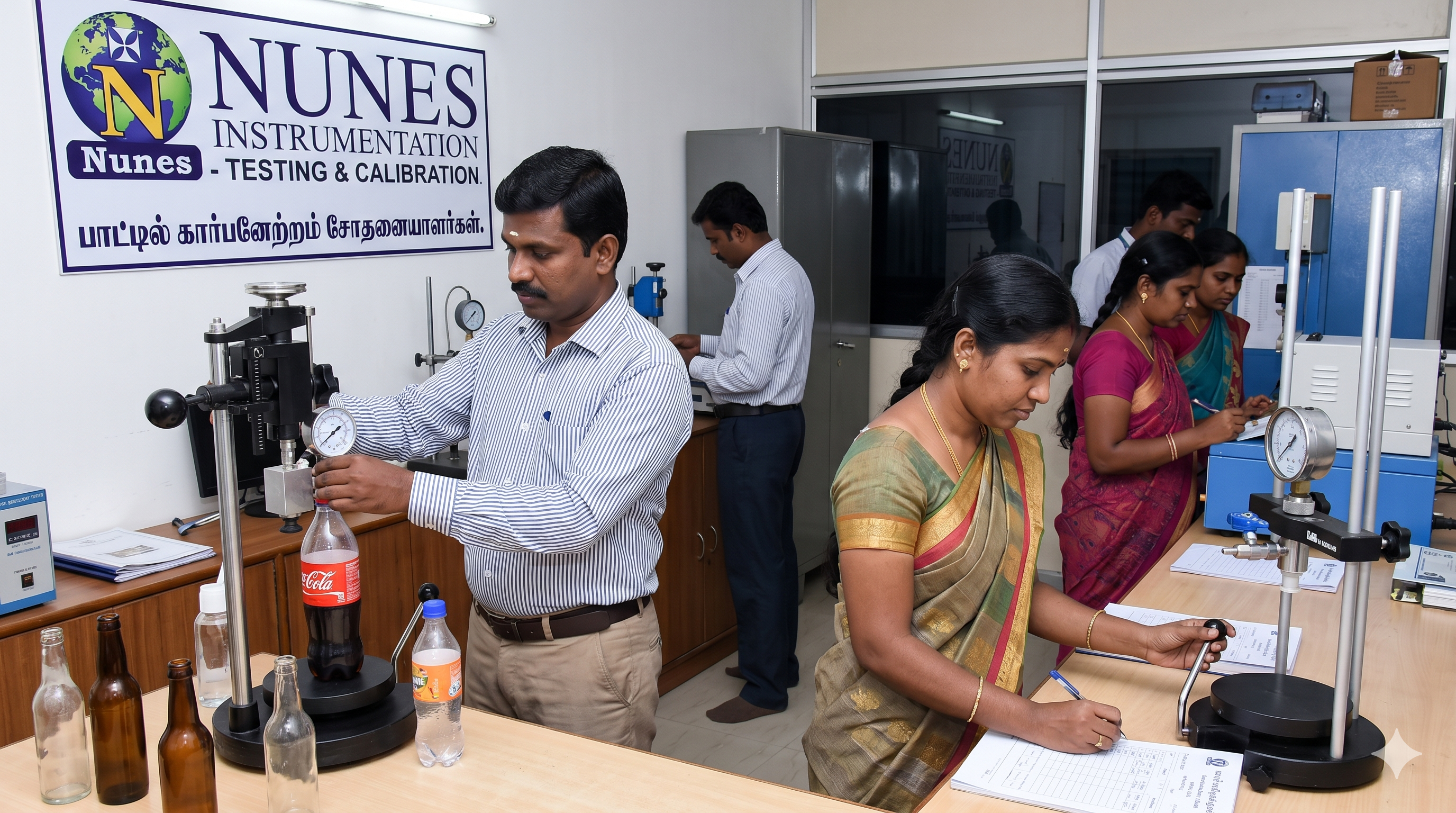
Bottle Carbonation Testers
- Dissolved CO2 measurement
- Automated shaker method
- Temperature & pressure math
Access Catalog
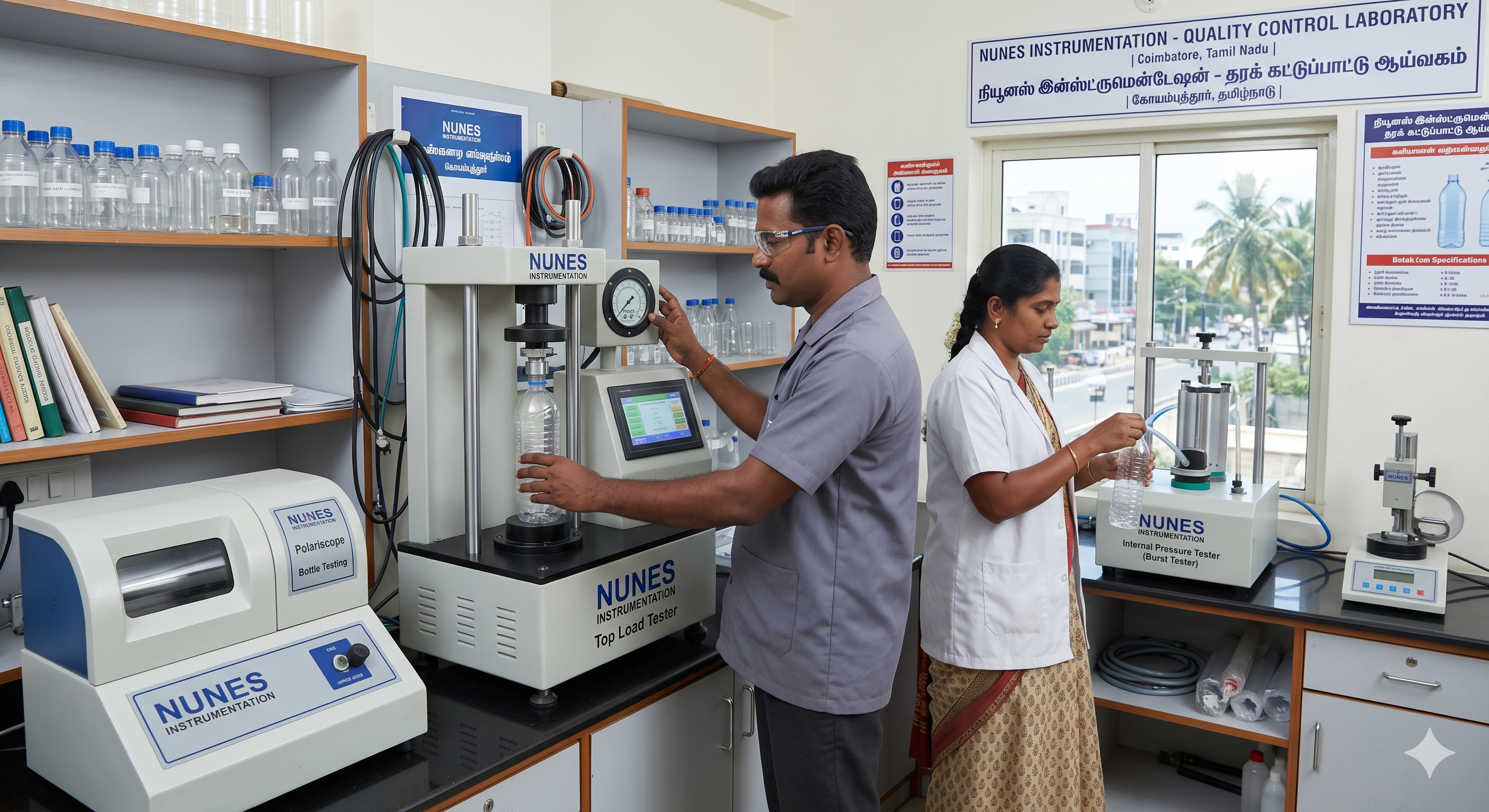
PET Bottle Testing Instruments
- Intrinsic viscosity analysis
- Acetaldehyde (AA) level testing
- Polarized light strain inspection
Access Catalog
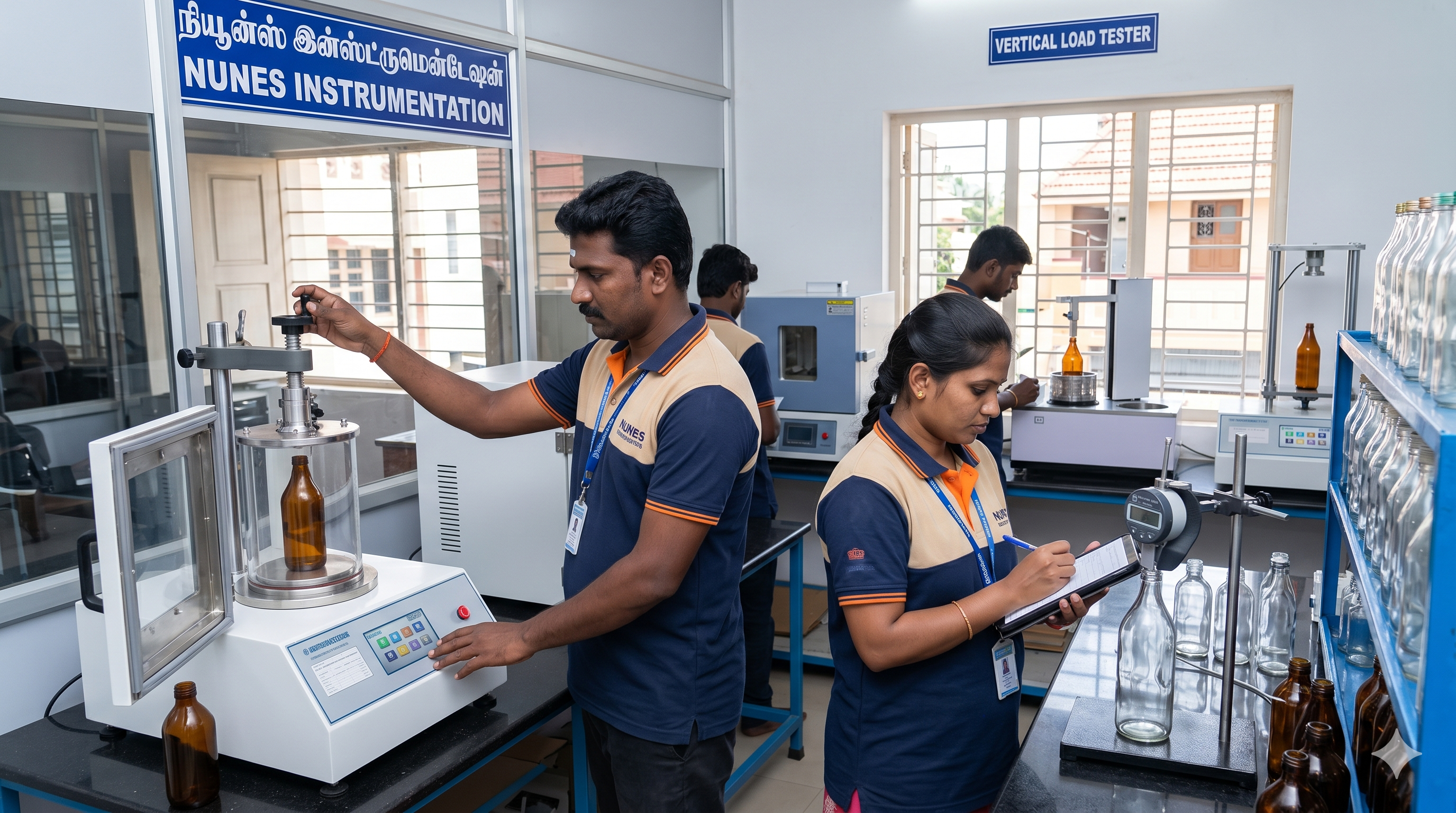
Glass Bottle Testing Instruments
- Thermal shock resistance
- Annealing strain viewing
- Glass thickness mapping
Access Catalog
No testing instruments found
Try adjusting your search terms.
Enterprise Packaging Quality Protocol
Ensuring the structural integrity and sealing performance of PET, glass, and HDPE bottles is a non-negotiable requirement for the beverage, pharmaceutical, and chemical industries. Proper testing guarantees product safety, shelf life, and brand reputation.
Top Load Testing
Best For: Crush ResistanceMeasures the compressive strength of a bottle to ensure it can withstand the physical forces applied during capping, stacking, and transportation without buckling or collapsing.
Key Standard:
ASTM D2659 - Column Crush Properties of Blown Thermoplastic Containers.
Burst / Expansion Testing
Best For: Carbonated BeveragesInjects internal pressure (air or water) to determine the volumetric expansion and ultimate bursting point of a bottle, crucial for highly pressurized liquids like soda and beer.
Key Standard:
ASTM F2054 - Burst Testing of Flexible Package Seals using Internal Pressurization.
Digital Torque Testing
Best For: Seal Integrity & UsabilityCalculates the exact rotational force required to open (removal torque) or close (application torque) a bottle cap. Ensures seals are leak-proof but still accessible to consumers.
Key Standard:
ASTM D2063 - Torque Retention for Packages with Continuous Thread Closures.
Vacuum Decay Leak Testing
Best For: Non-Destructive IntegrityDetects micro-leaks in sealed bottles by measuring pressure changes in a sealed vacuum chamber over time. Essential for preventing contamination in pharmaceutical liquids.
Key Standard:
ASTM F2338 - Nondestructive Detection of Leaks in Packages by Vacuum Decay.
Wall Thickness Measurement
Best For: Material DistributionUtilizes non-destructive Hall Effect (magnetic target) or Ultrasonic sensors to map the precise thickness profile of a bottle, preventing weak spots during the blow-molding process.
Key Standard:
ASTM E797 - Thickness by Manual Ultrasonic Pulse-Echo Contact Method.
Verticality & Perpendicularity
Best For: Filling Line EfficiencyMeasures the deviation of the bottle's vertical axis from its base. High vertical deviation causes catastrophic jams in automated high-speed capping and filling machines.
Process Benefit:
Eliminates line-stoppages and reduces misaligned or cross-threaded caps.
Defect Analysis & Solution Matrix
| Identified Defect / Risk | Testing Technology Applied | Critical Measurement Metric | Industry Impact & Prevention |
|---|---|---|---|
| Base Cracking / Buckling | Top Load Tester | Maximum Force (N, Kgf) | Prevents pallet collapse in warehouses during stacking. |
| Explosion during transit | Burst Pressure Tester | PSI / Bar | Critical safety parameter for pressurized carbonated drinks. |
| Micro-bacterial Ingress | Vacuum Leak Tester | Pressure Drop (Pa / mBar) | Assures sterile packaging for pharmaceutical and medical liquids. |
| Thin walls / Uneven molding | Hall Effect Thickness Gauge | Microns (µm) | Optimizes expensive PET material usage, saving production costs. |
| Caps too tight / too loose | Digital Torque Meter | In-lbs / N-m | Ensures child-safety compliance while maintaining senior usability. |
| Filling Machine Jams | Verticality Deviation Tester | Angle / Millimeters (mm) | Maintains high throughput (BPM) on automated production lines. |
Mission-Critical Selection Criteria
Choosing the correct bottle testing instrument requires analyzing the material properties, production speed, data management needs, and specific industry regulations.
1. Material Specificity
Testing parameters differ vastly between rigid glass, semi-rigid HDPE, and highly flexible PET. Ensure the instrument's load cells and pressure sensors match the material's specific yield strength.
2. Destructive vs. Non-Destructive
Whenever possible, modern labs are shifting toward non-destructive testing (like Vacuum Decay) over traditional destructive methods (like water bath bubble emission) to significantly reduce product waste.
3. Regulatory Compliance & Validation
Instruments used in the pharmaceutical packaging sector must be supplied with IQ/OQ/PQ validation documentation and meet stringent FDA 21 CFR Part 11 software requirements.
4. Traceability & Data Management
Industry 4.0 demands that lab instruments feature Ethernet, USB, and direct LIMS (Laboratory Information Management System) integration for real-time Statistical Process Control (SPC) and audit trails.